1 Ottobre 2026
INDENTATIONS OF MEMORY.
Solo exhibition of Janine Thüngen-Reichenbach
The remembrance of nature gives free rein to the consolation
the subject finds in positing itself:
‘A tear welling up, and the earth has me back once more!’
Here, the ego, in a spiritual sense, steps out of its self-imprisonment.
– Theo W. Adorno
Is it possible to etch the memory of time? In the work of Janine Thüngen-Reichenbach, the fleeting echoes of passing years are impressed forever, creating a tangible continuum between the past and the future. Through the artist’s multidisciplinary practice, the concepts of motion and stillness are fused into a single art object, resulting from her research in scientific territories that explore spacetime and the void through the lenses of both physics and Eastern philosophy.
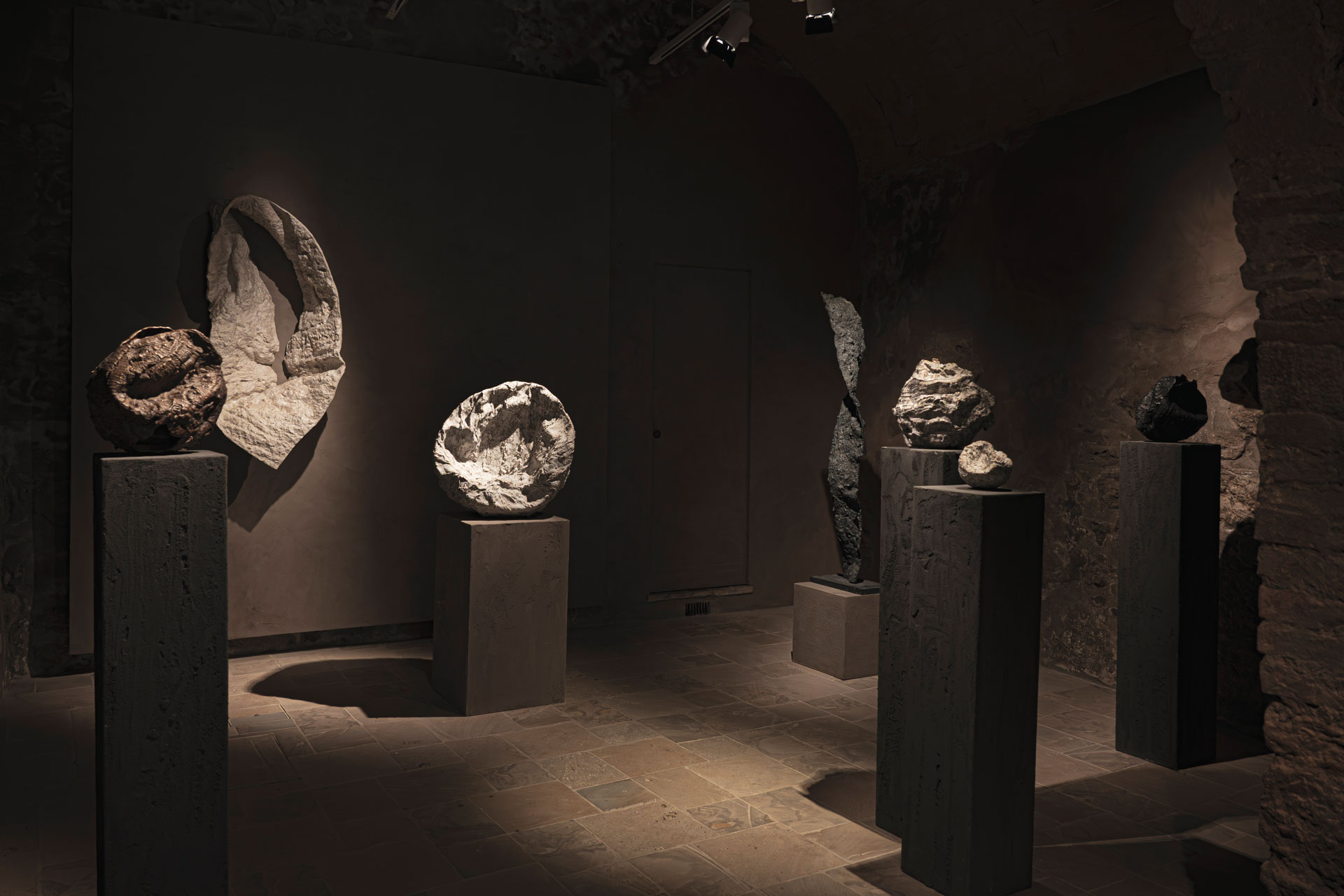
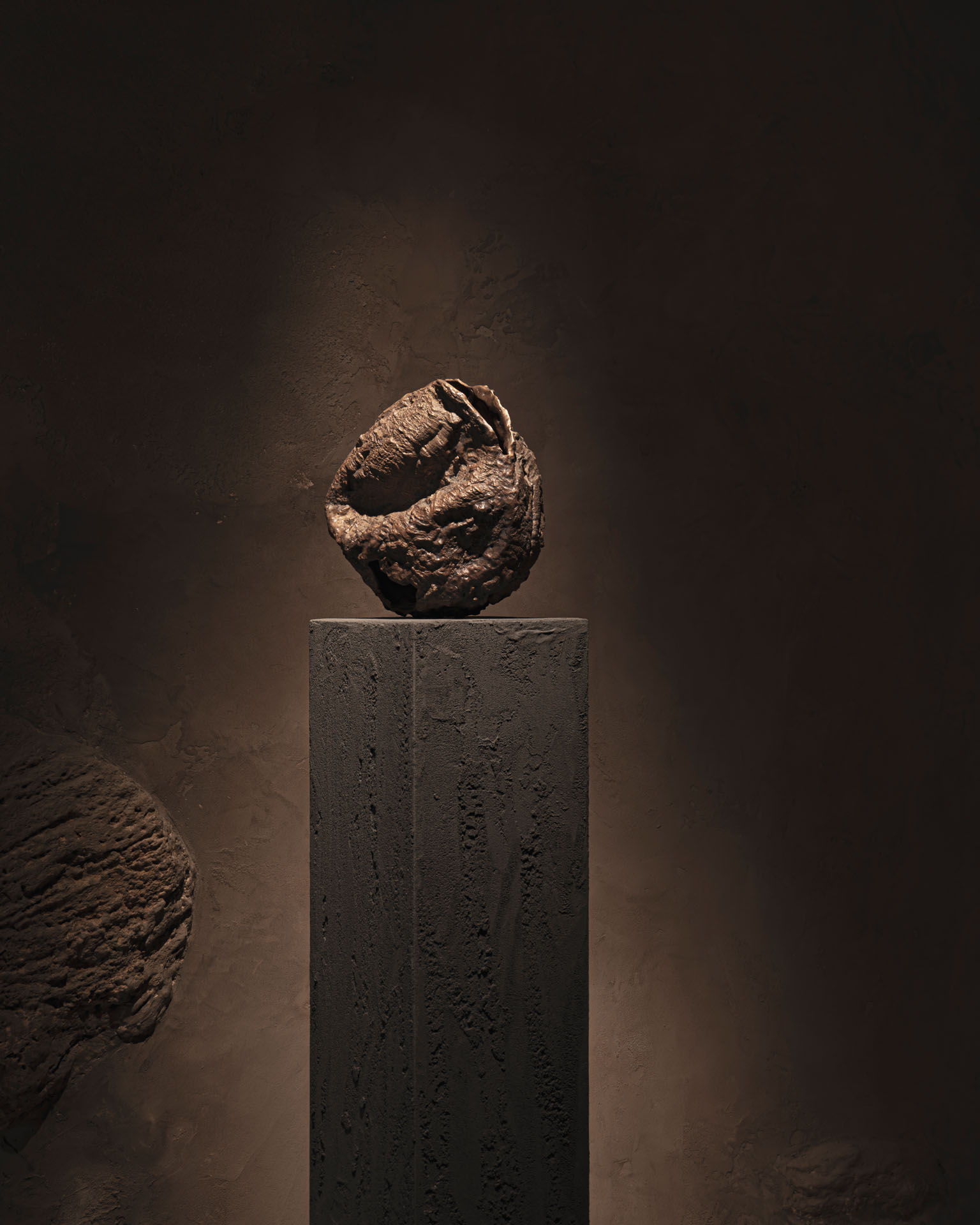
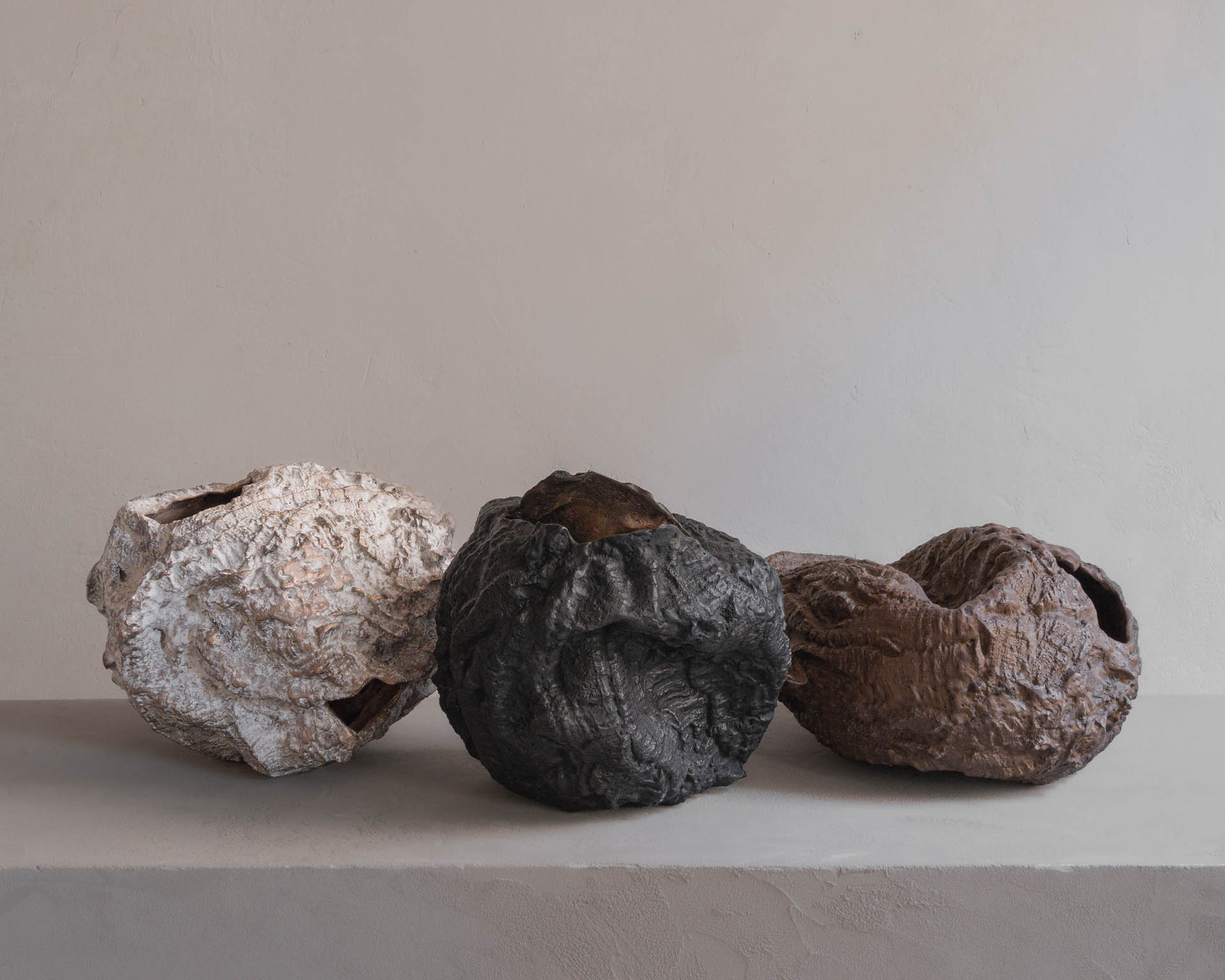
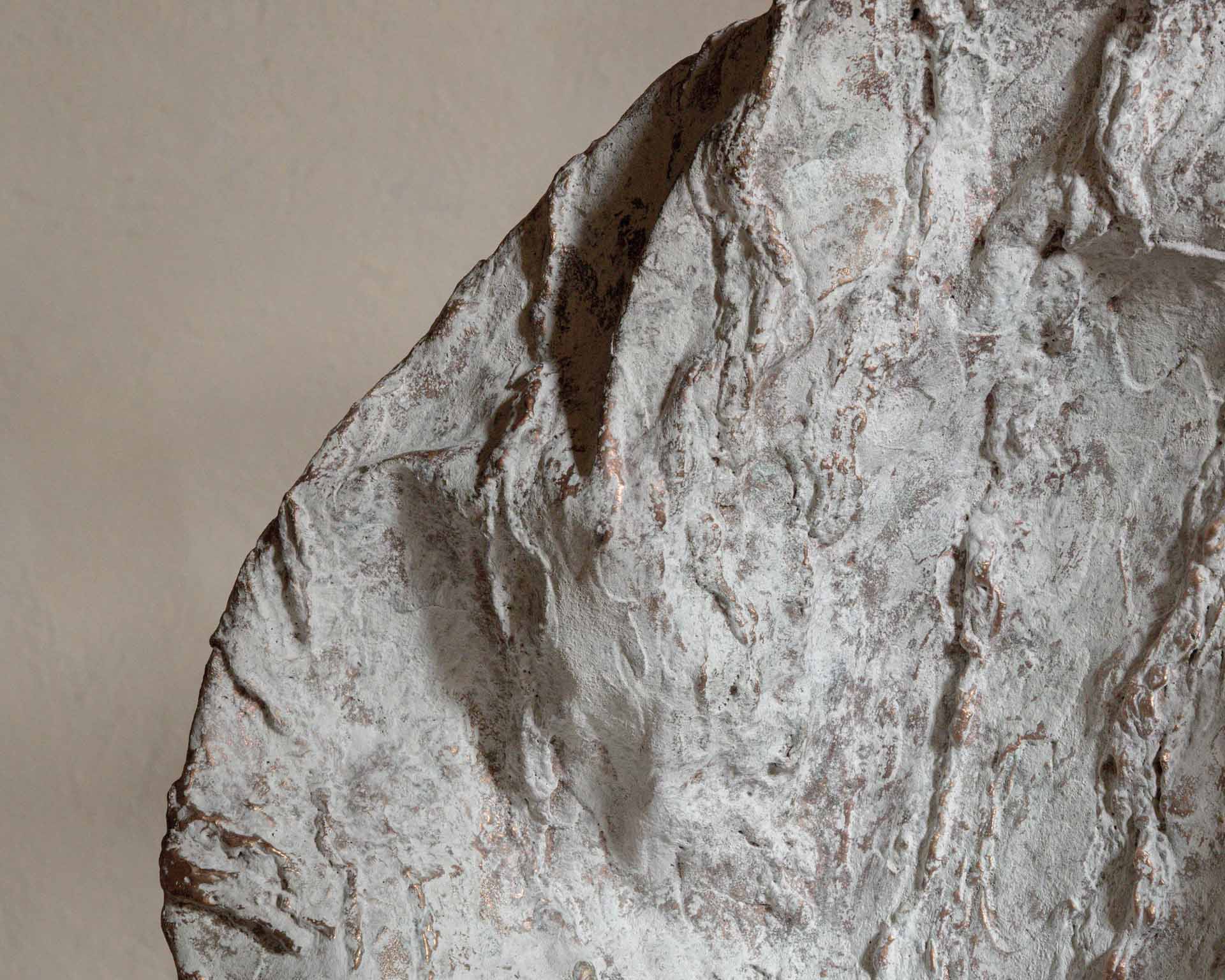
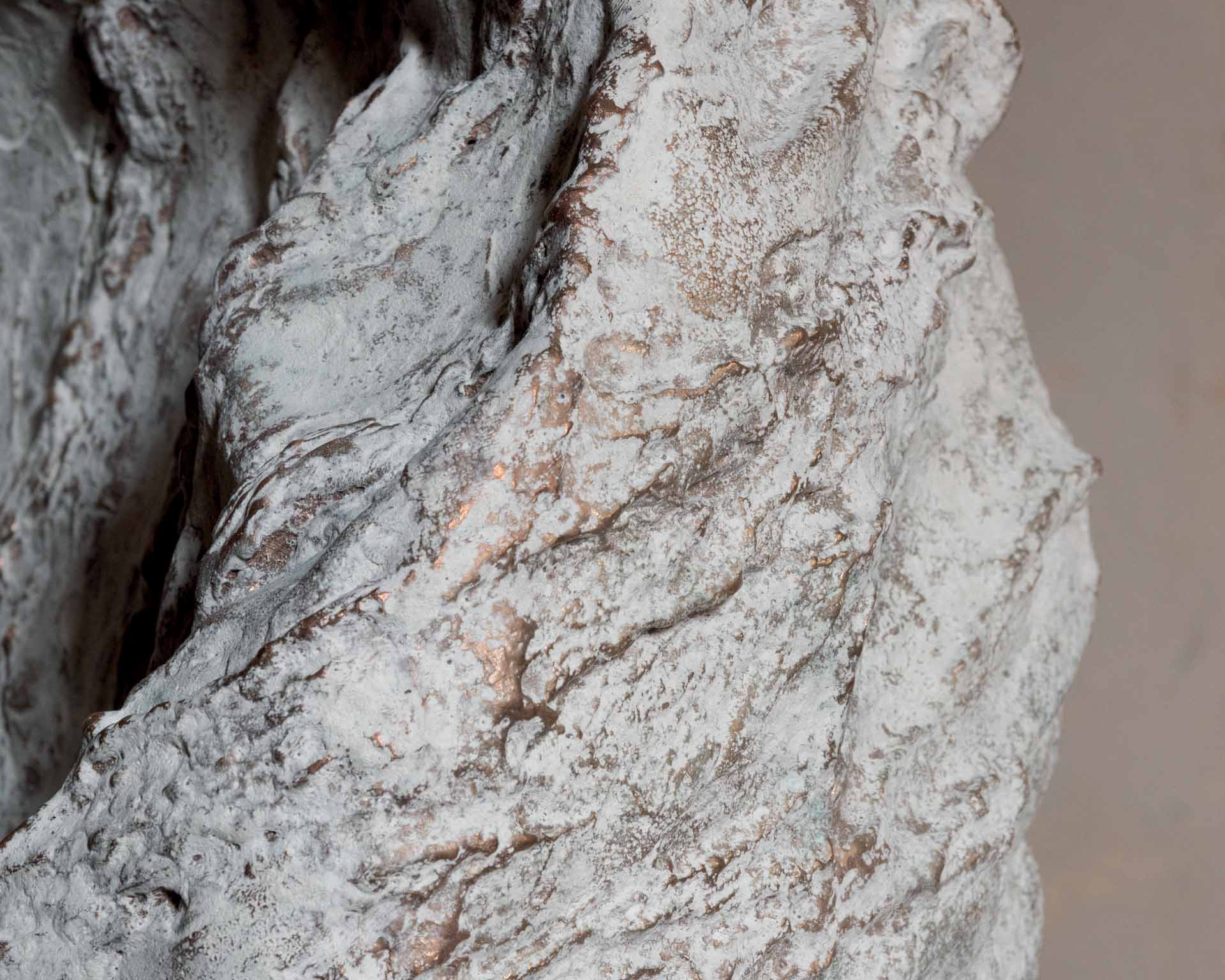
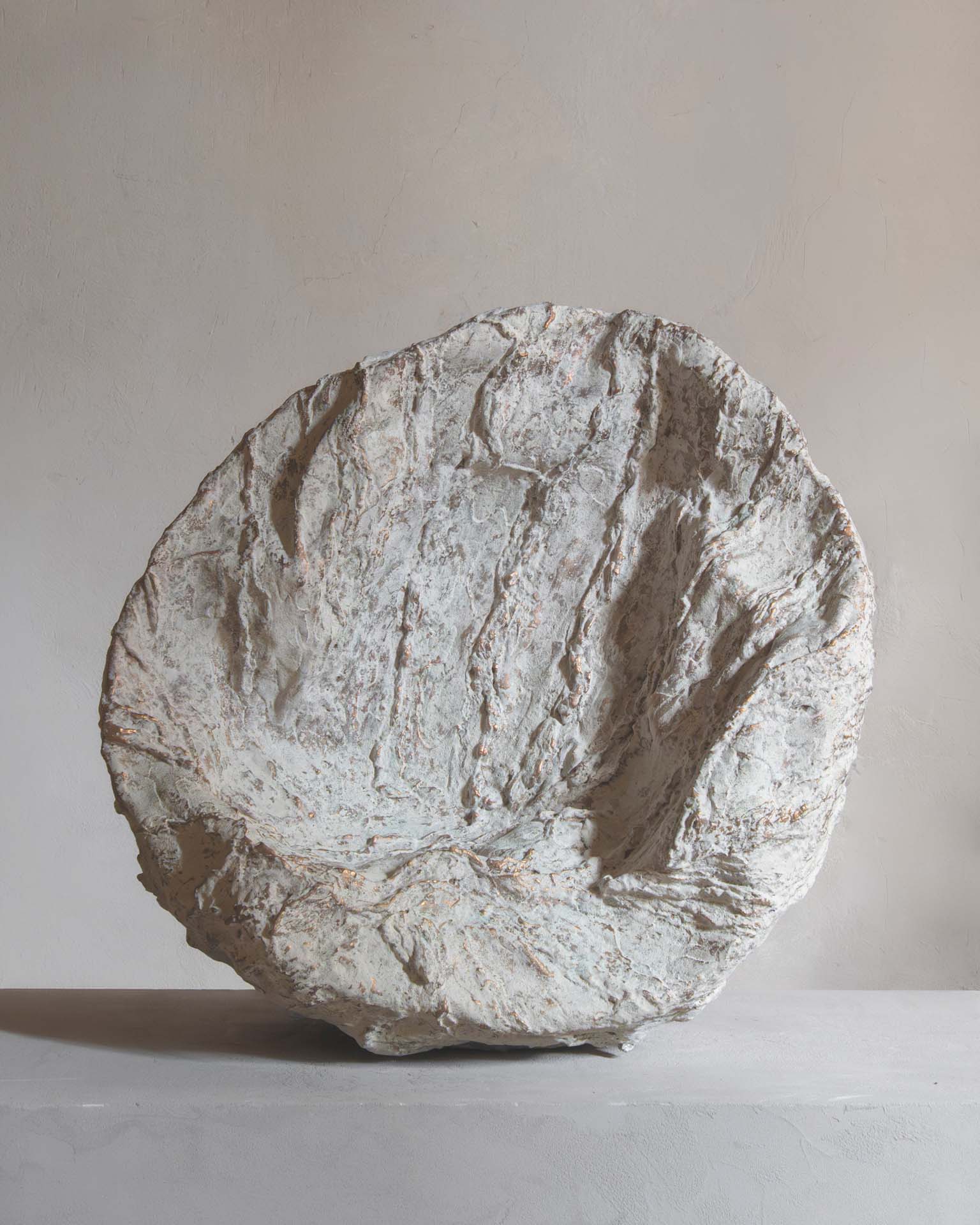
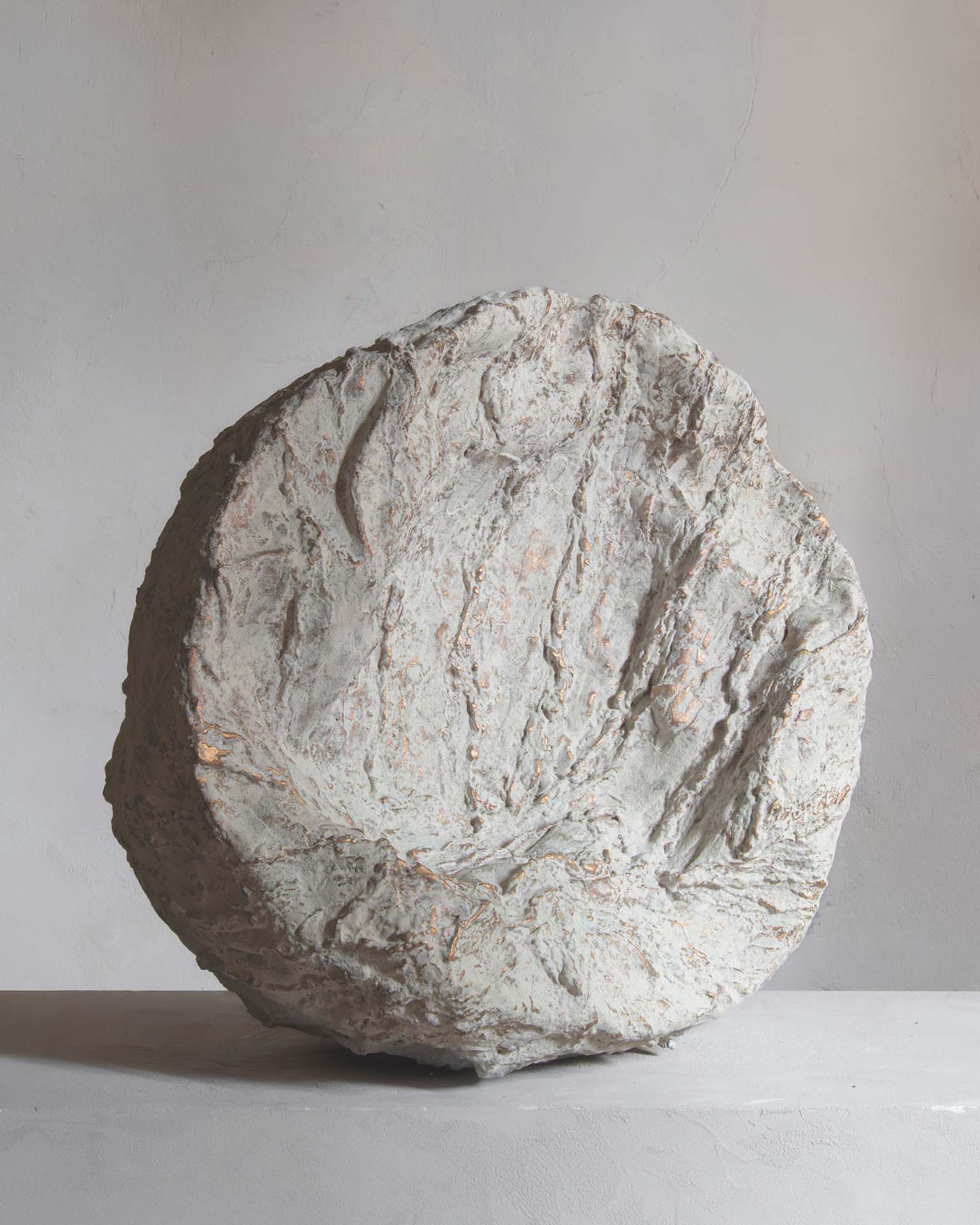
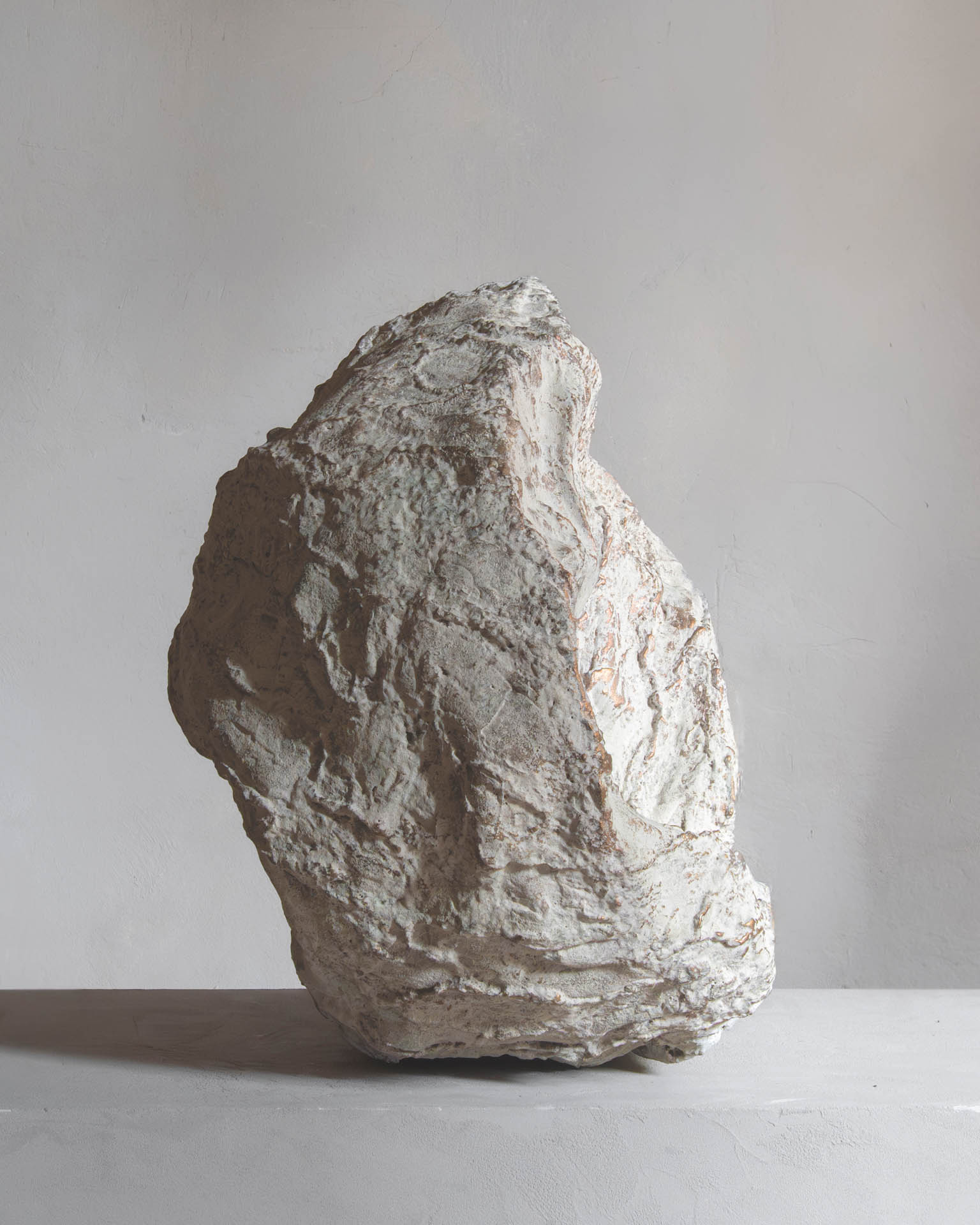
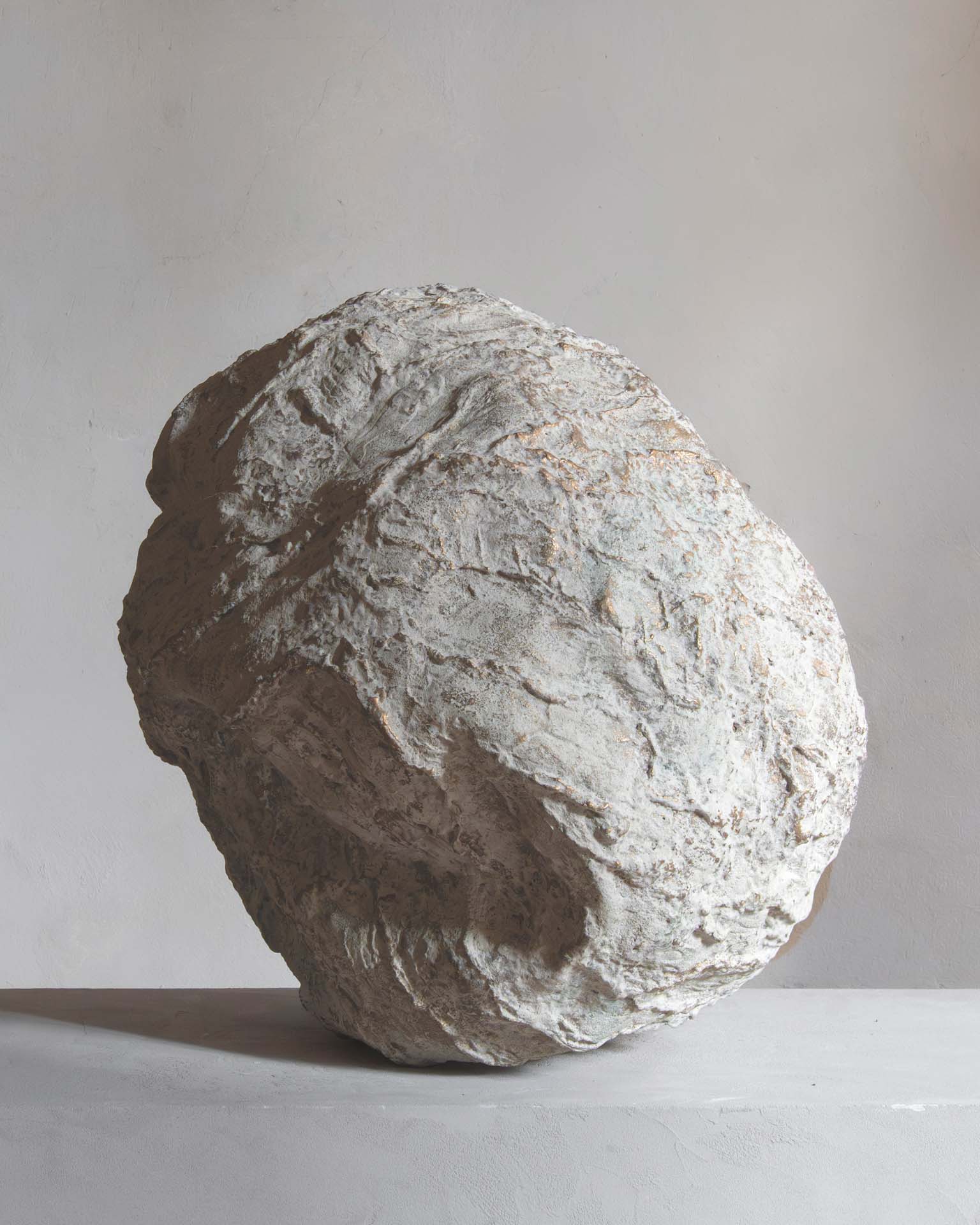
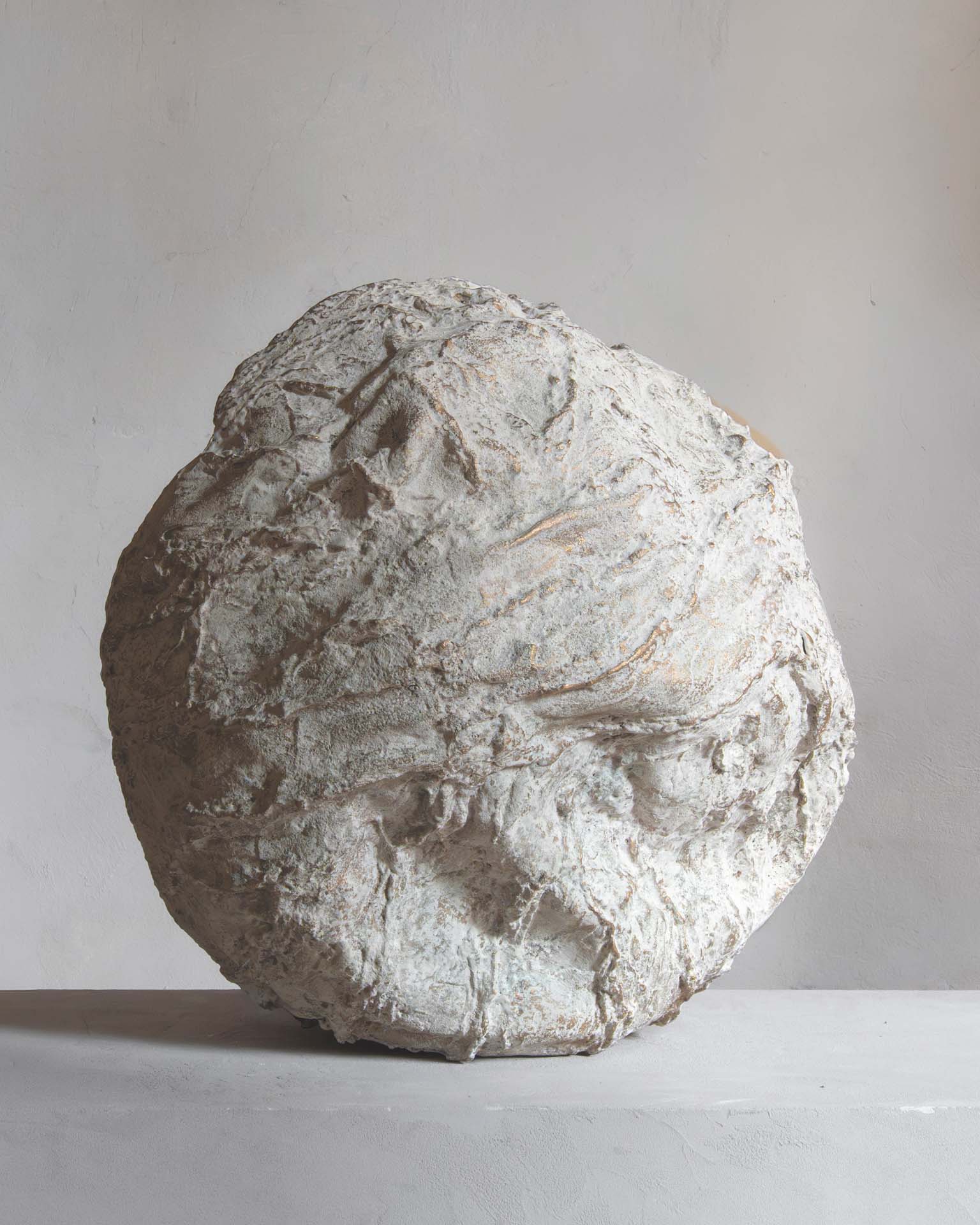
The title of her latest solo exhibition at KALPA, Indentations of Memory, finds its roots in the Medieval Latin indentāre, meaning “to furnish with teeth”, emphasising the visceral, biting nature of time. This project, presenting an iconic washi paper work alongside a significant body of bronze sculptures – a material renowned for its durability and nobility – is deeply sensorial. It is an invitation to inhabit the penumbra of the room and engage with art forms that demand to be touched and felt. These sculptures thus become physical thoughts in the act of transformation, accentuated by light reflected off elusive surfaces that lend them a haunting, impressionistic quality.
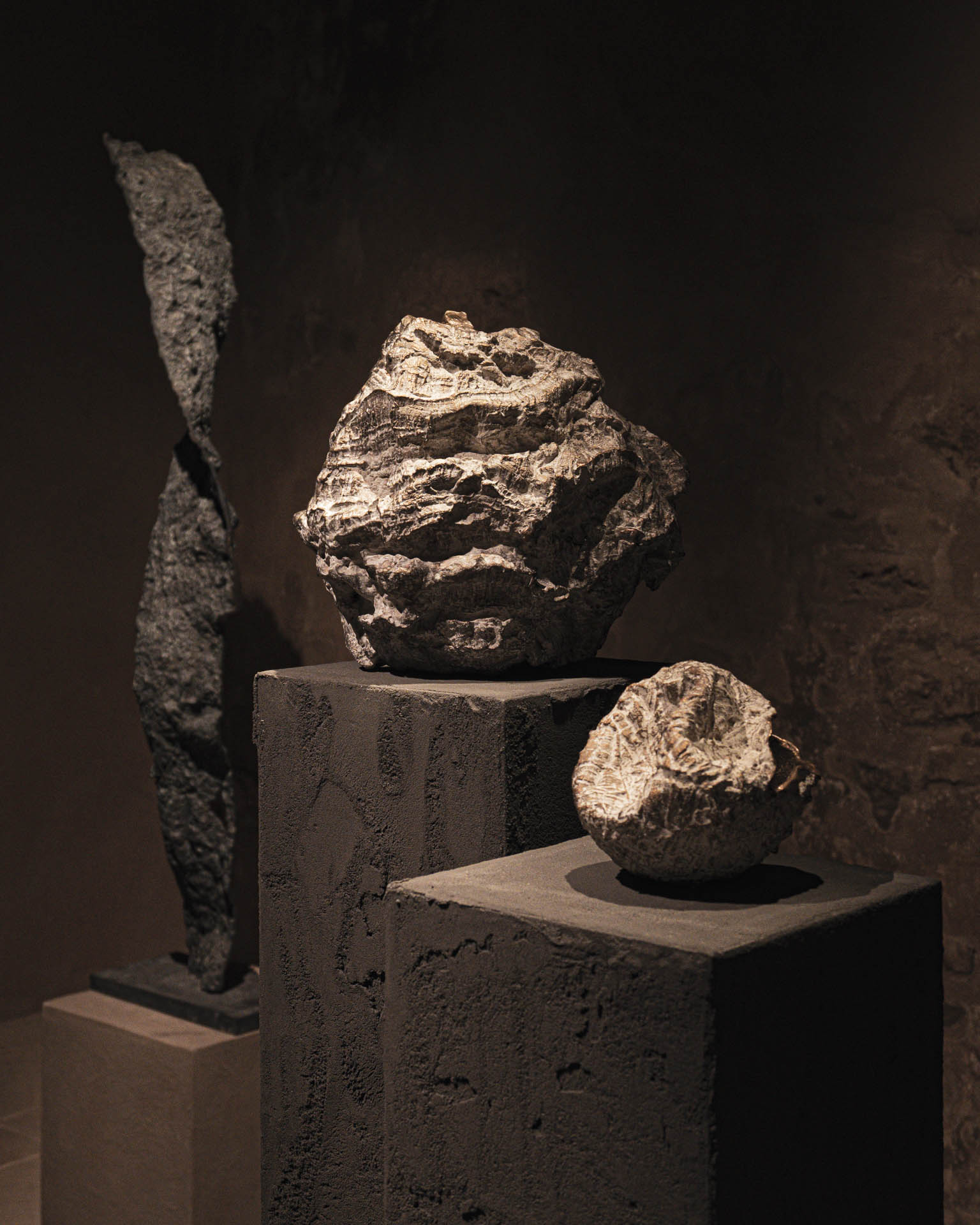
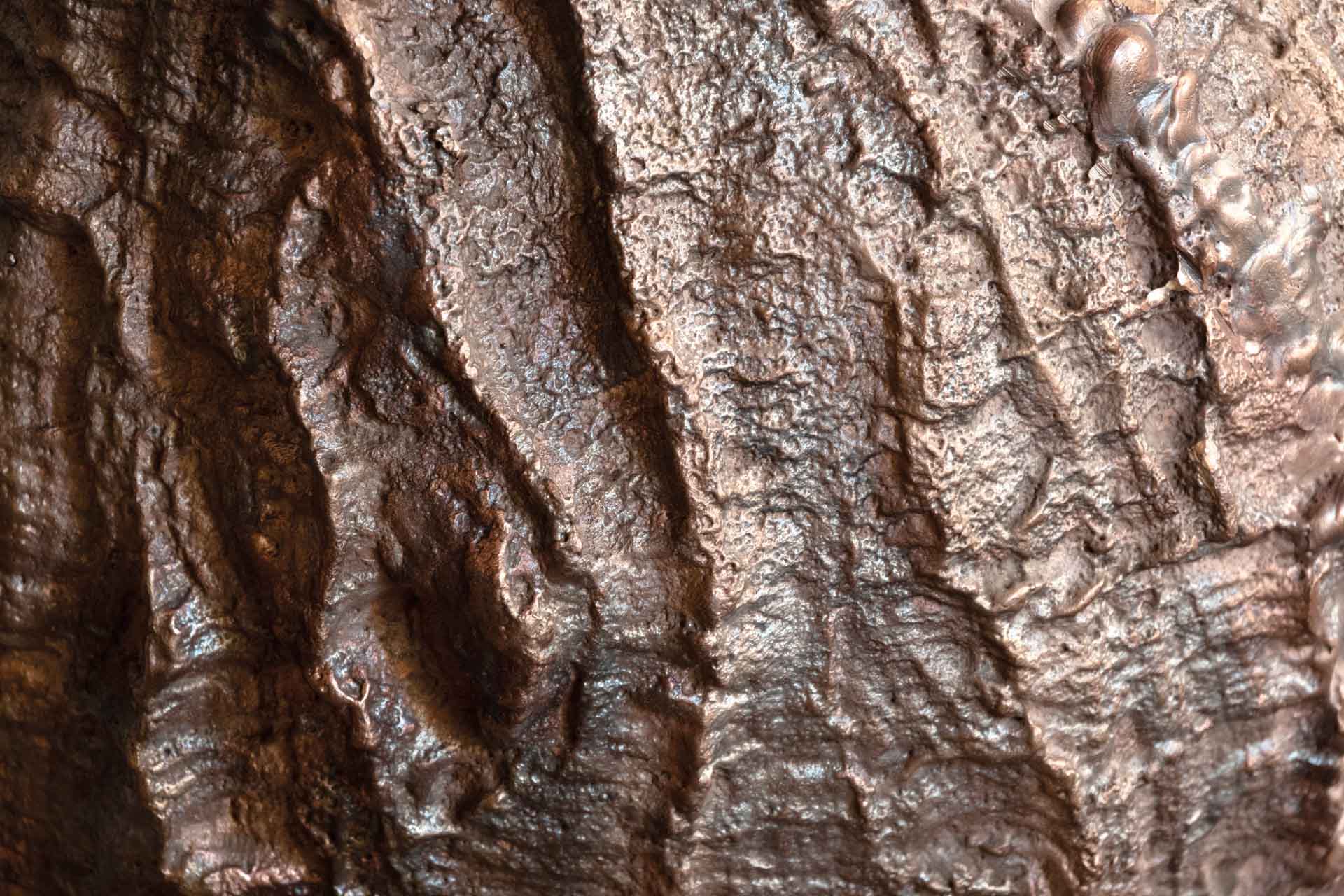
Ranging from near-spherical forms to elongated, abstract creations, the exhibition reunites the bas-relief Omega with the DNA bronzes and the artist’s recent series, Baumwelt, dedicated to the universe of trees. This is an atlas of evocative narratives: impressions of traces and unveiled secrets from both nature and subterranean history. Born from the depths of time, Omega and DNA originate from silicon casts taken directly from the walls of paleo-Christian catacombs beneath the artist’s residence. Through a molding process, raw, subterranean surfaces are reimagined and preserved in washi paper and bronze. Bearing the titles of Greek letters employed in contemporary mathematics, they reflect the artist’s fascination with theories that depict space as constantly contorting, stretching, and crushing.
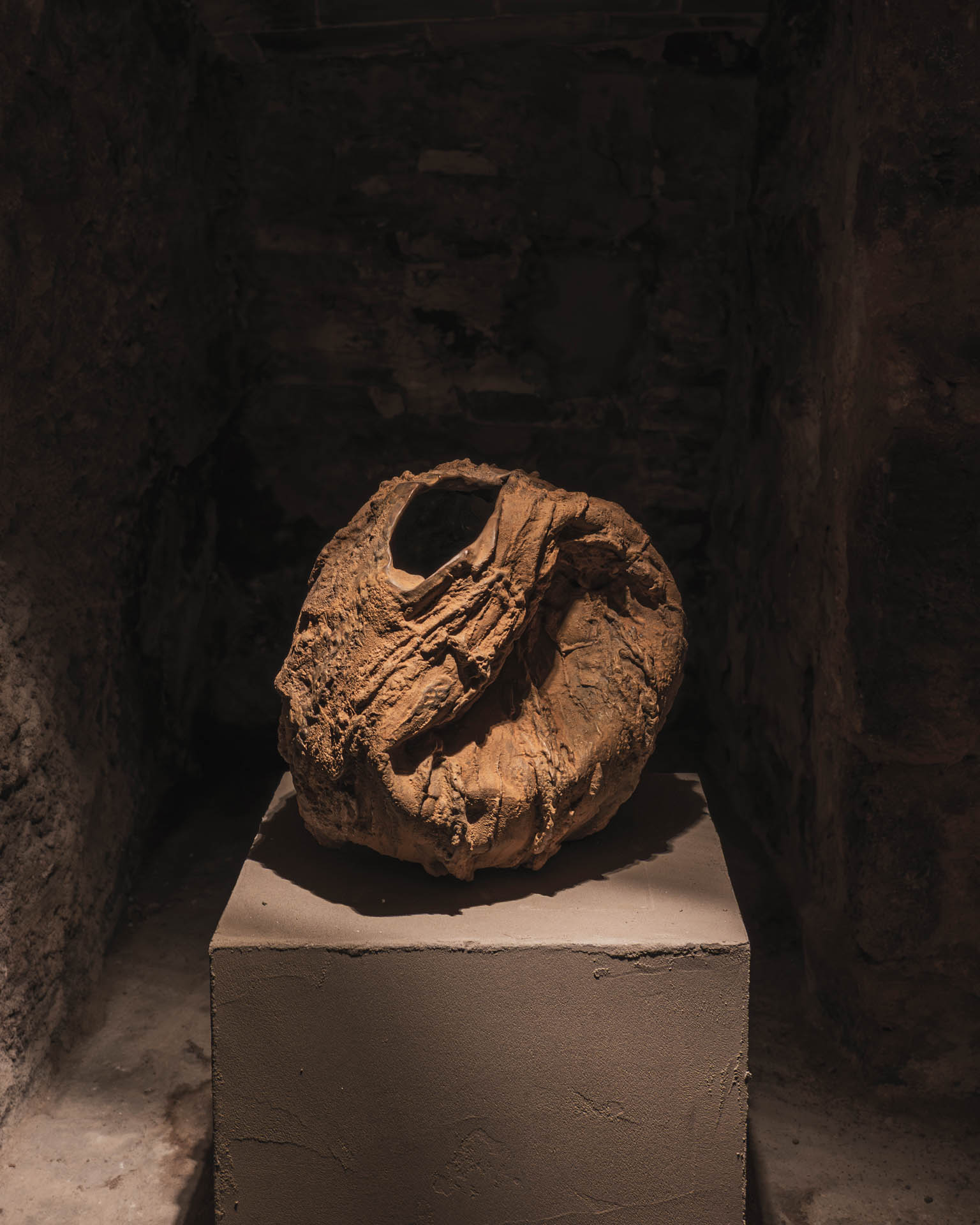
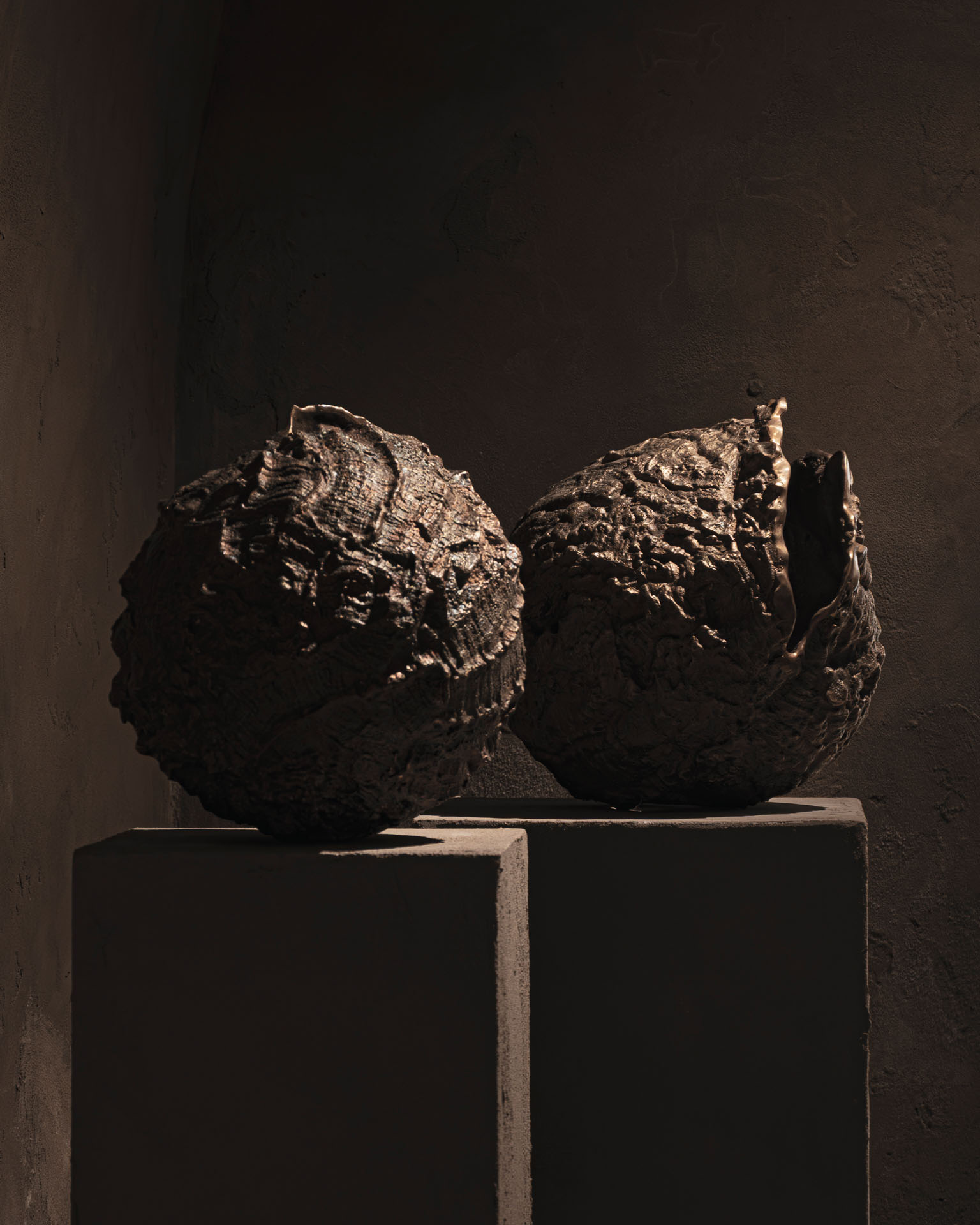
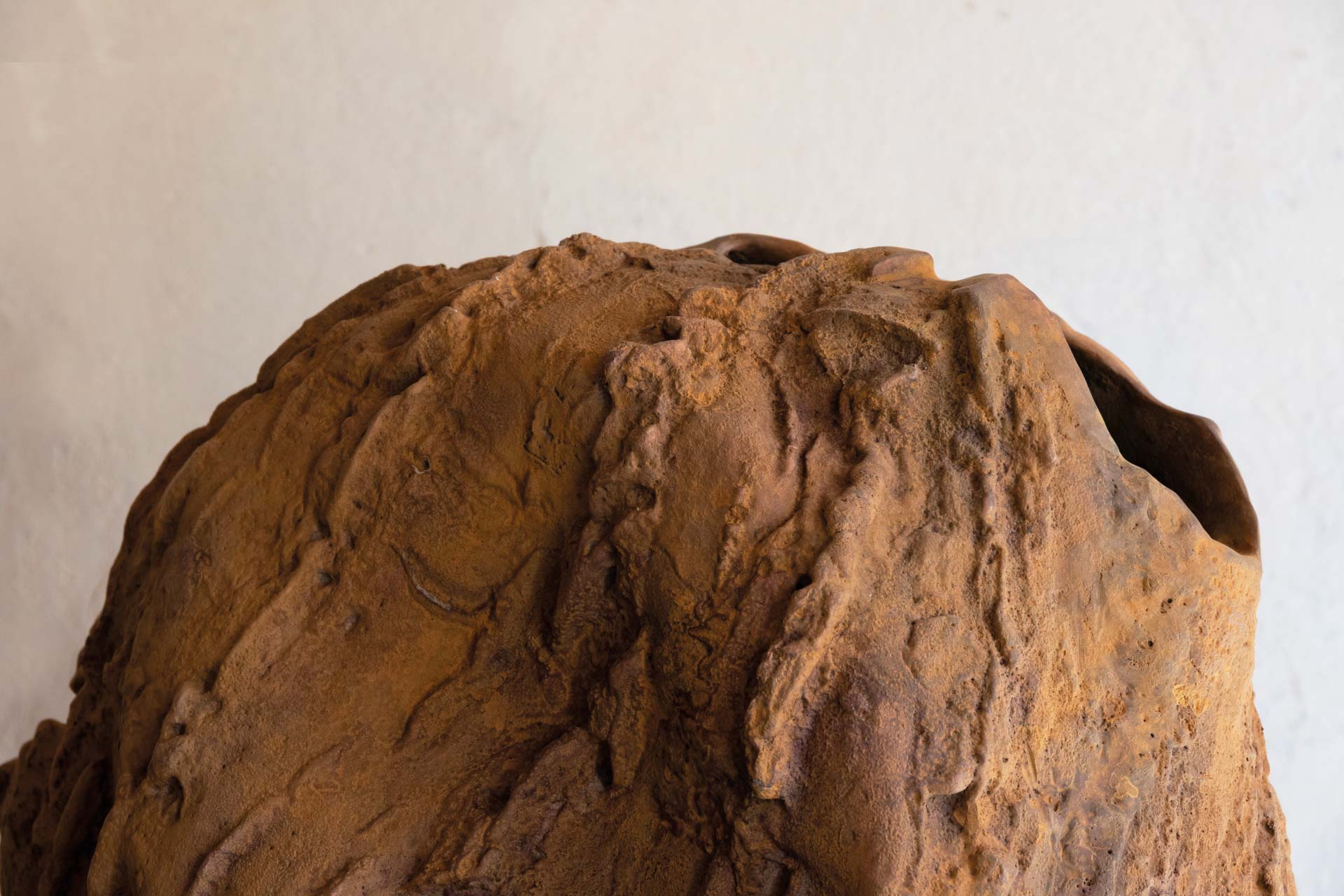
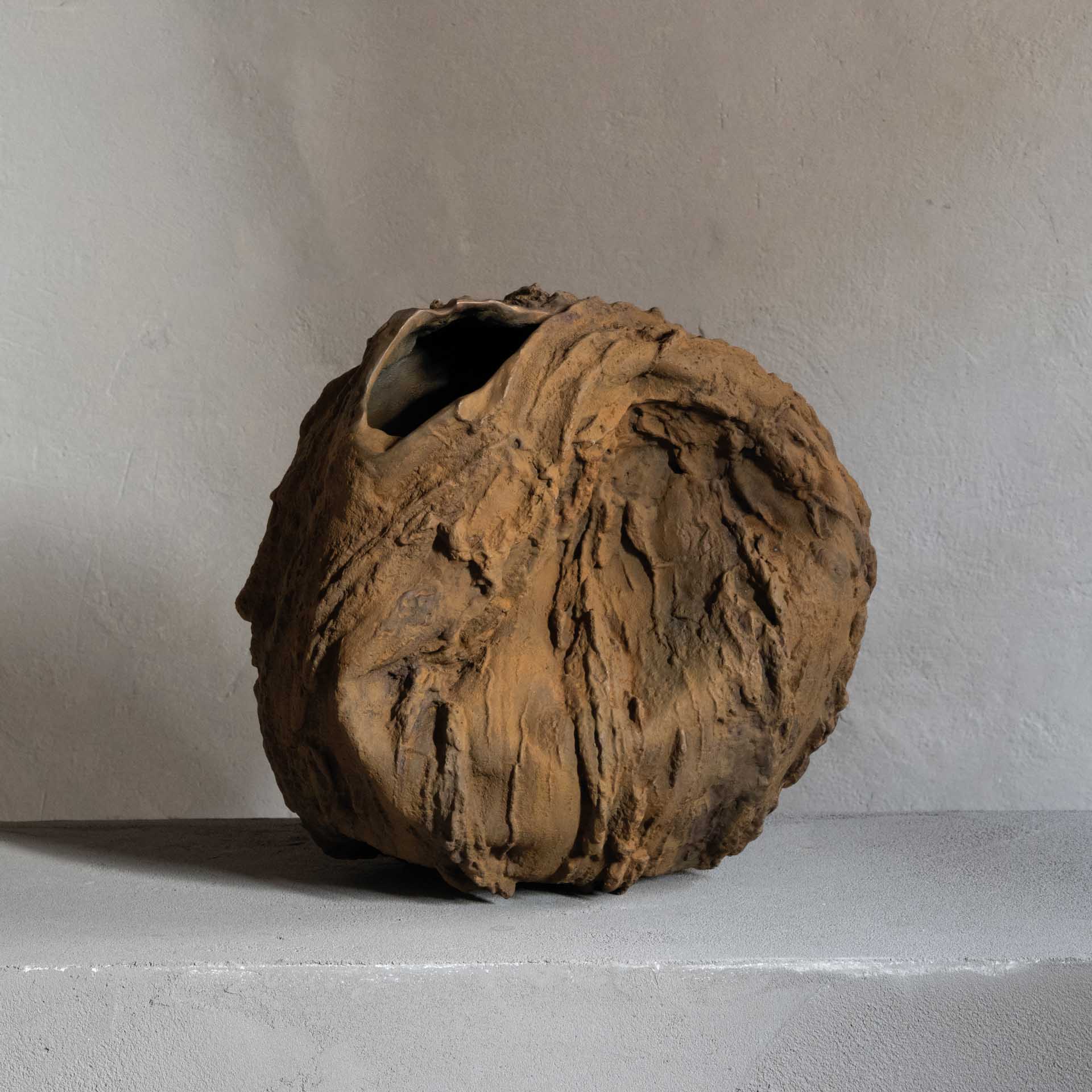
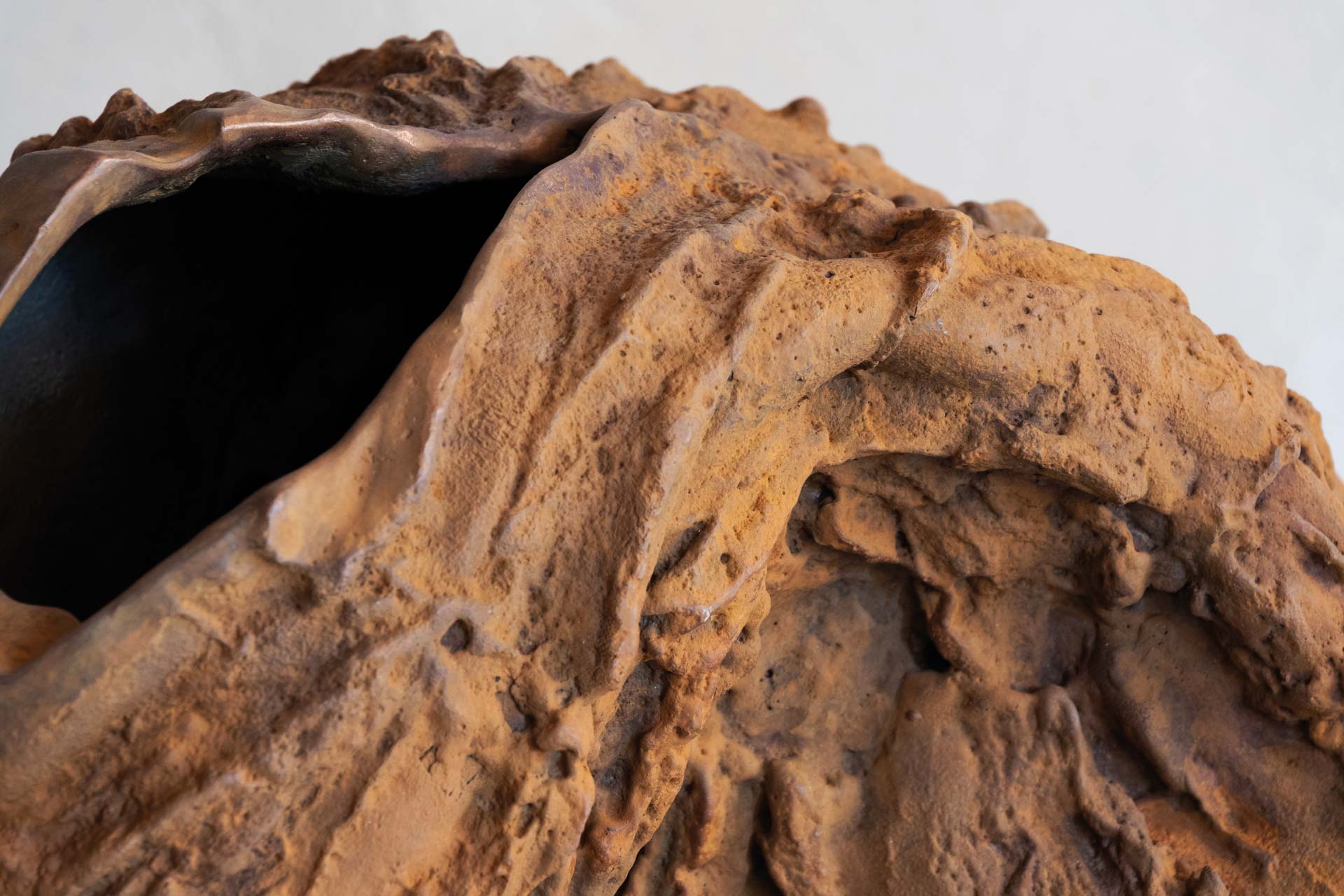
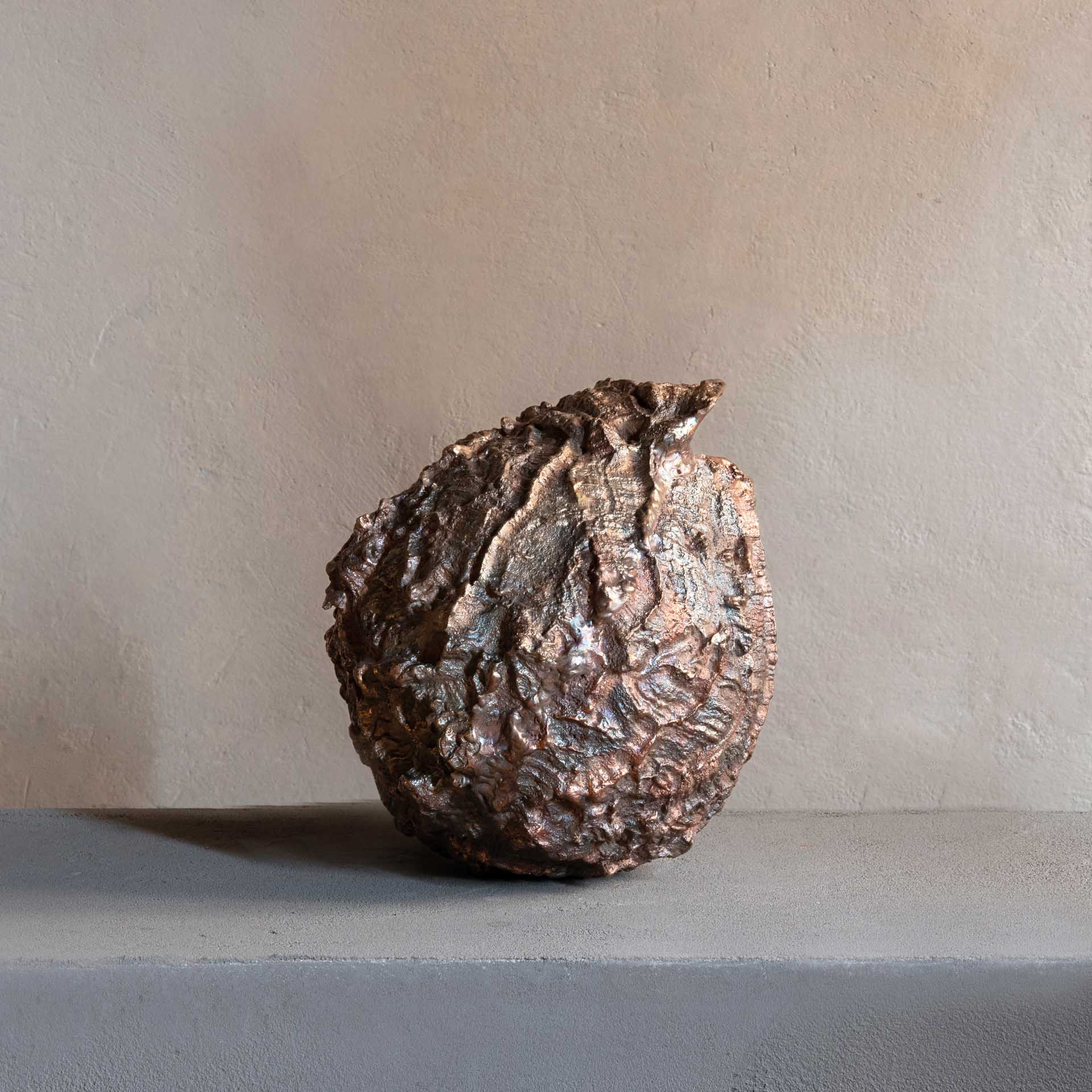
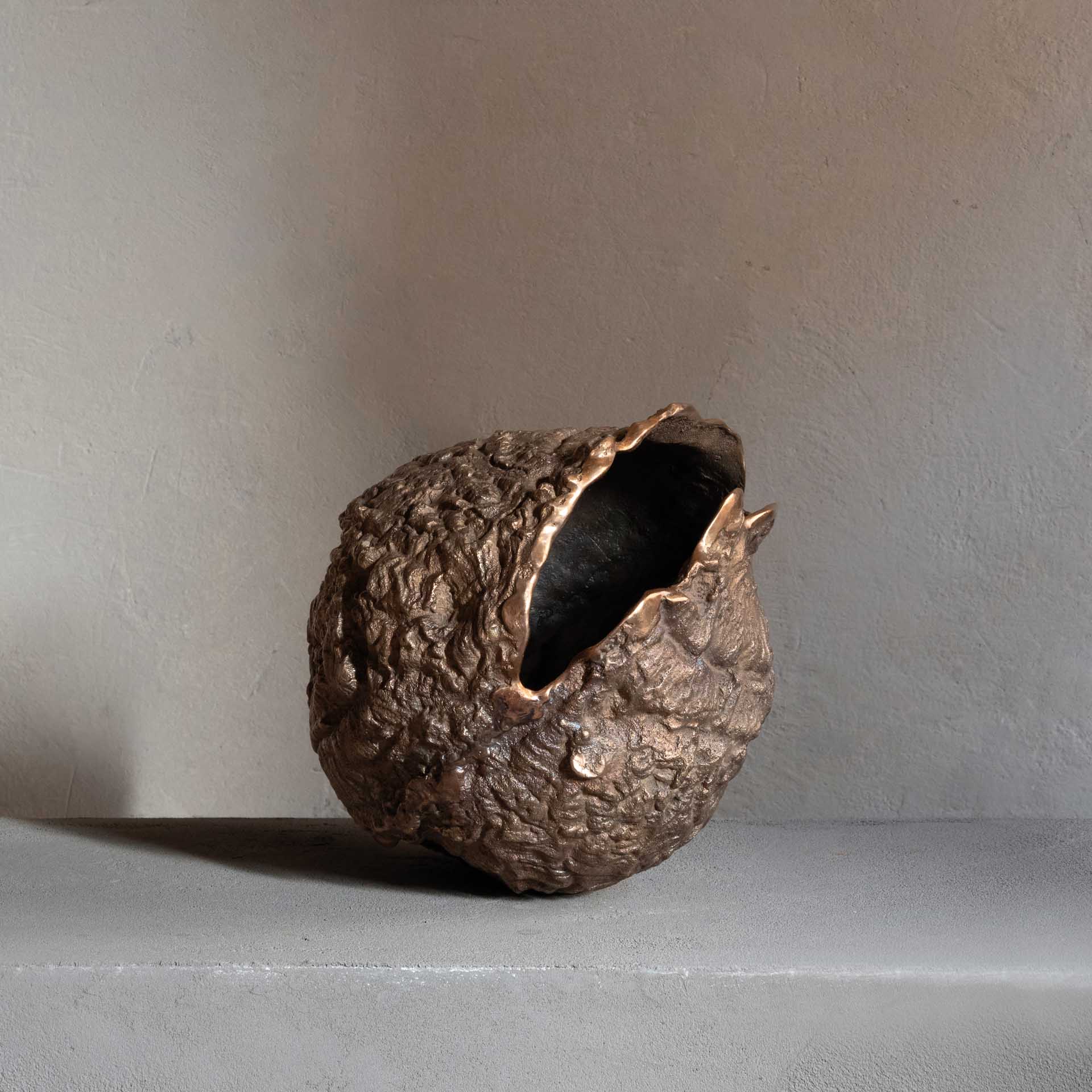
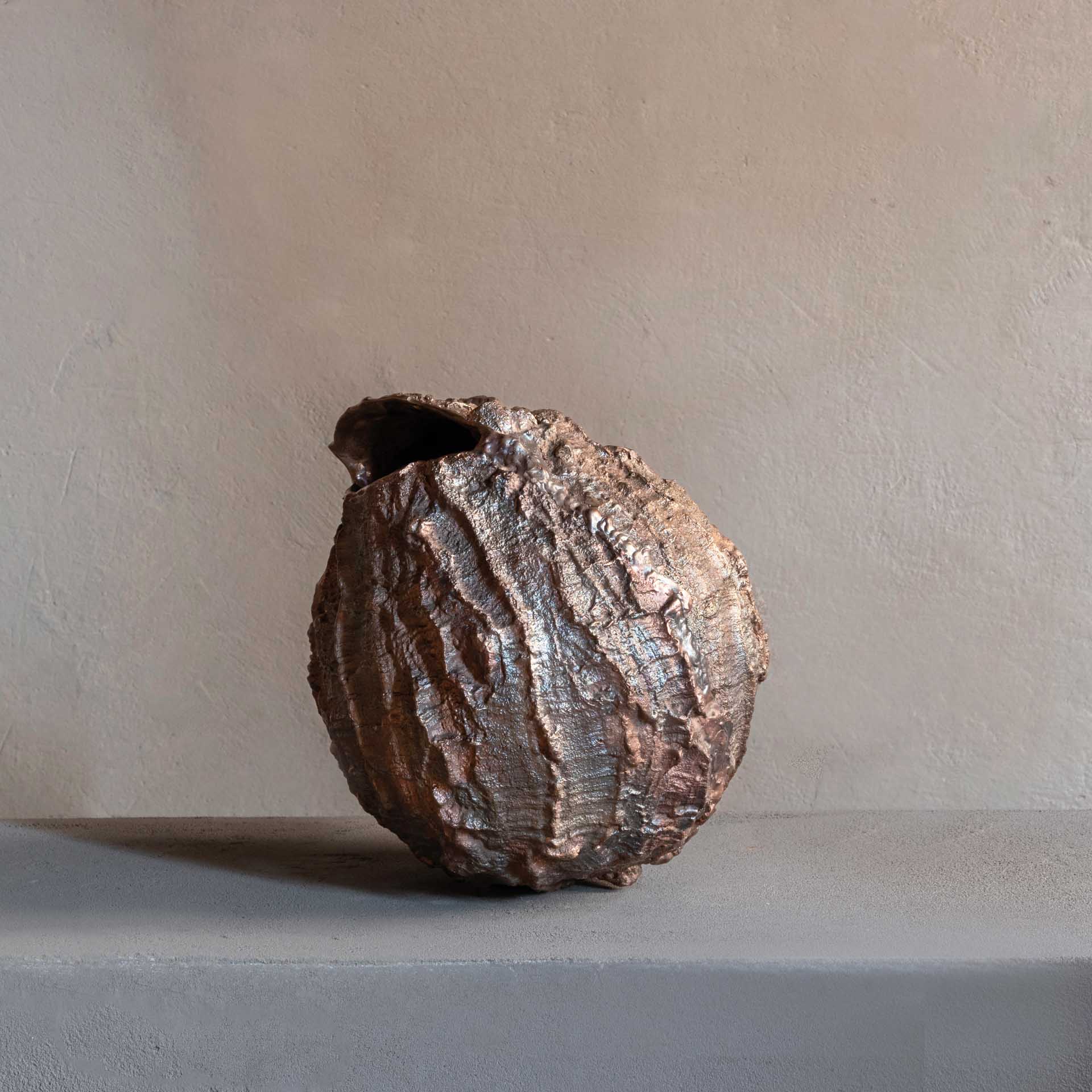
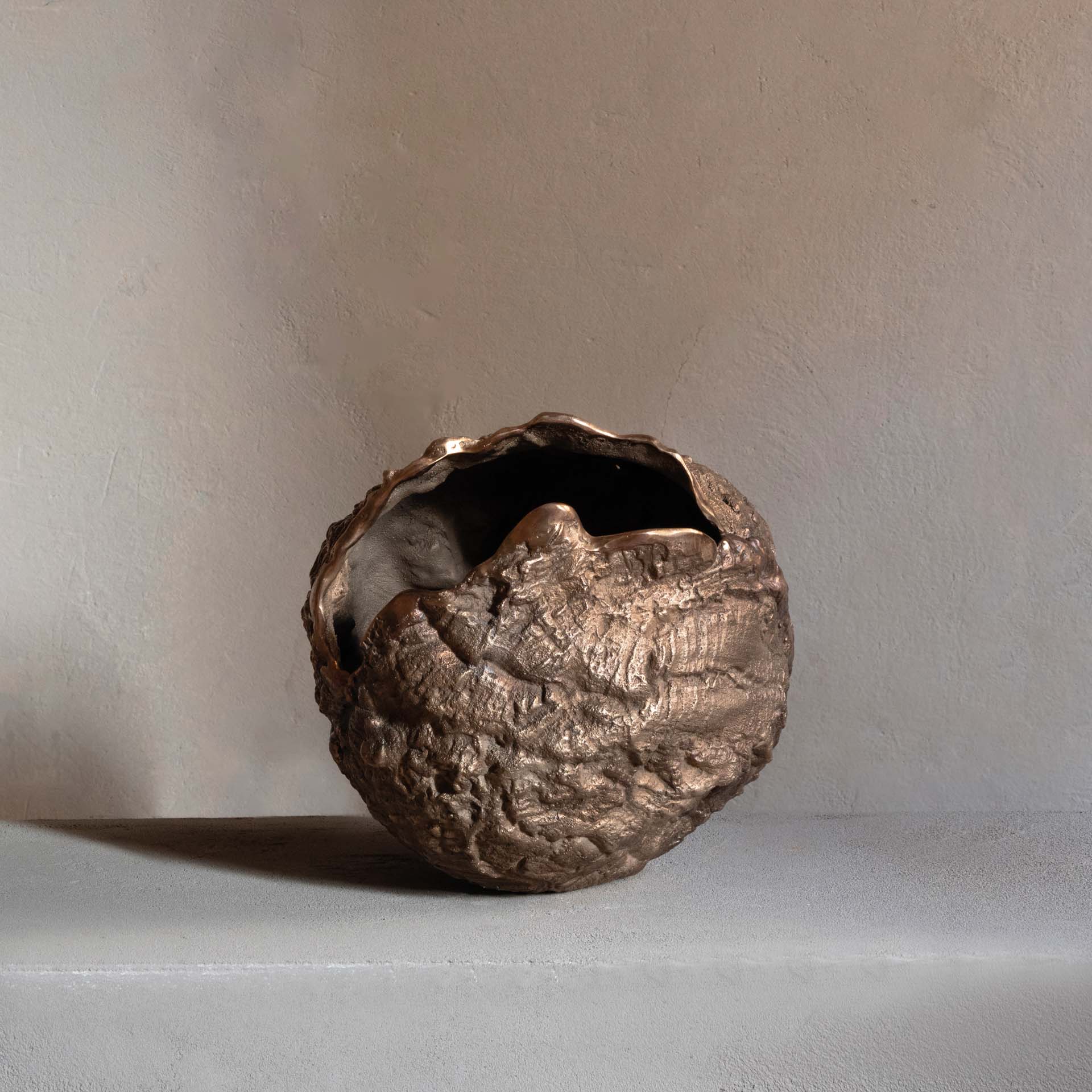
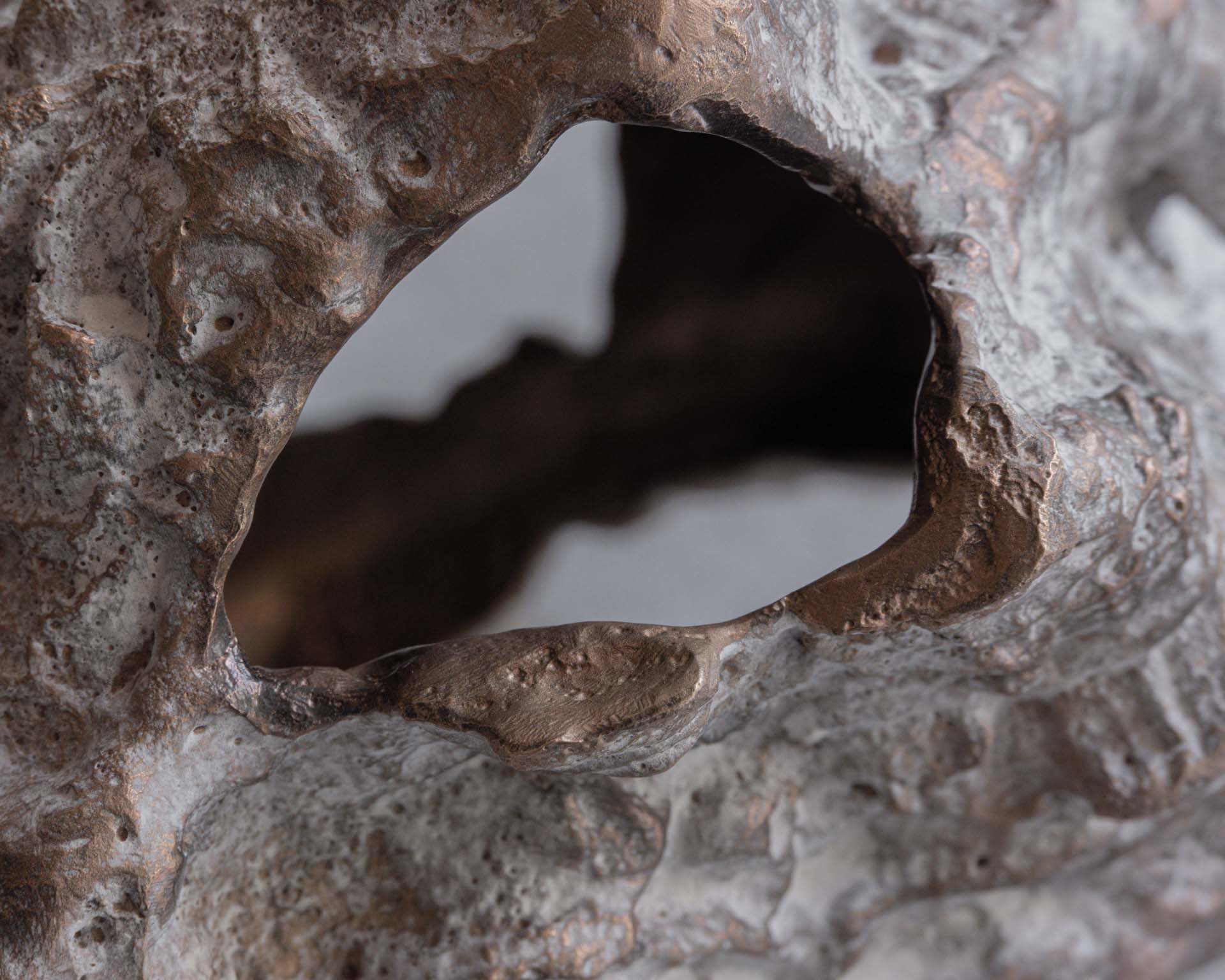
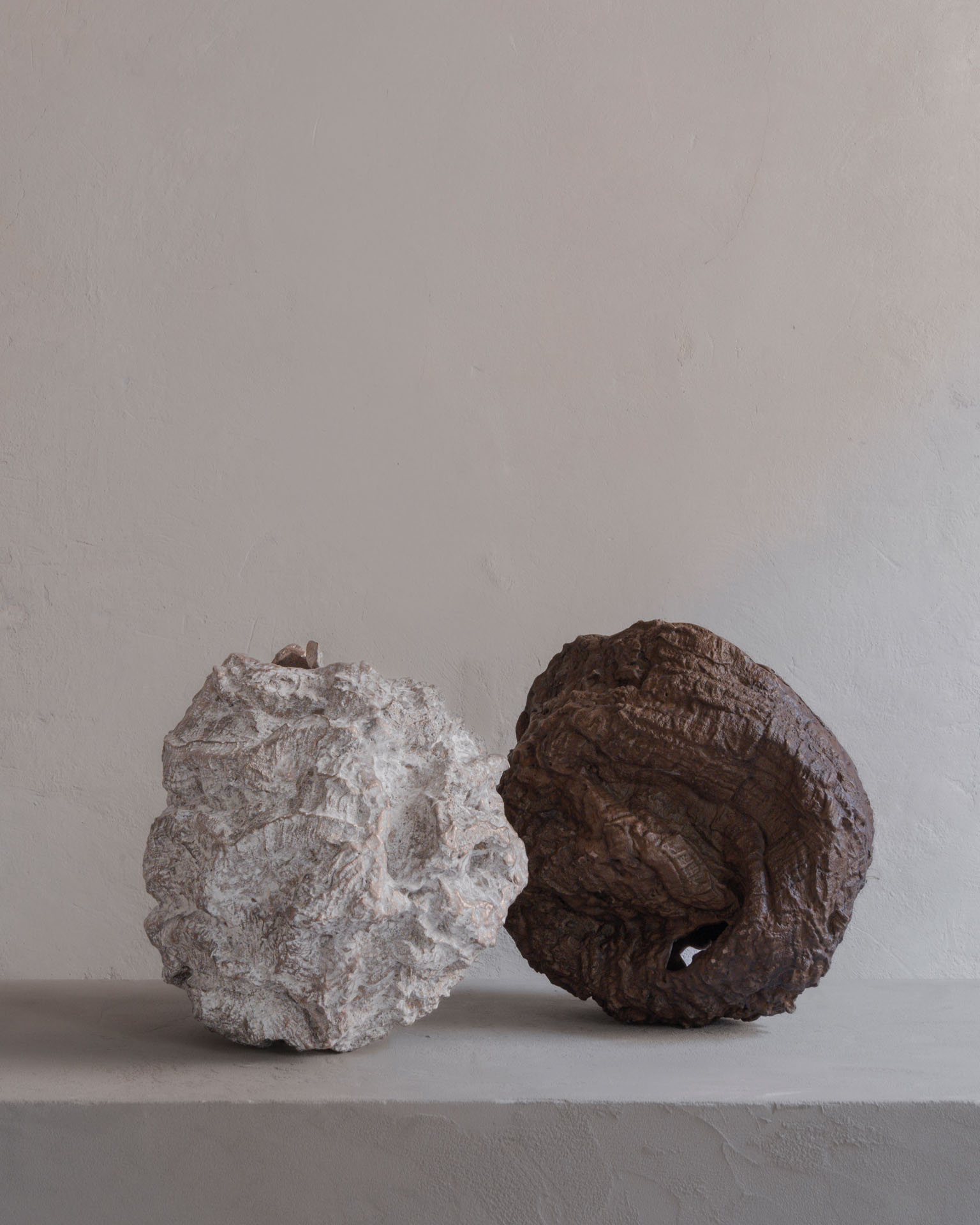
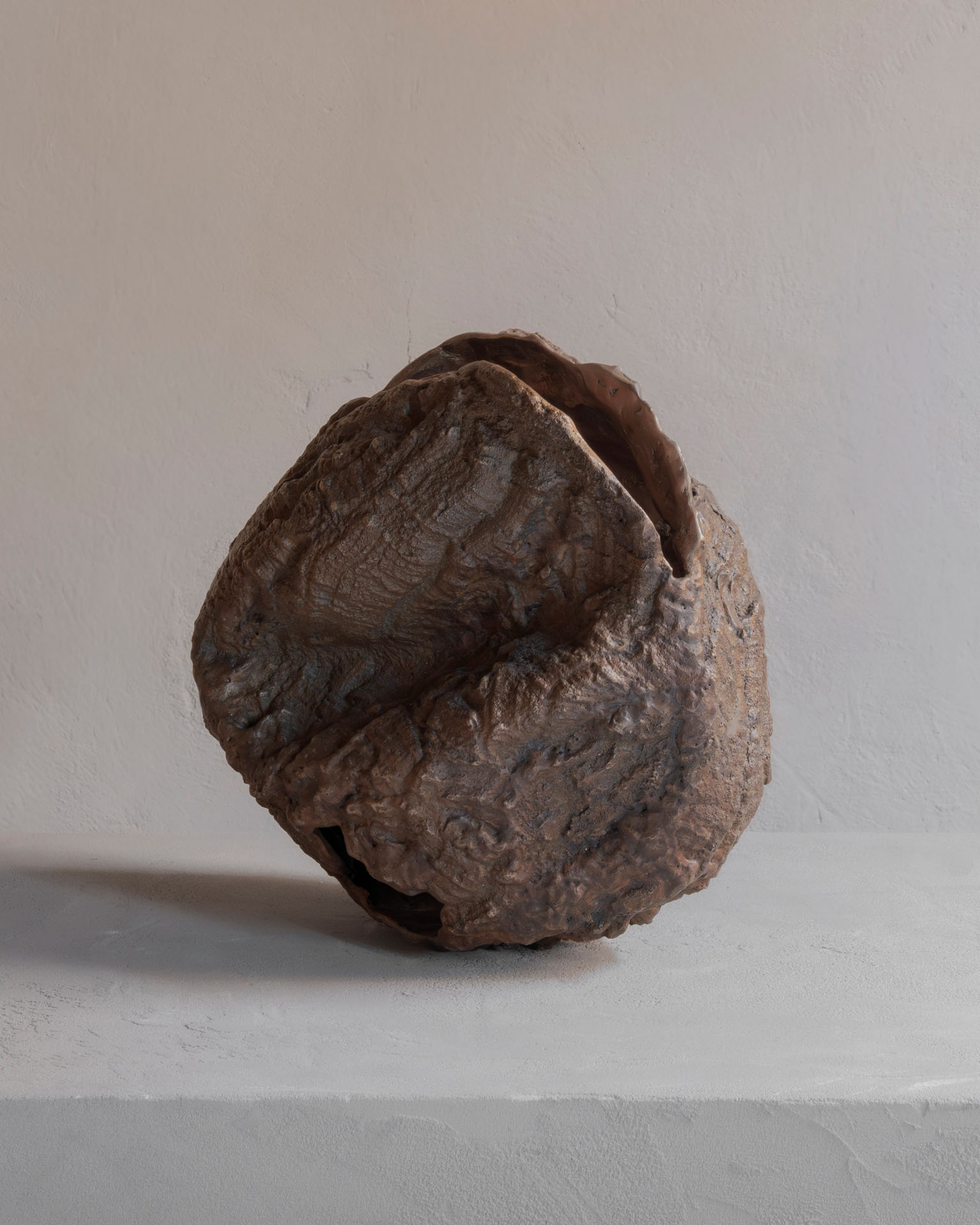
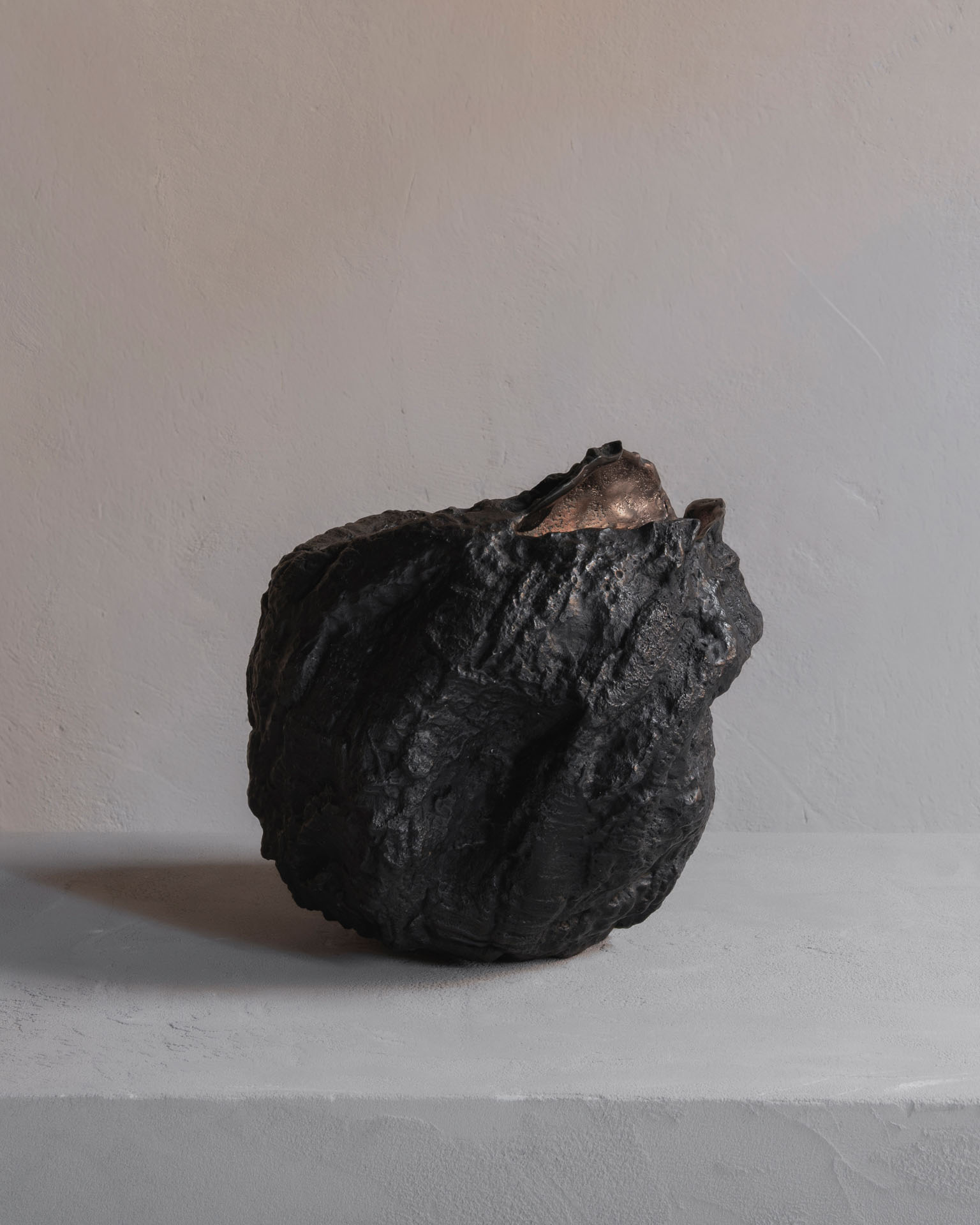
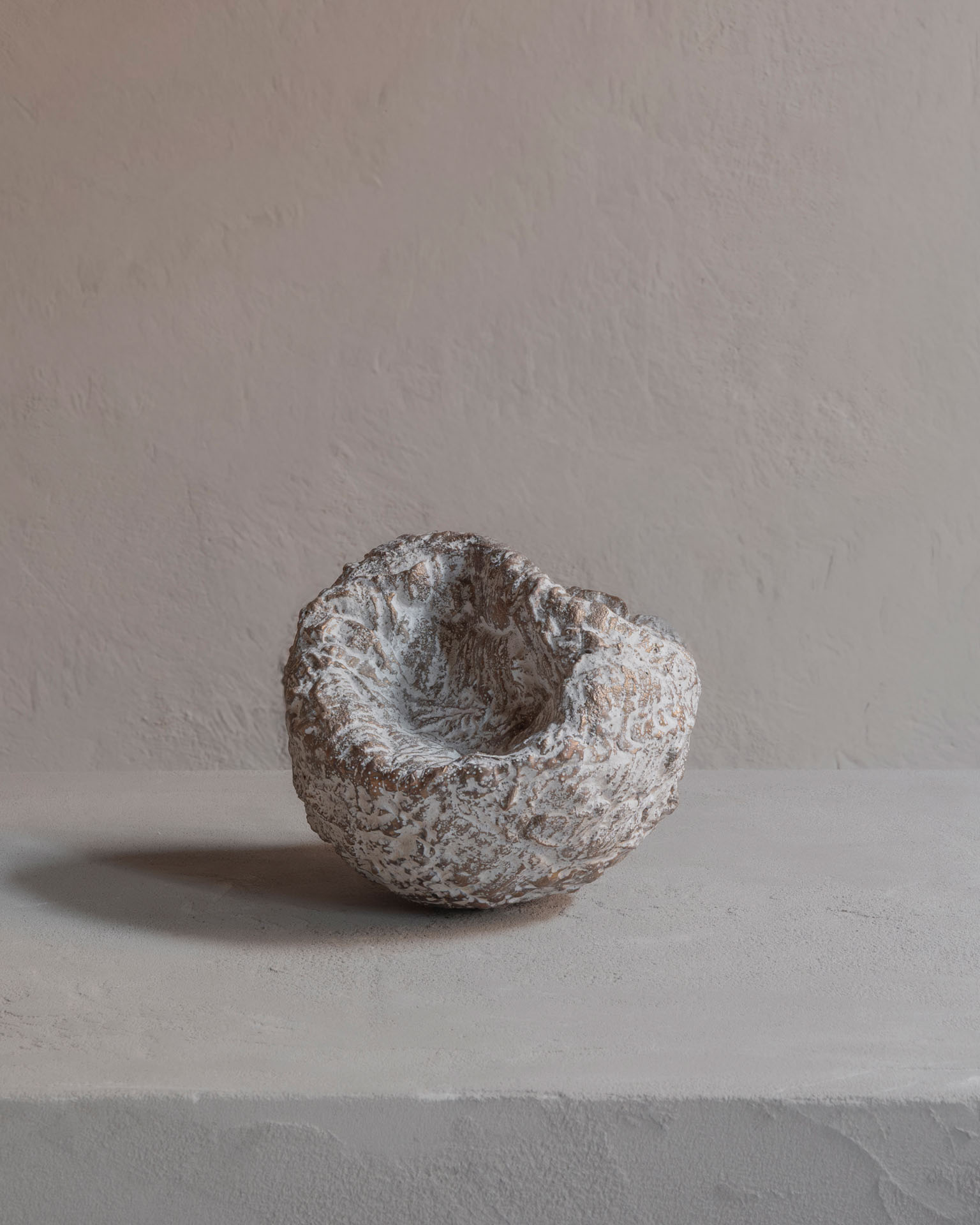
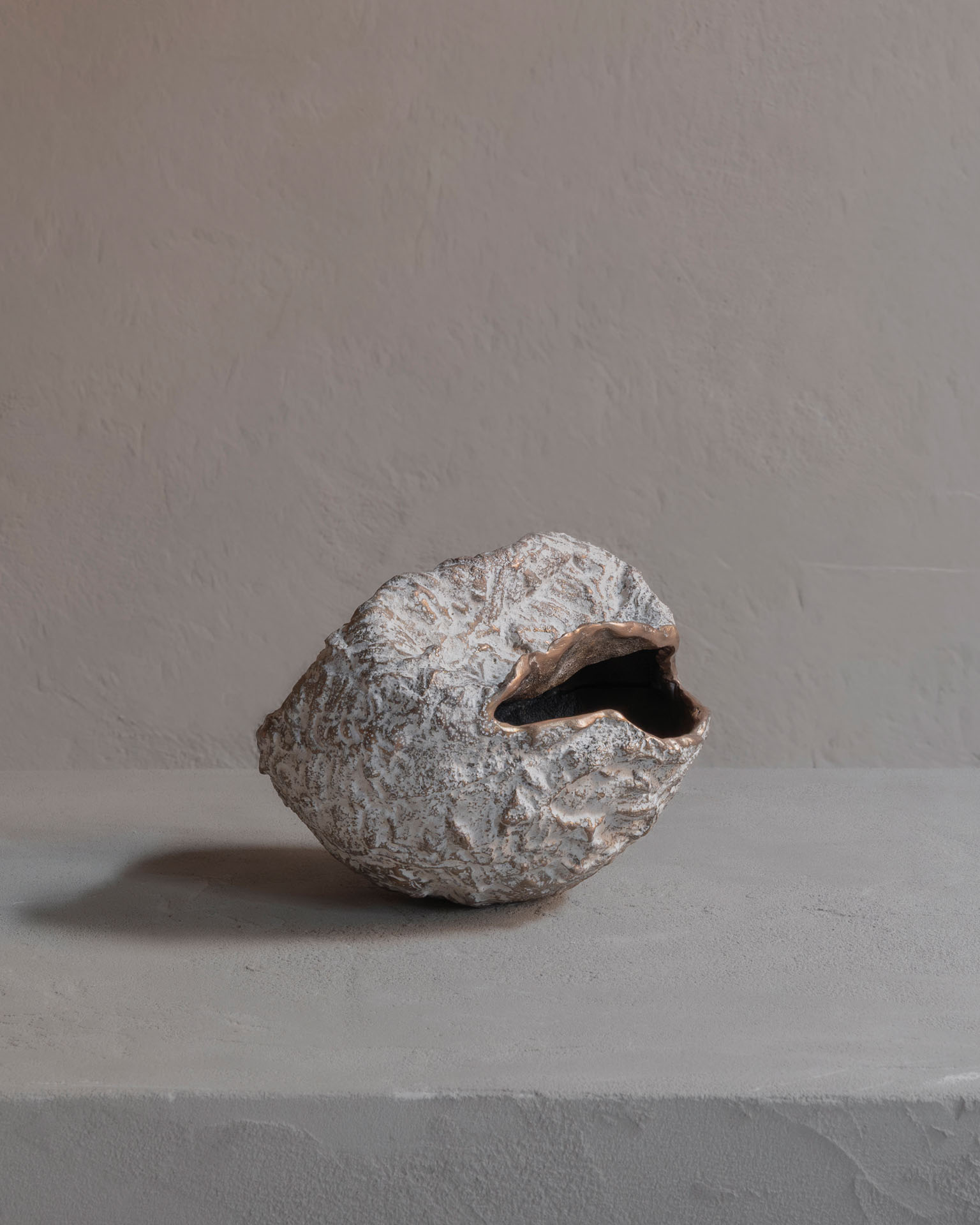
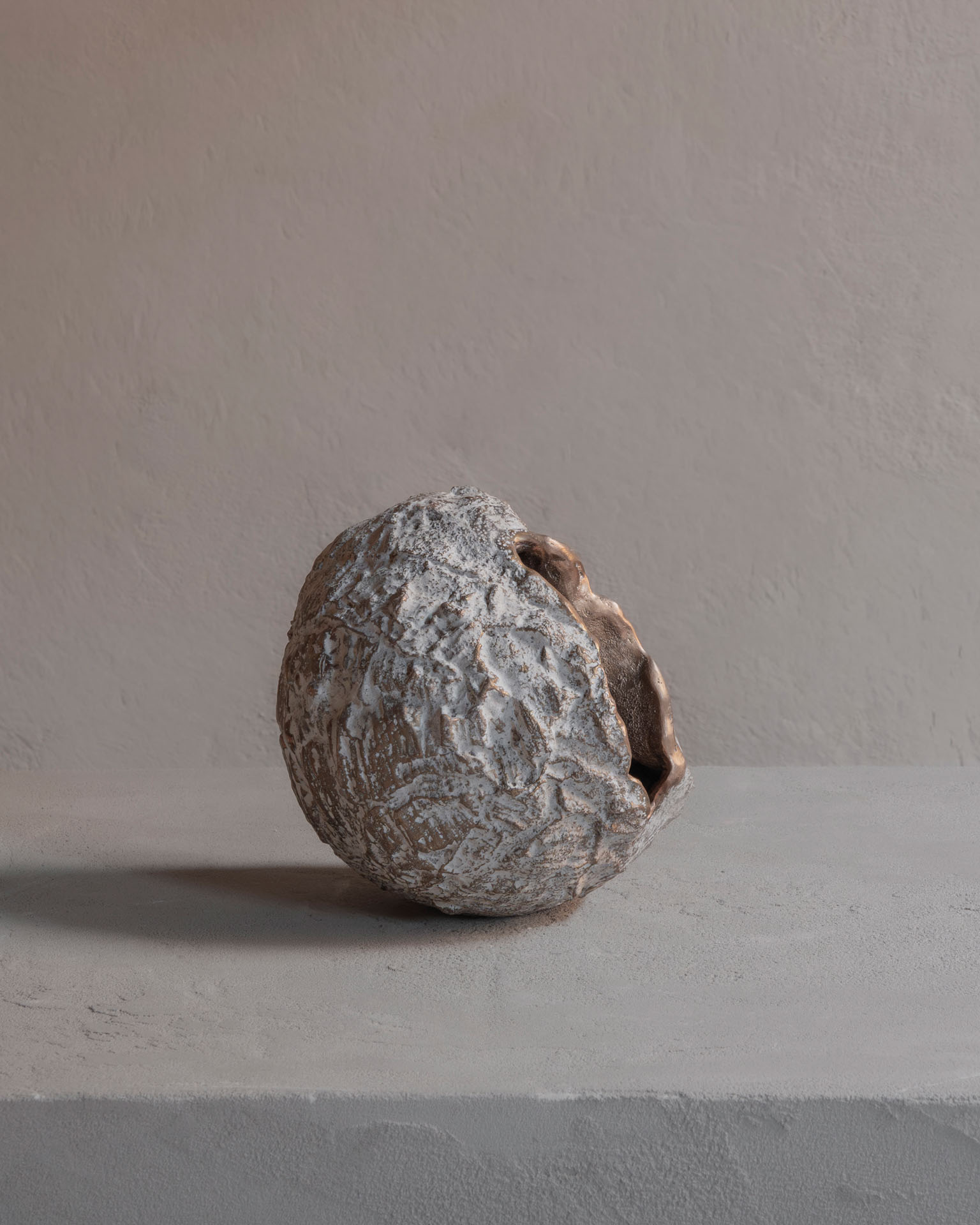
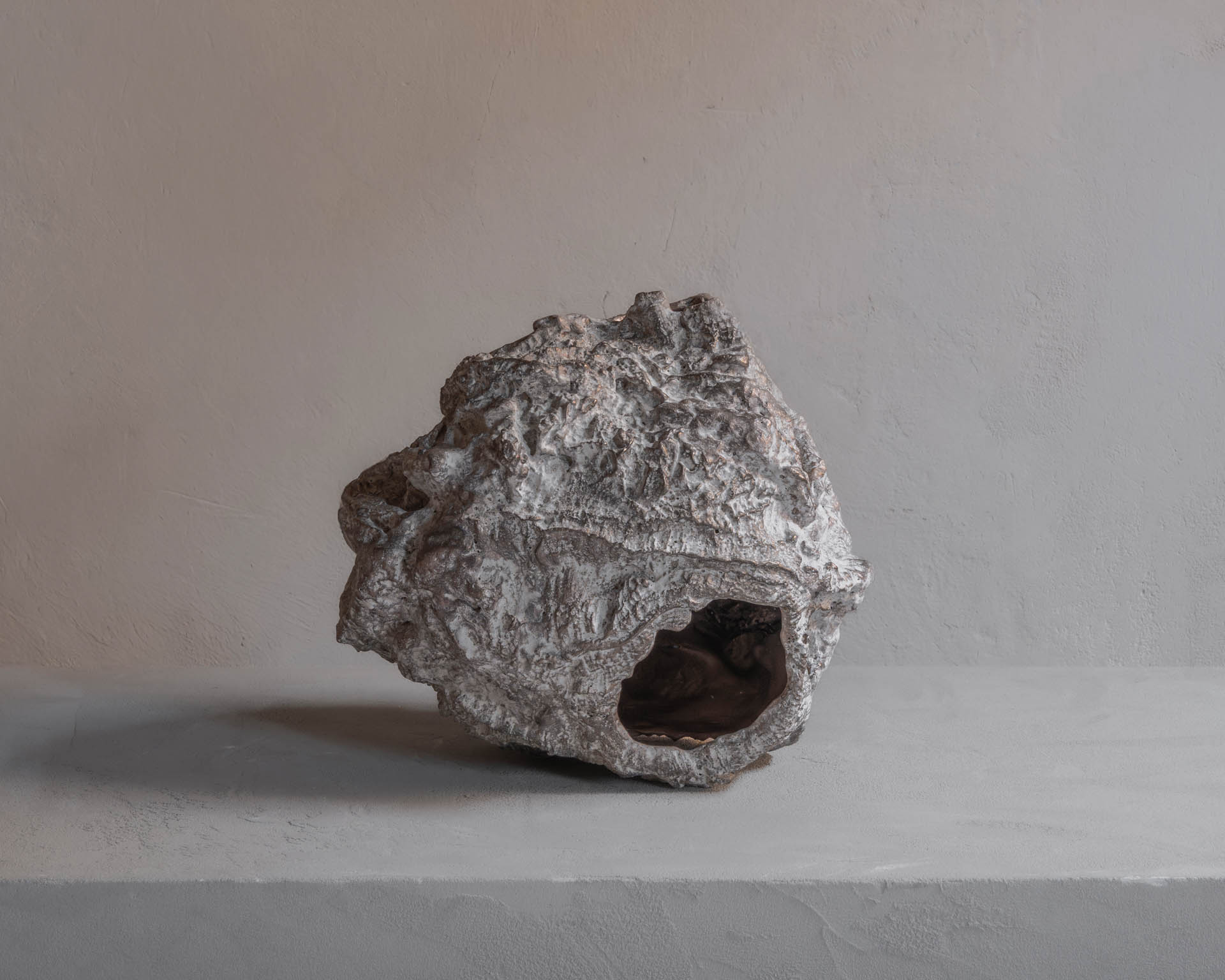
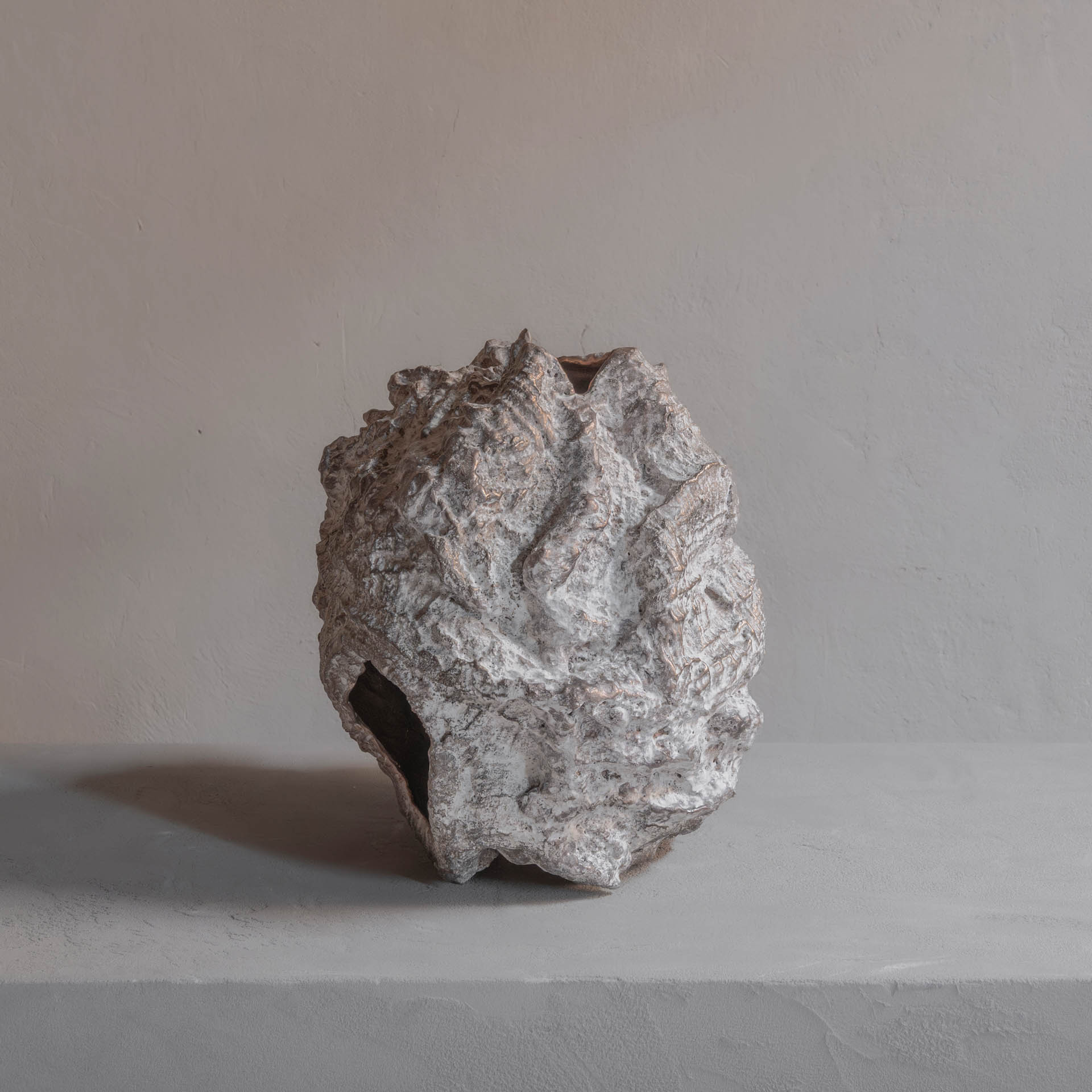
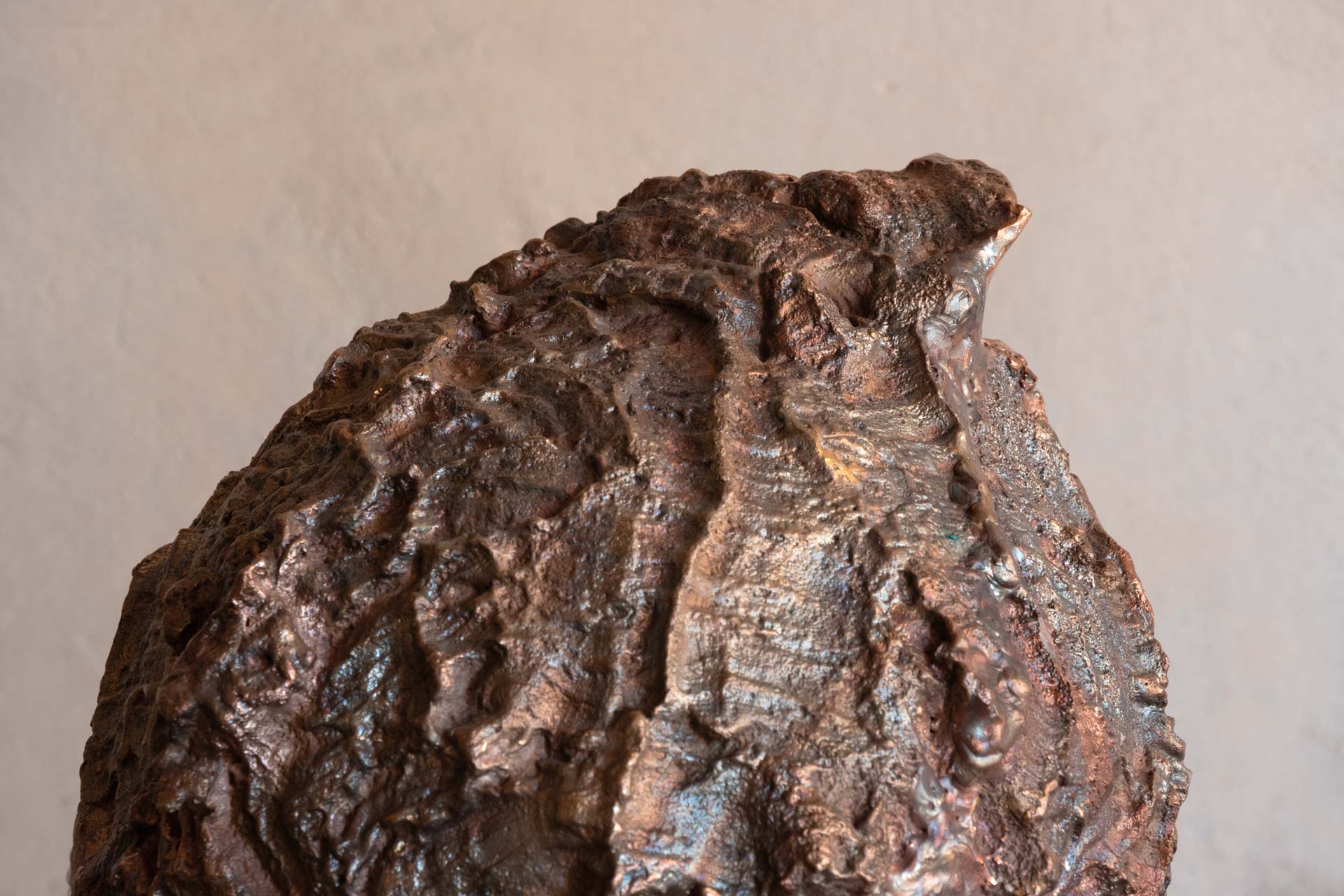
Focusing on nature’s impermanence, the Baumwelt bronzes explore the intersection of botanical memory and spherical form. The project, encompassing bronze, glass, and silicon, stems from the artist’s interest in the hidden connections among trees, recognising in their subterranean webs a metaphor for the invisible bonds that sustain life. Formed from negative imprints of ancient bark along Rome’s Via Appia Antica, these sculptures are distinguished by cratered surfaces, serving as protective shells for the void within. The surfaces reveal both beauty and original imperfections like scars and insect tracks, transforming the trees into enduring, silent sentinels.
For the renowned Swedish botanist Carl Linnaeus (1707–1778), monumental classification transcended mere identification. Linnaeus argued that naming was the fundamental key to true understanding; as he famously stated: Nomina si nescis, perit et cognitio rerum – if you know not the name, the knowledge of things perishes. Adopting a similar approach, Thüngen-Reichenbach identifies each sculpture by the precise Latin nomenclature of the tree from which the impression was taken, meticulously recording the trunk’s dimensions, species, and origin. Each sculpture, corresponding to a unique living organism, becomes a microcosm in its own right: a vessel for the memory of its energy, tension, and breath.
Every tree narrates its own long history, a journey through time, the elements, and human intervention. The trunk is a living archive embodying the stratification of time, where every ring and irregularity in the bark bears witness to the plant’s resilience. Here, the “scar” is transformed into an aesthetic testament to strength. With textures reminiscent of meteoric surfaces, these works transcend their botanical origins to carry a universal message: a meditation on the profound precariousness of all life.
The artworks in Indentations of Memory possess a light, organic movement set against an earthy, compact texture that reflects their intrinsic bond with the ground. The artist’s effort to “dematerialize” the sculpture introduces a deliberate discontinuity into the matter, evoking a sense of lightness and motion. As an impressionist sculptor, Thüngen-Reichenbach embraces the legacy of Medardo Rosso, rendering the solid ephemeral through the shifting effects of light. Thus, she seeks out distortions and unexpected angles, challenging the viewer’s perception of what a sculpture can, and should, be.
Eleonora Raspi, Ph.D
KALPA Gallery
BAUMWELTEN
Permanence. Indentations of memory
solo exhibition at KALPA ART LIVING GALLERY
VOLTERRA