1 Settembre 2025
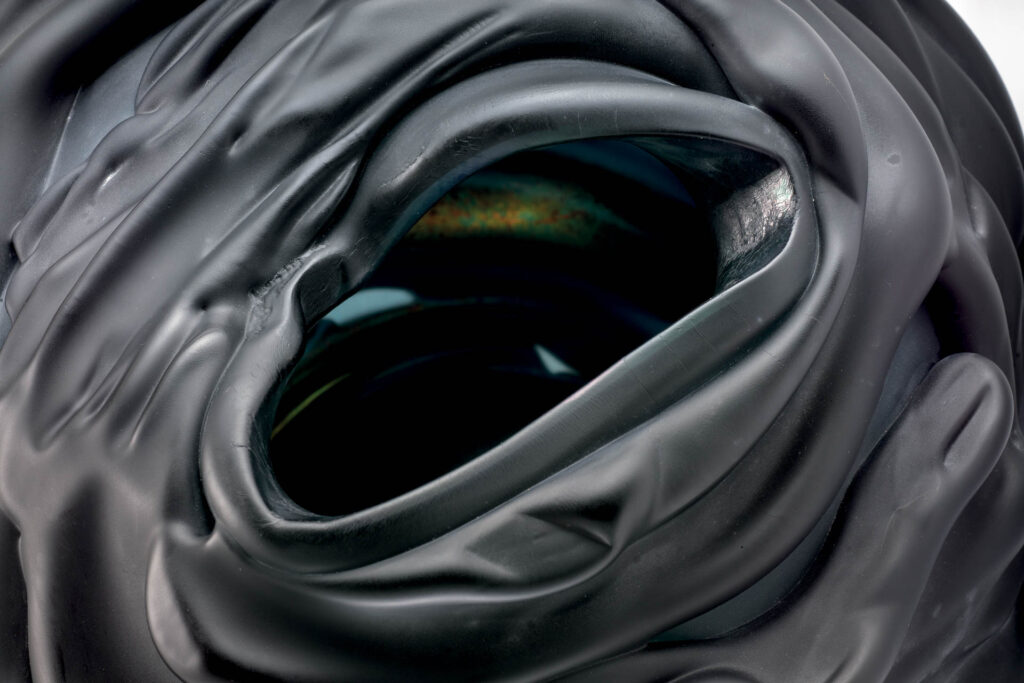
IL SOFFIO – Glass – Venice
Cosmologies of Light and the Invisible
In the series dedicated to Murano glassworks, Janine Thüngen-Reichenbach takes her exploration a step further: no longer merely memory imprinted in the material, but the possibility that the material itself might become an apparition, a breath, a luminous epiphany. While in the previous sections of the BAUMWELTEN project silicone and bronze functioned as archaeological tools of the trace—the epidermal imprint of time, a fossil relic of the organic—here glass introduces a different dimension: that of transfiguration.
Glass is sand, fire, breath. It is a body born from the combustion of primordial elements and which, in its ambiguous nature, belongs simultaneously to the mineral realm and to that of immateriality. Transparent and sharp, fragile and potentially eternal, it embodies the conjunction of opposing extremes, a duality that runs through the artist’s entire poetics: empty-full, interior-exterior, death-permanence, visible-invisible. It is no surprise that Janine chose Venice (where she lives part of the year in a fertile archaeological-industrial space converted into a loft) and the island of Murano—liminal places par excellence, suspended between land, water, and sky, cultural interconnection, ritual, and alchemy—to give form to this new metamorphosis of the BAUMWELTEN cycle. Venice, on the other hand, is symbolically generated by an “inverted forest,” the matrix of the transfiguration of a utopian and visionary dream, which then materialized into something sublime.
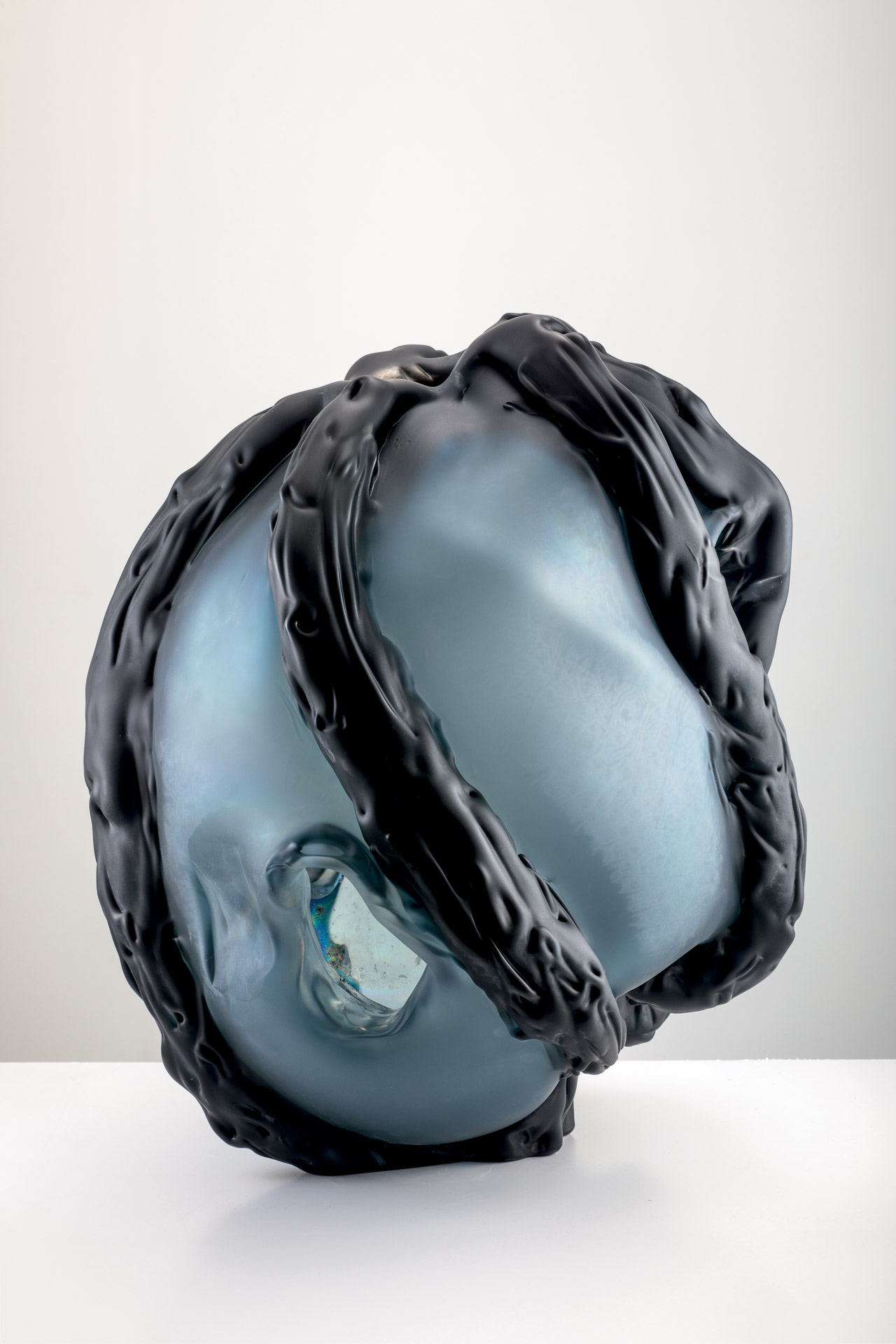
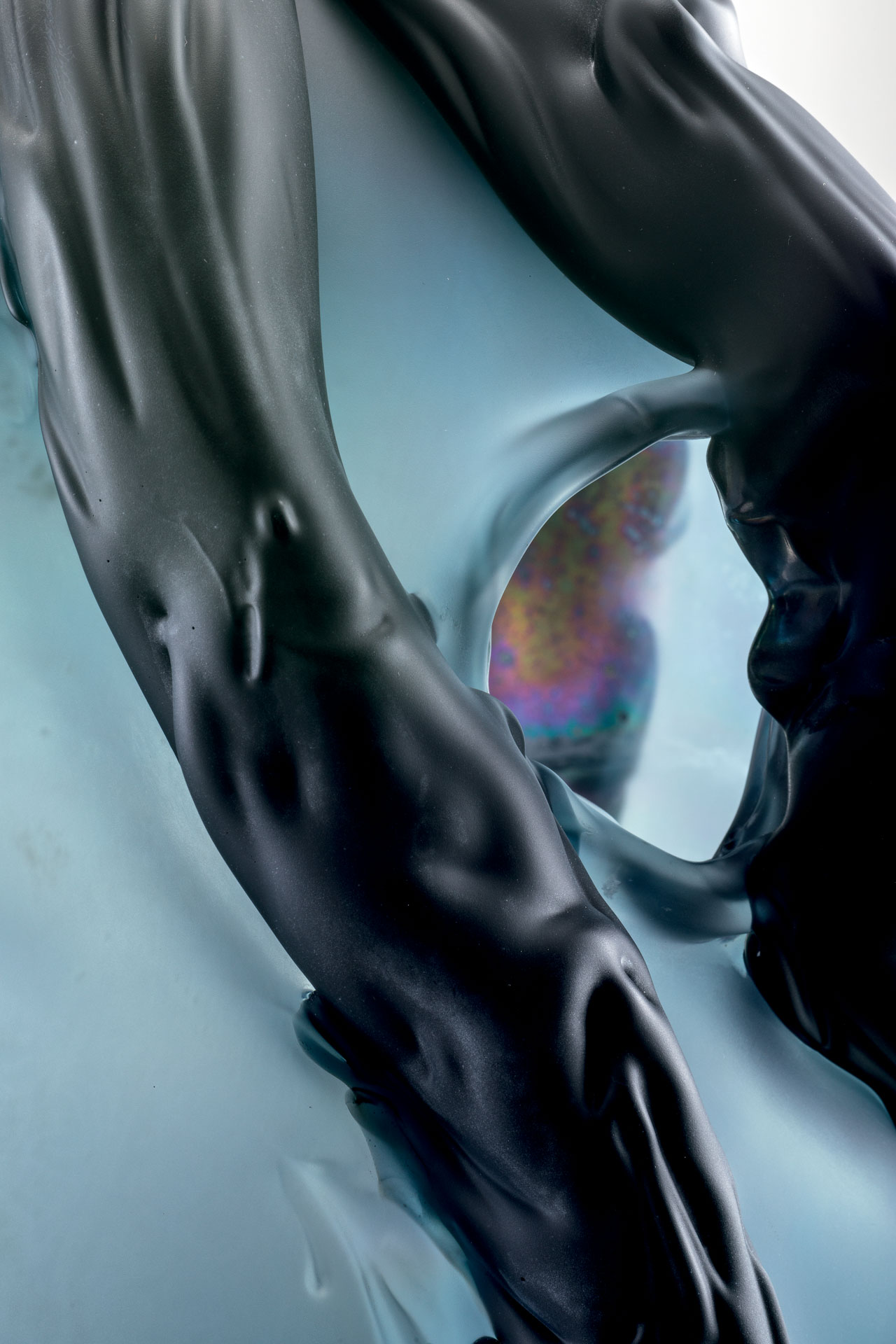
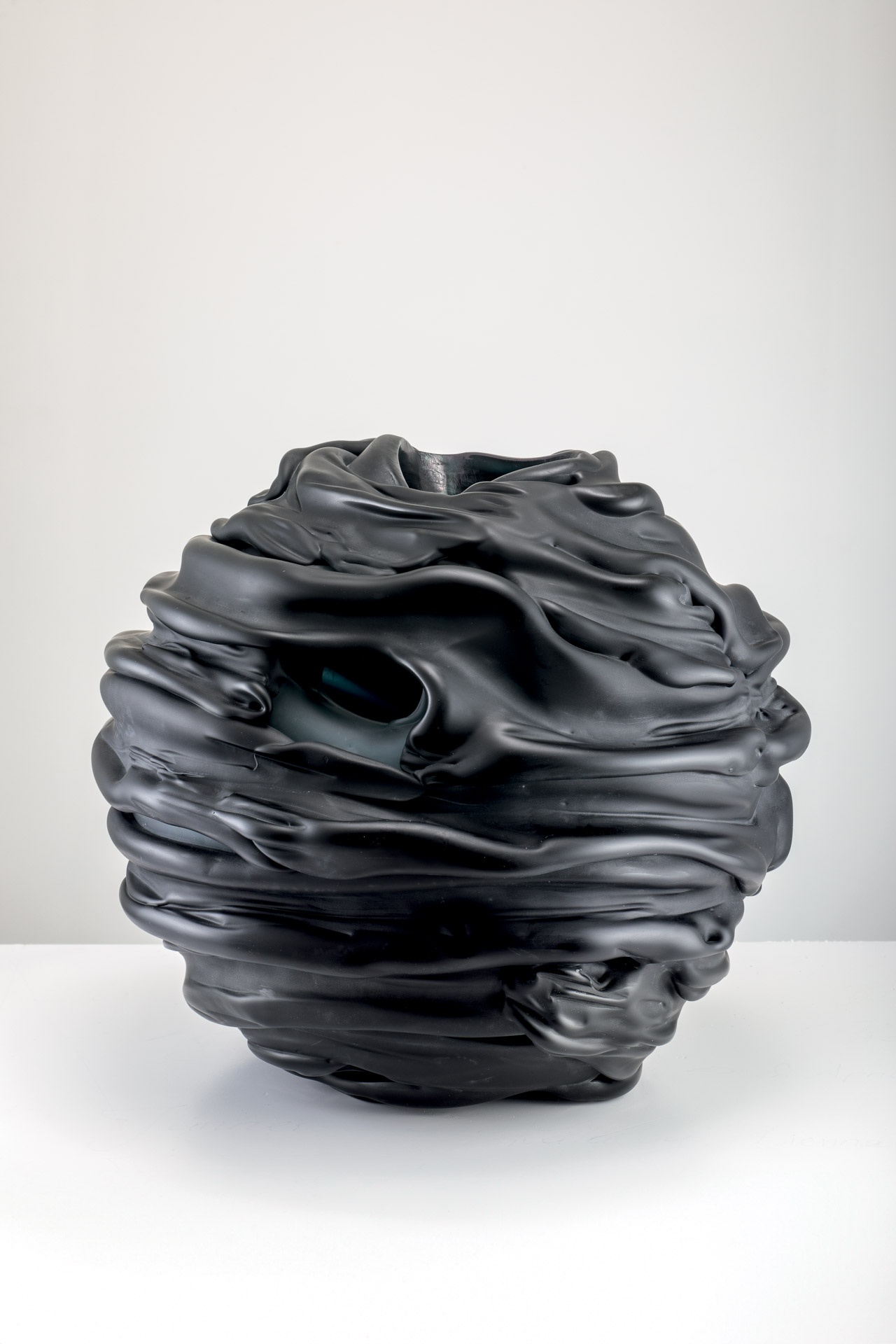
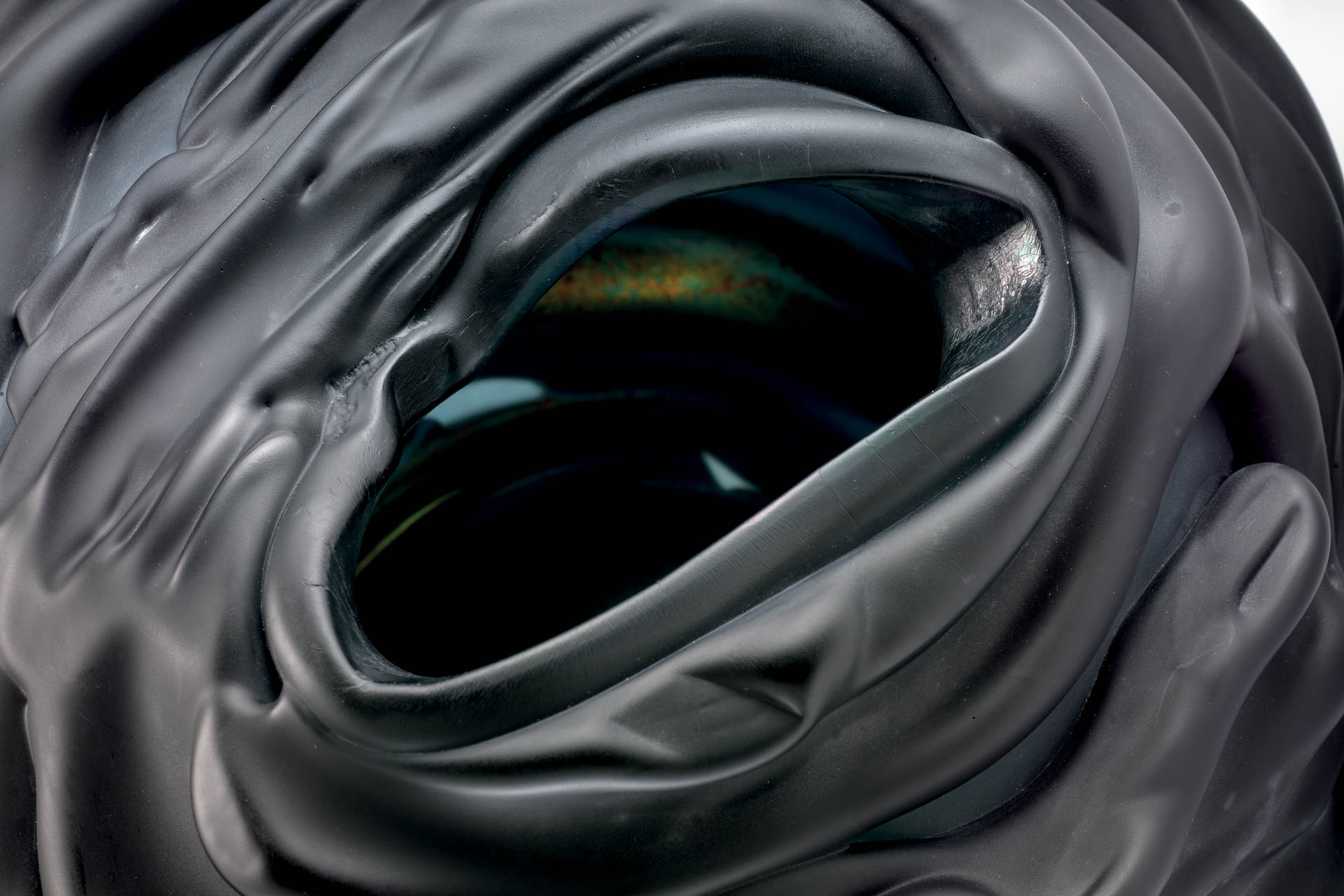
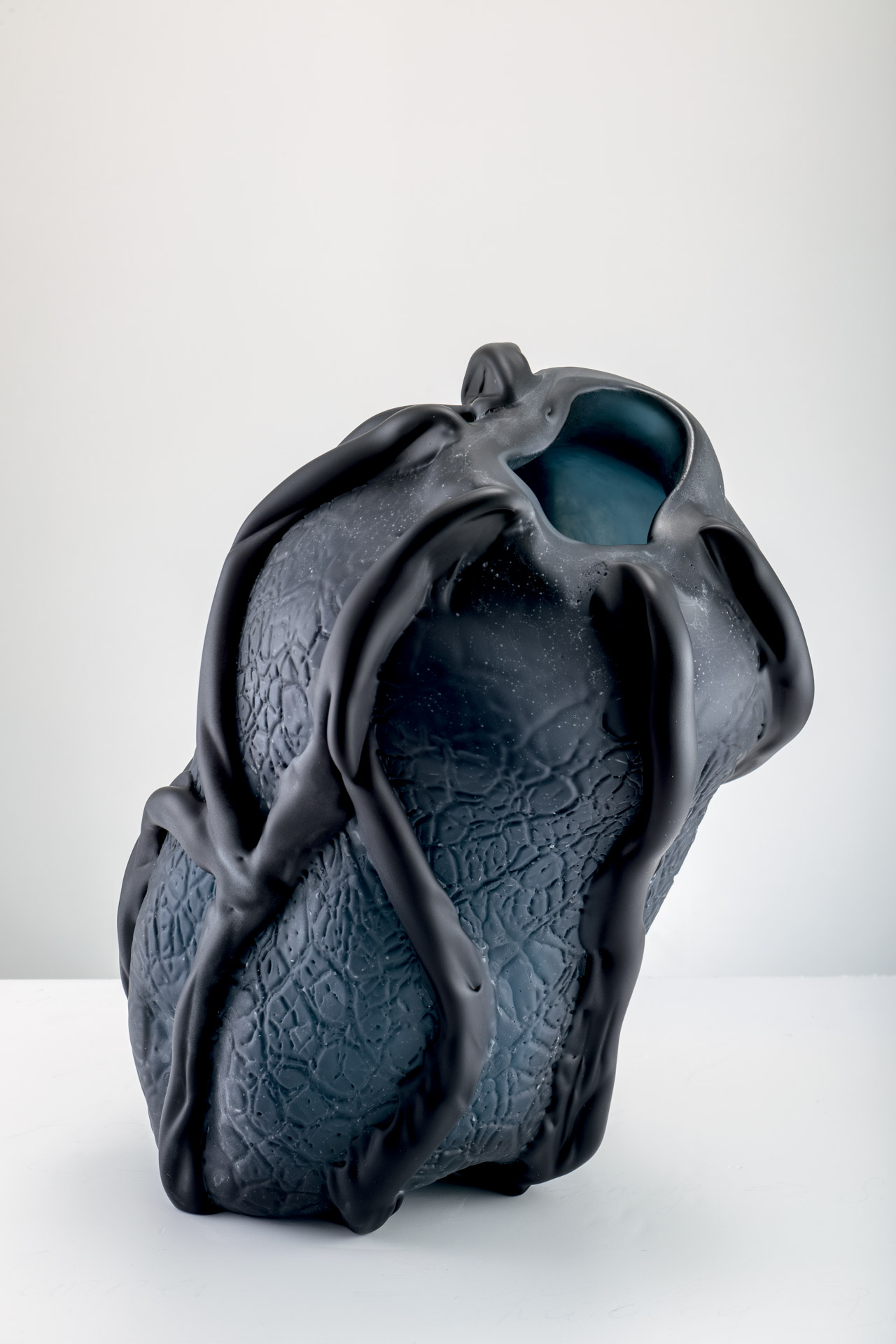
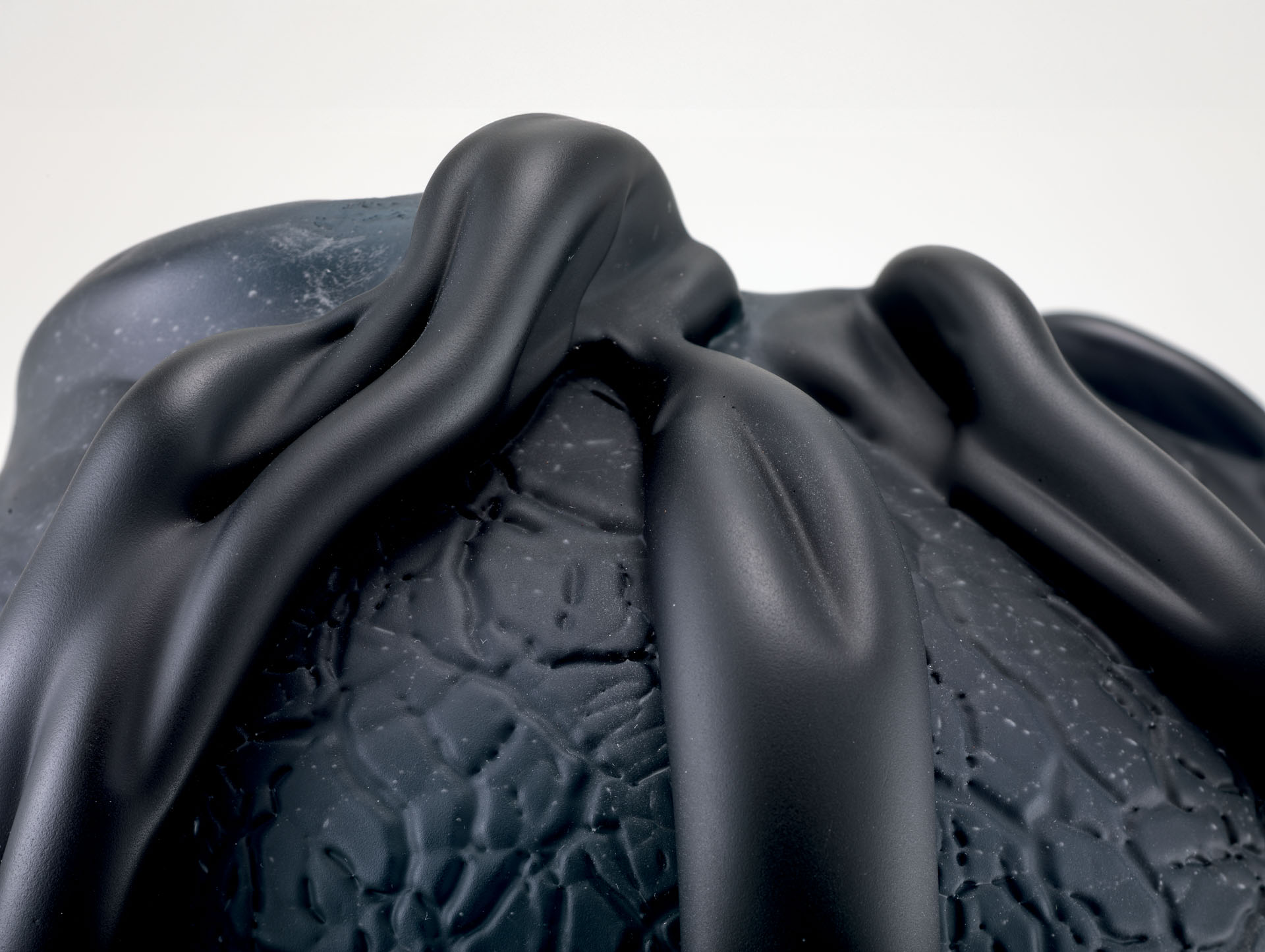
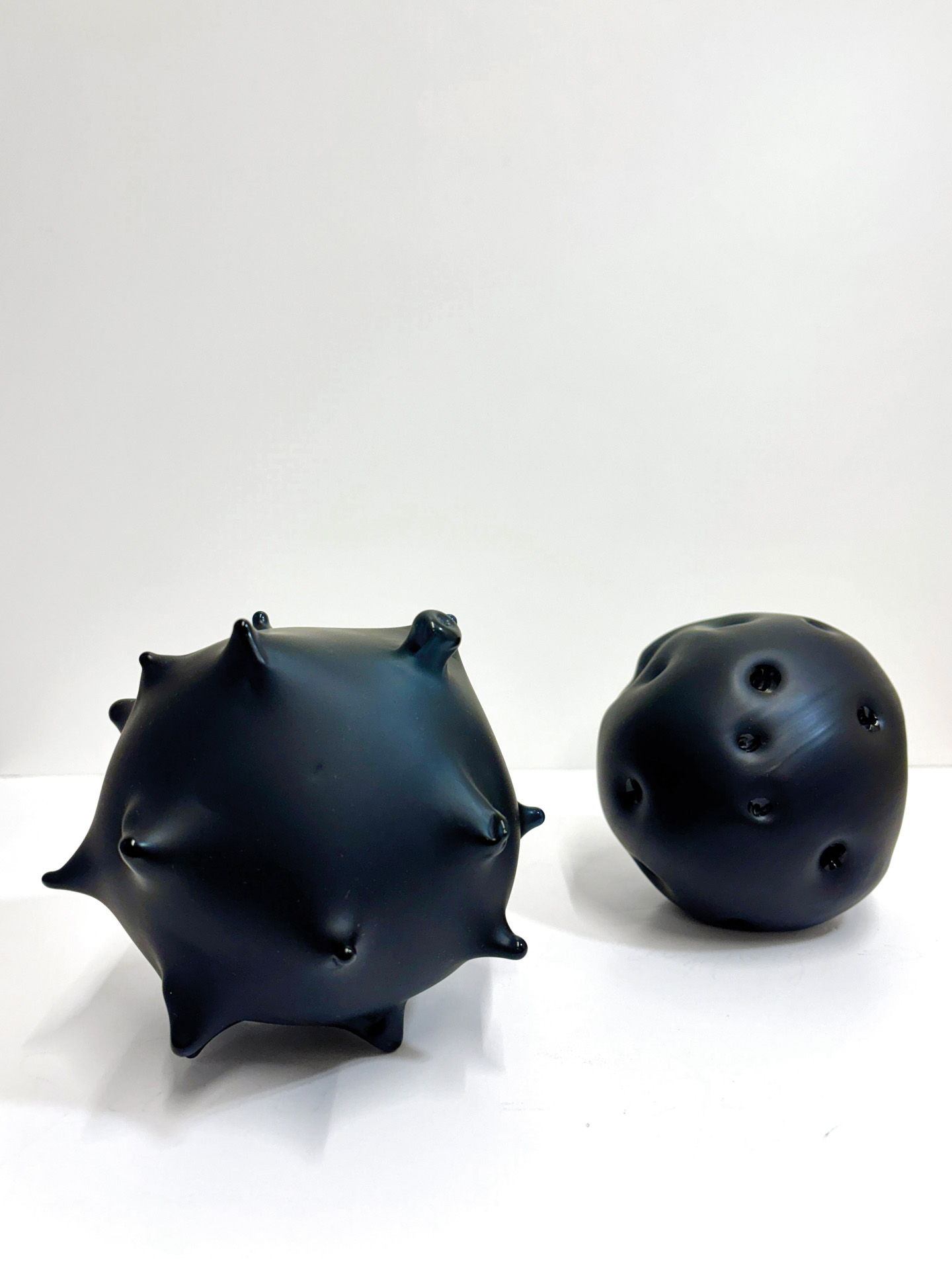
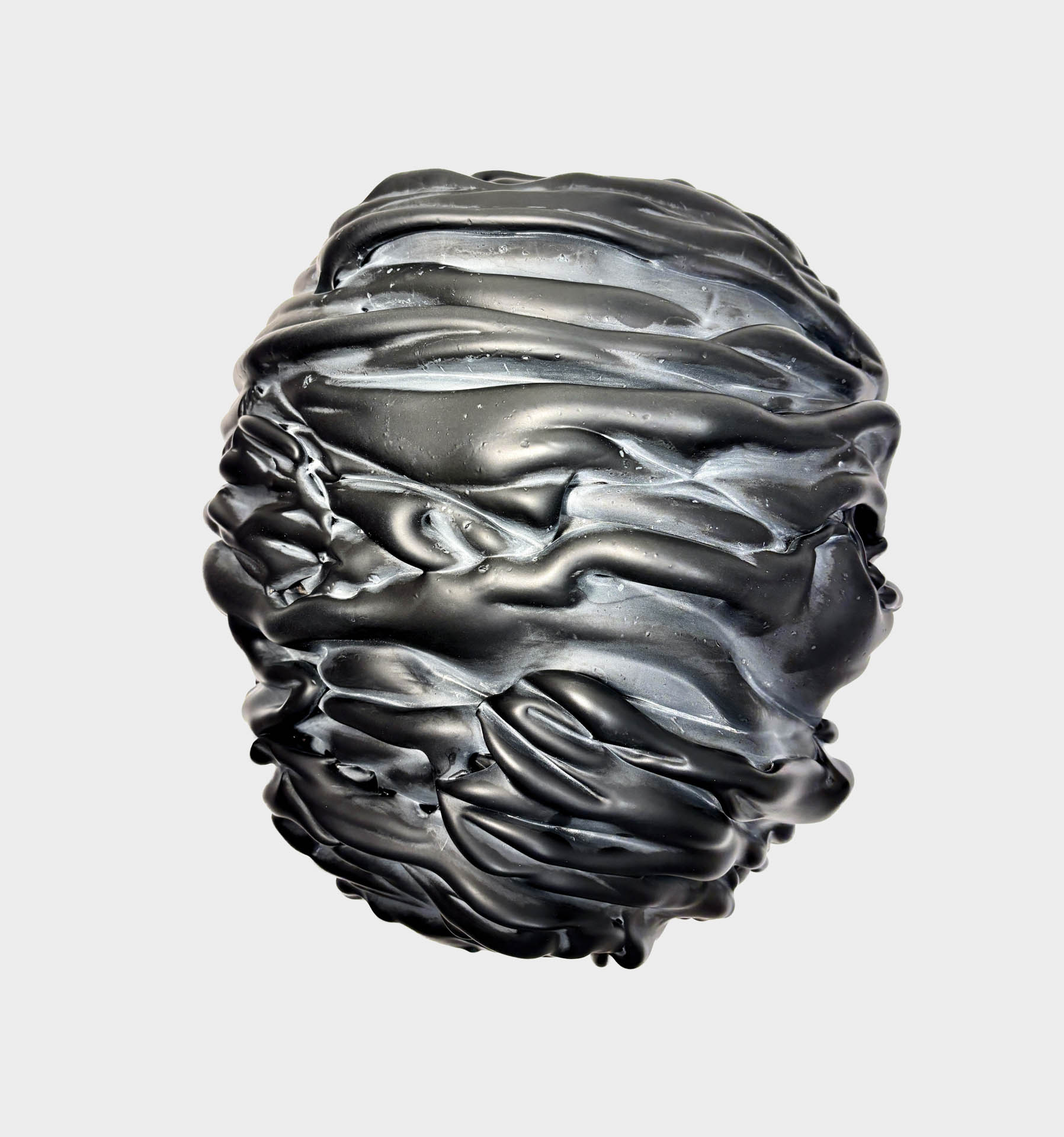
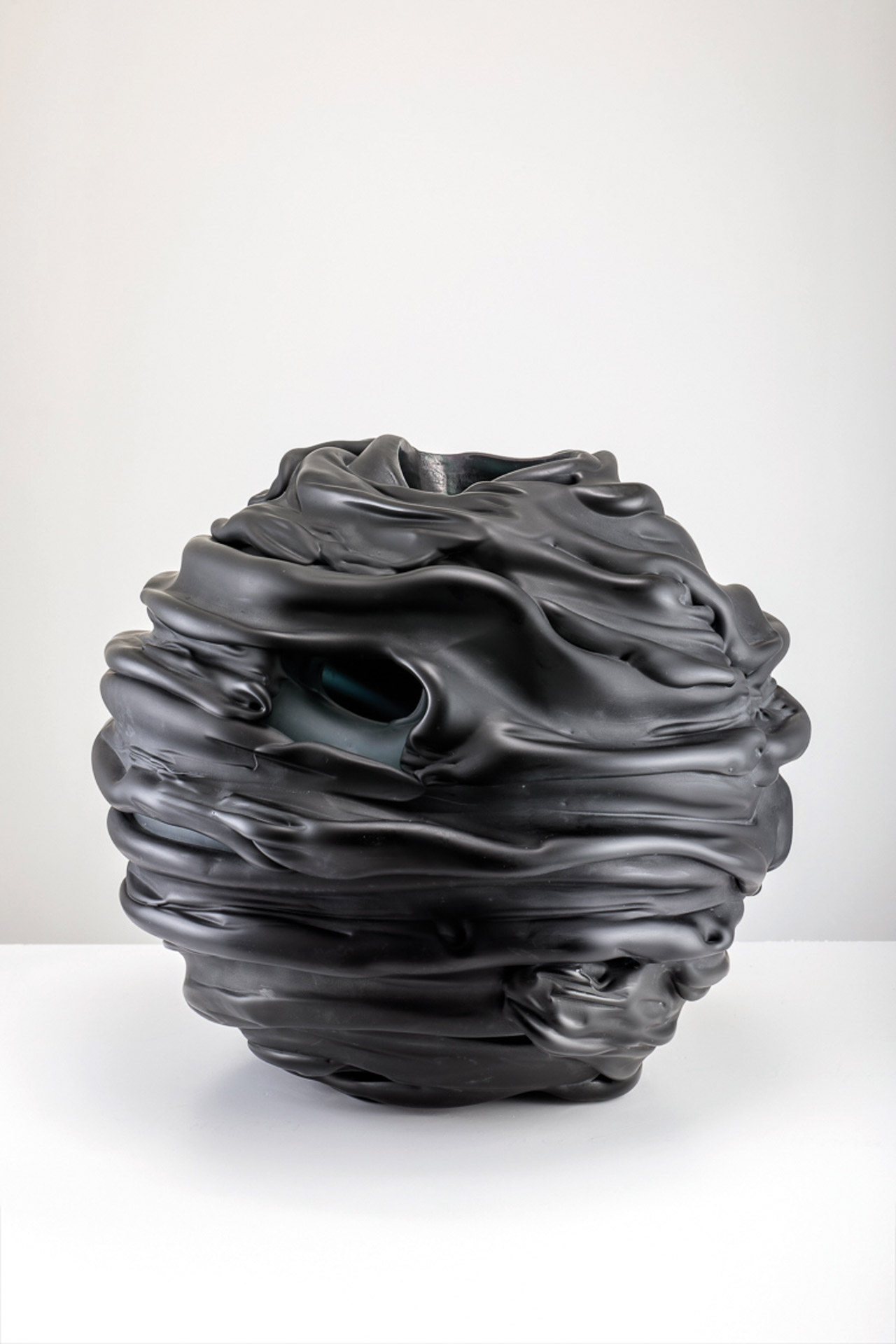
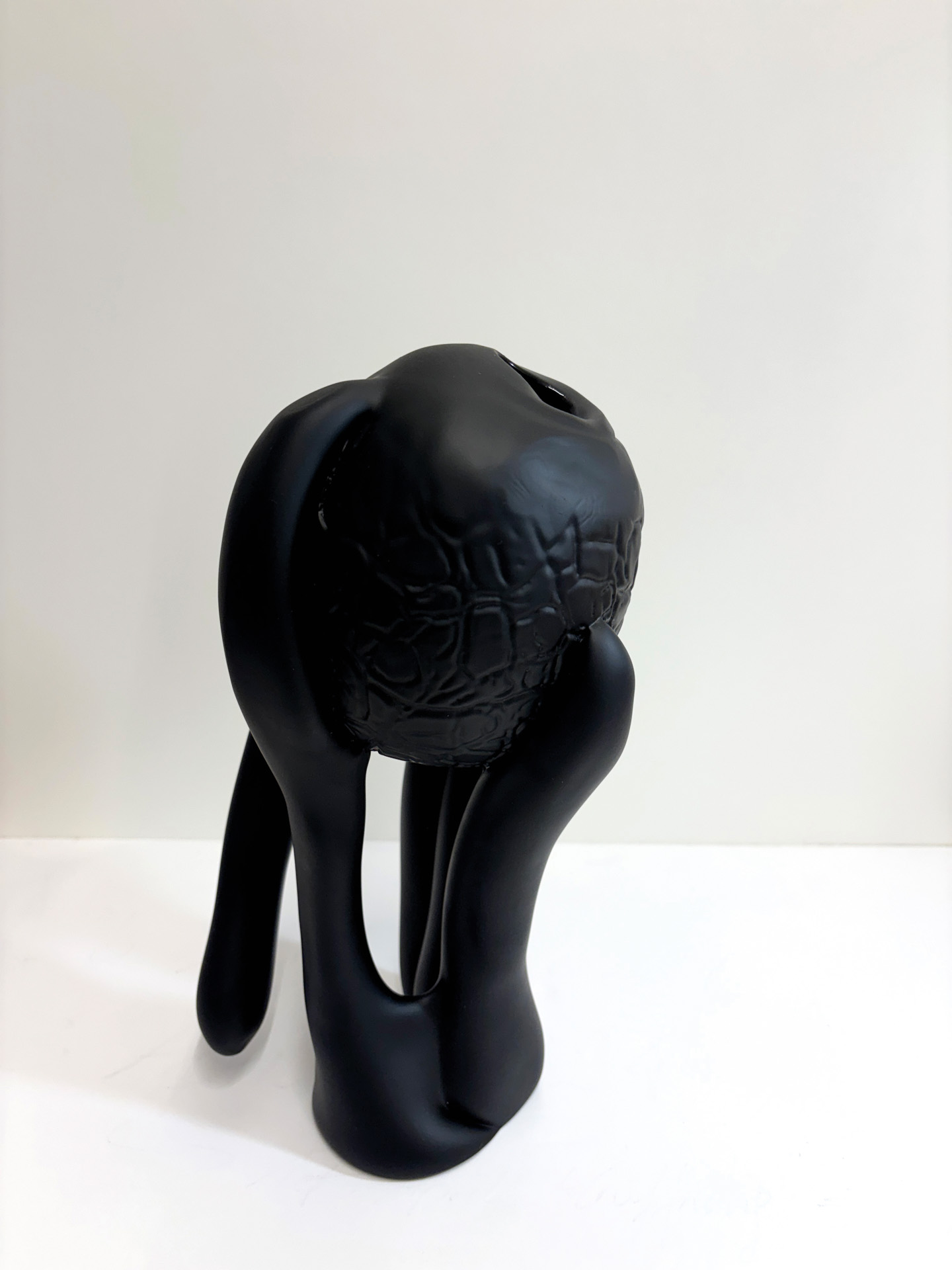
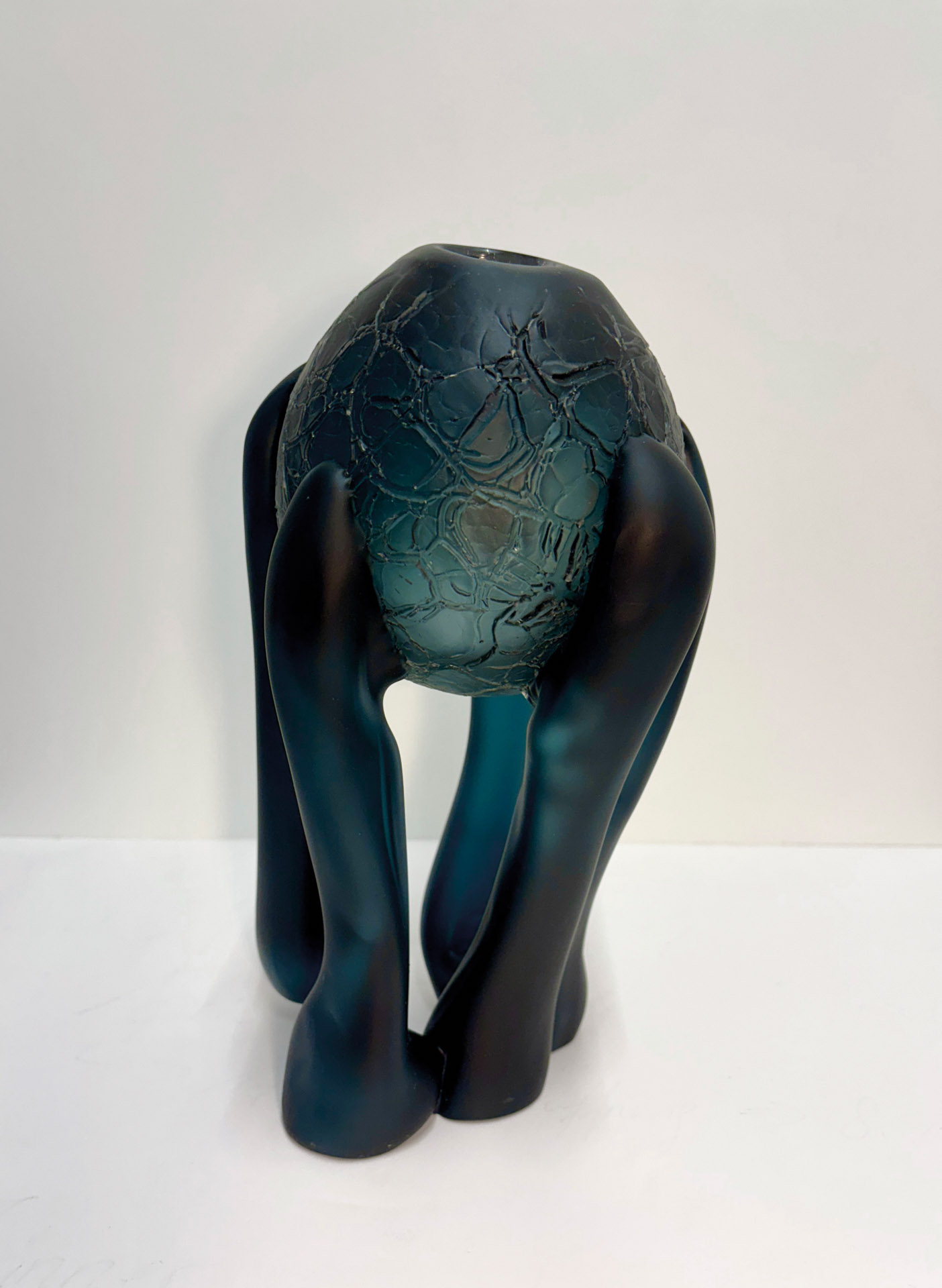
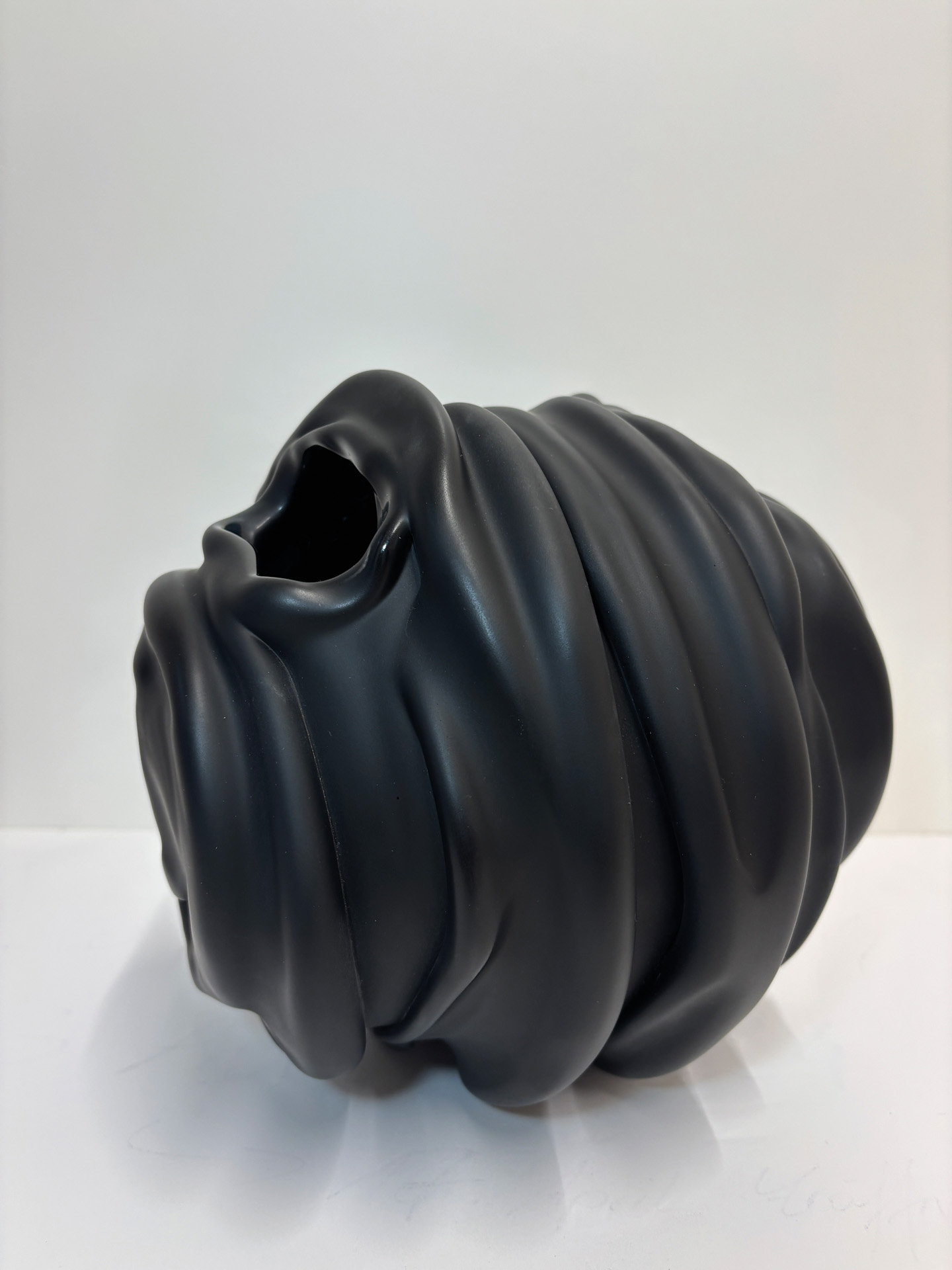
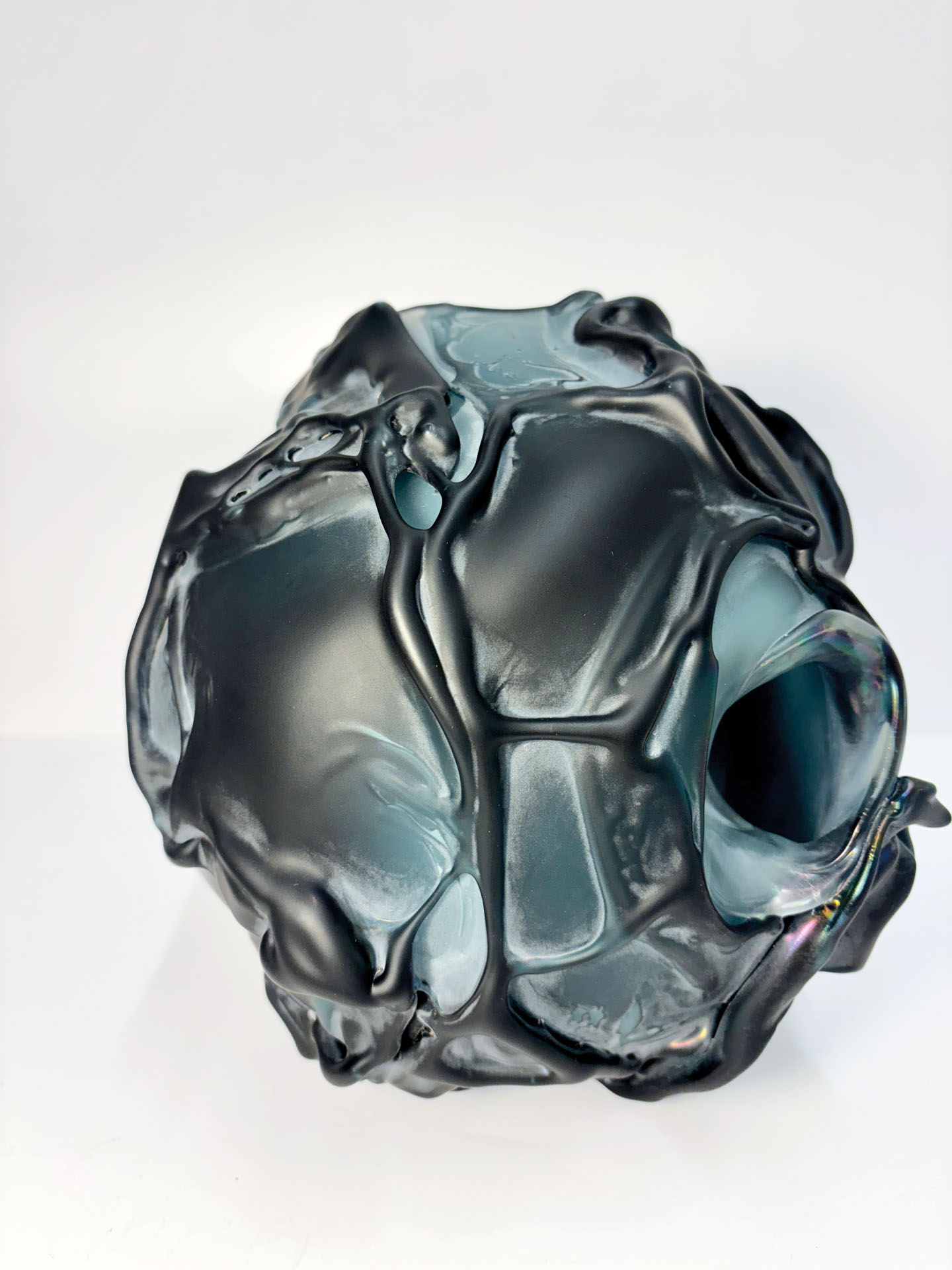
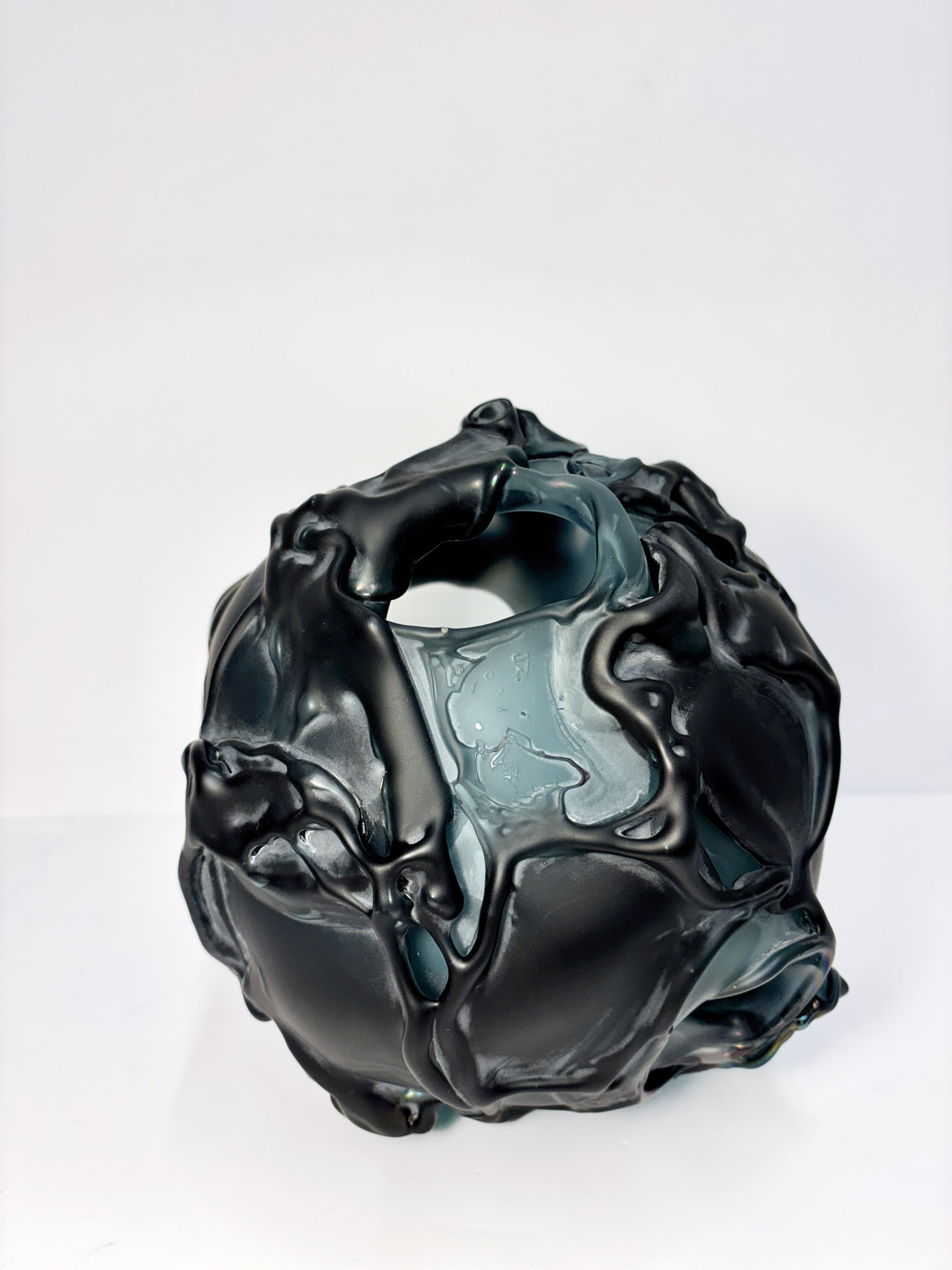
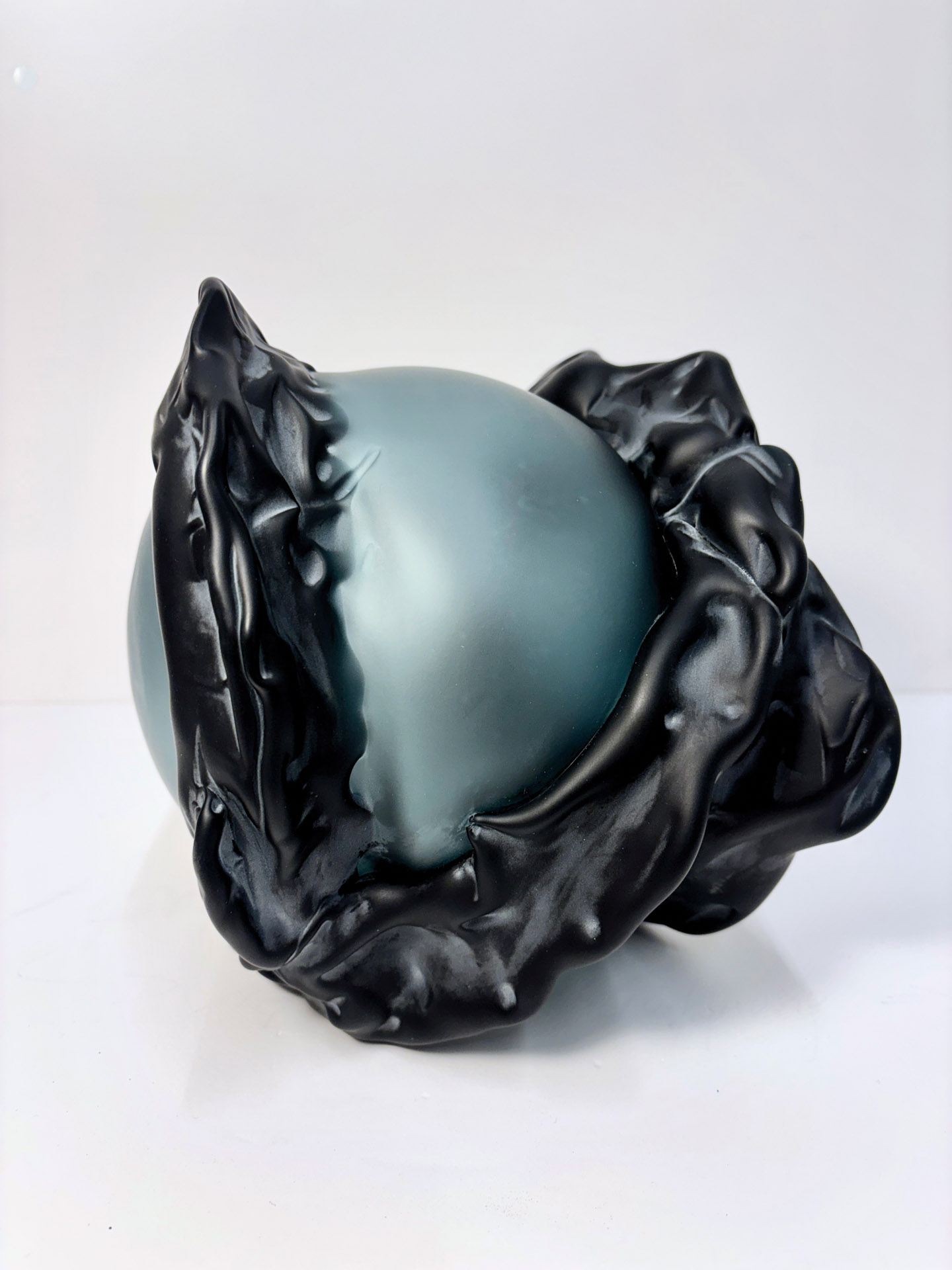
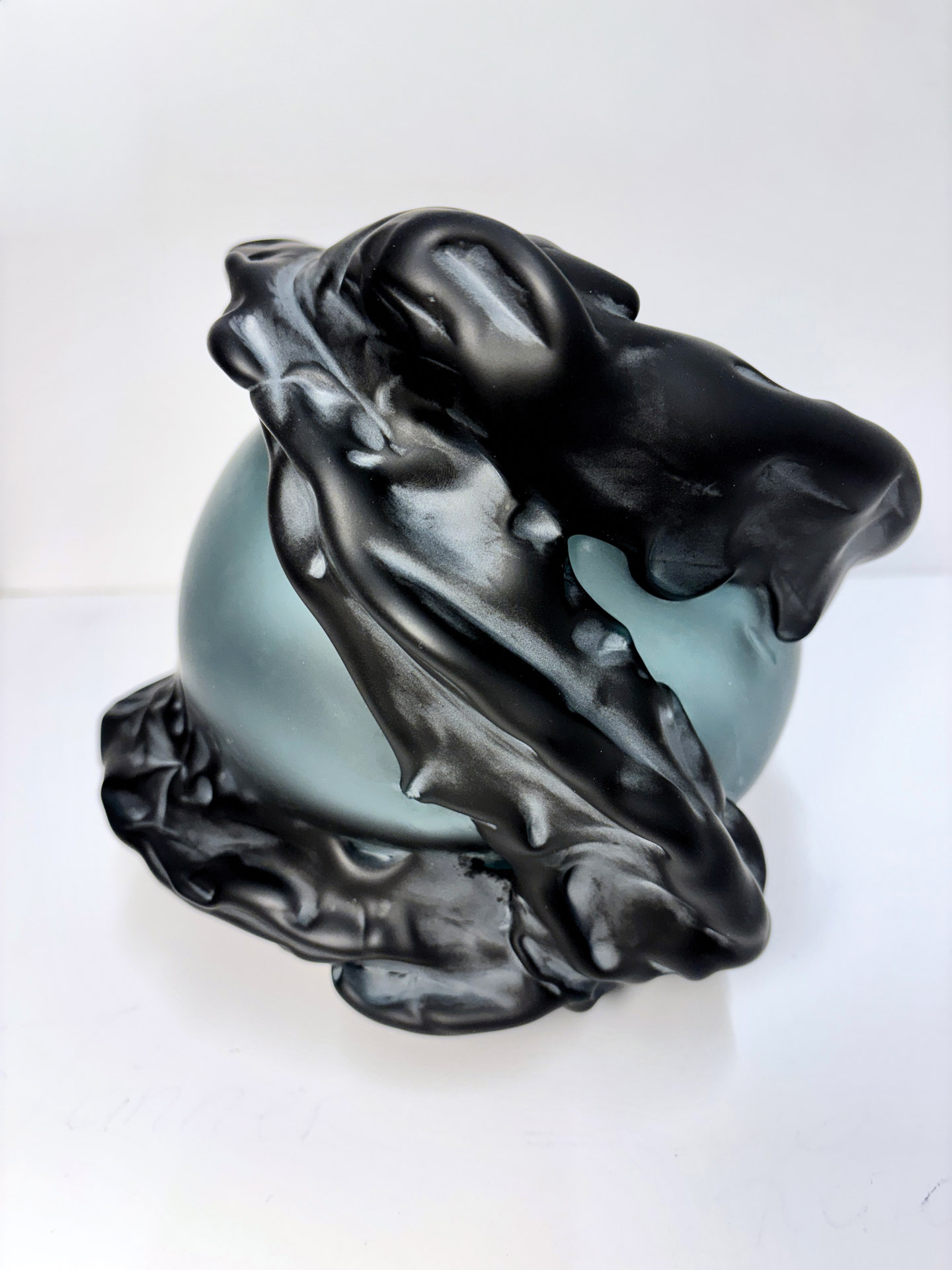
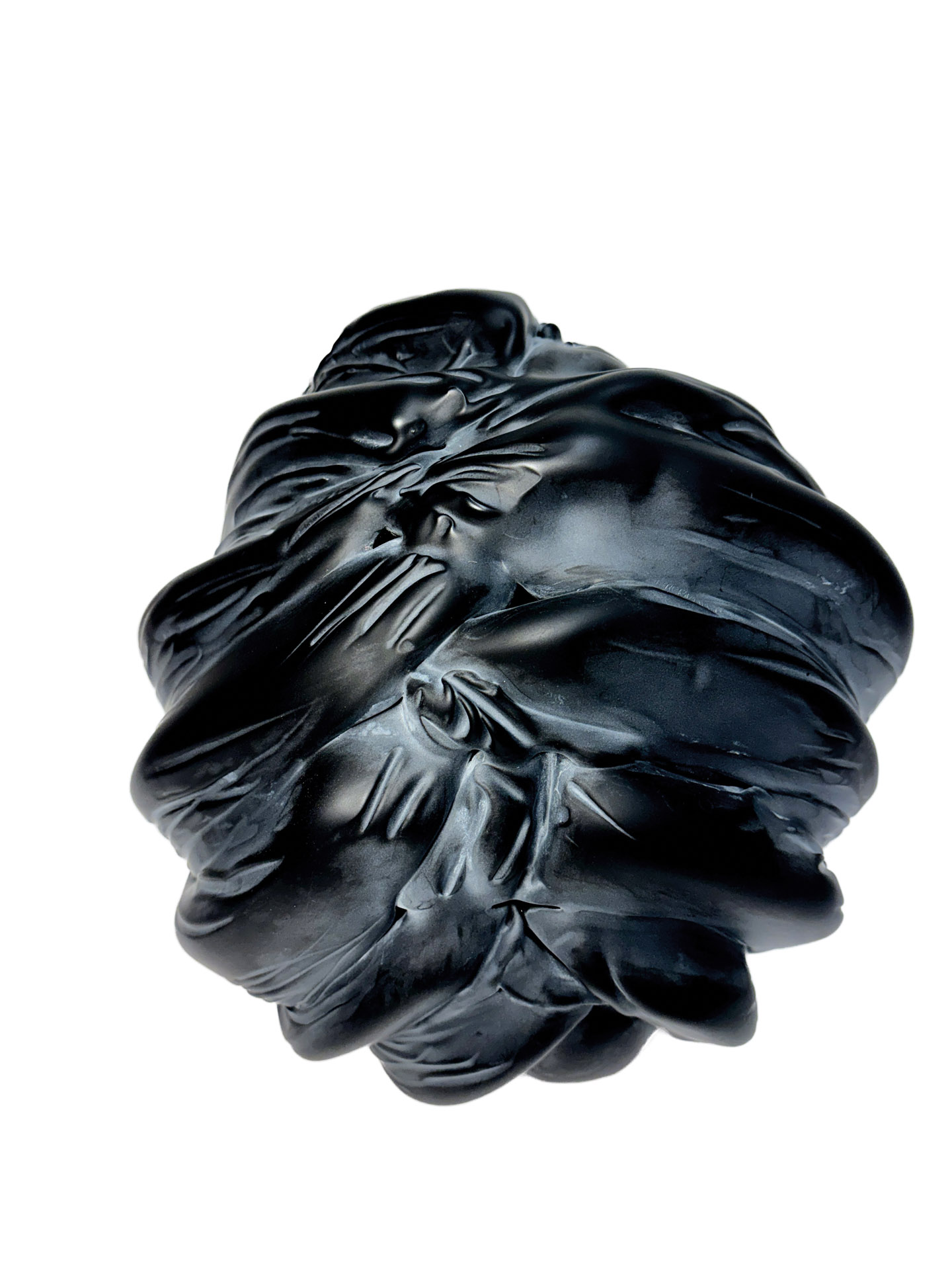
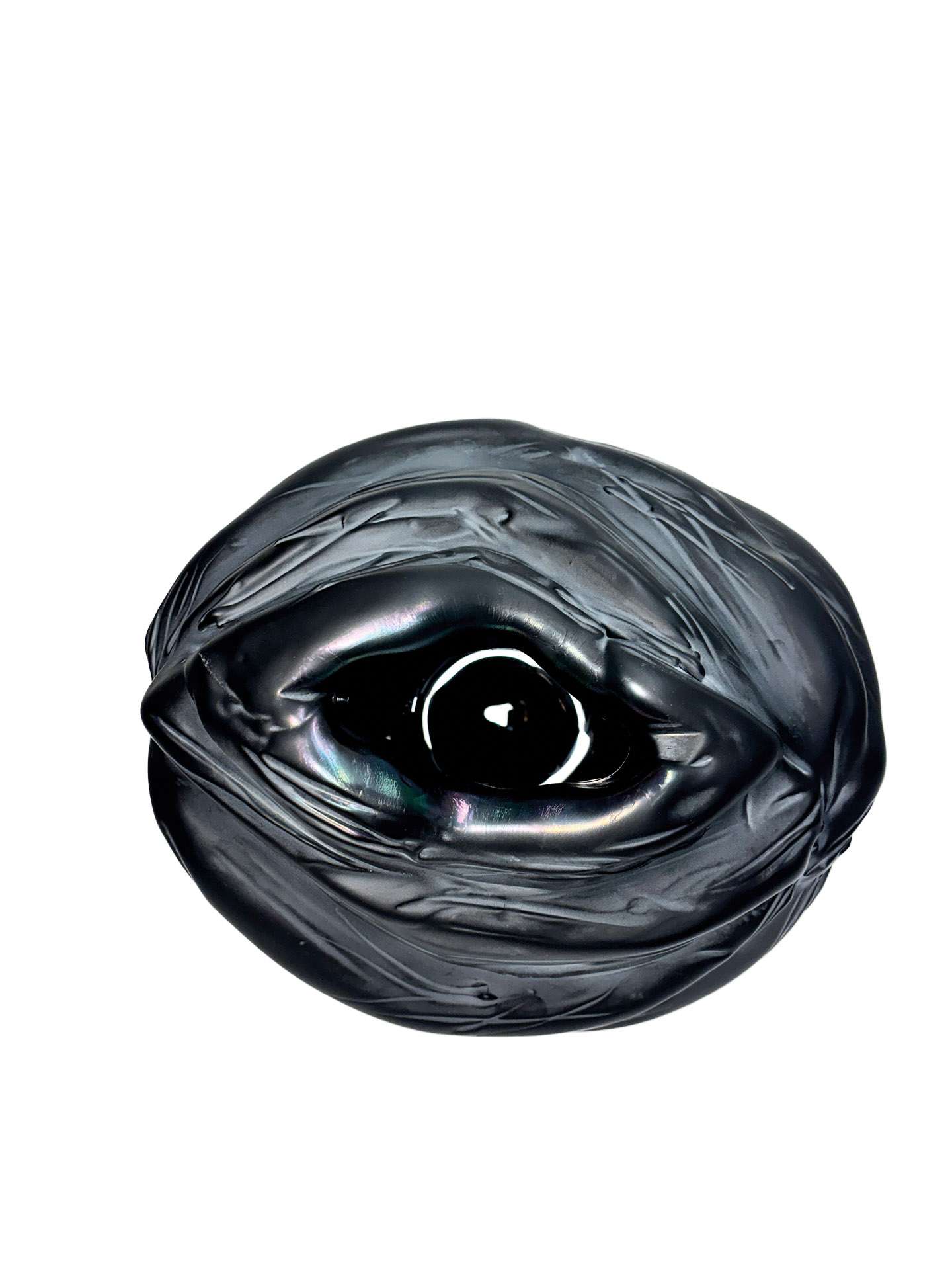
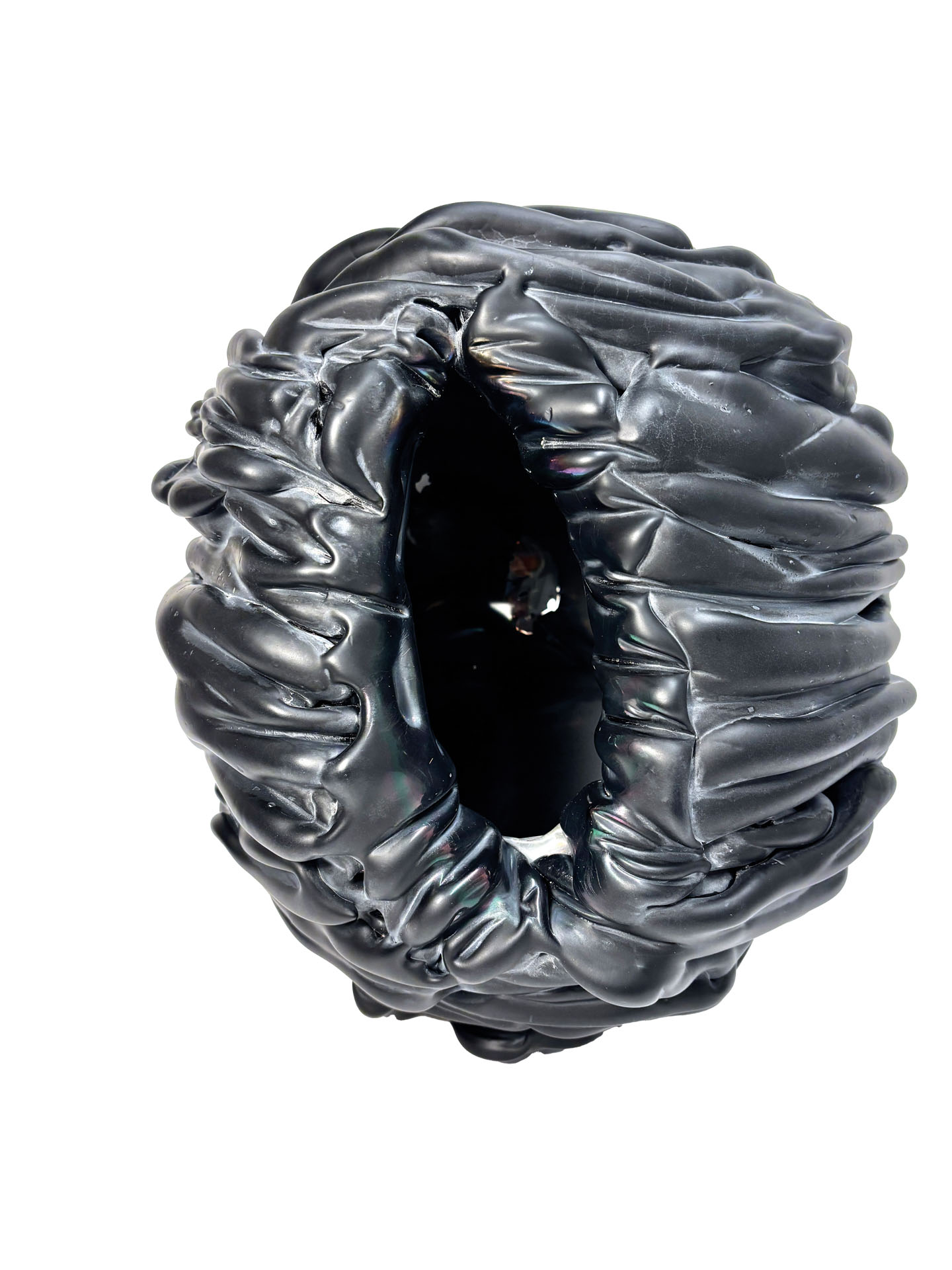
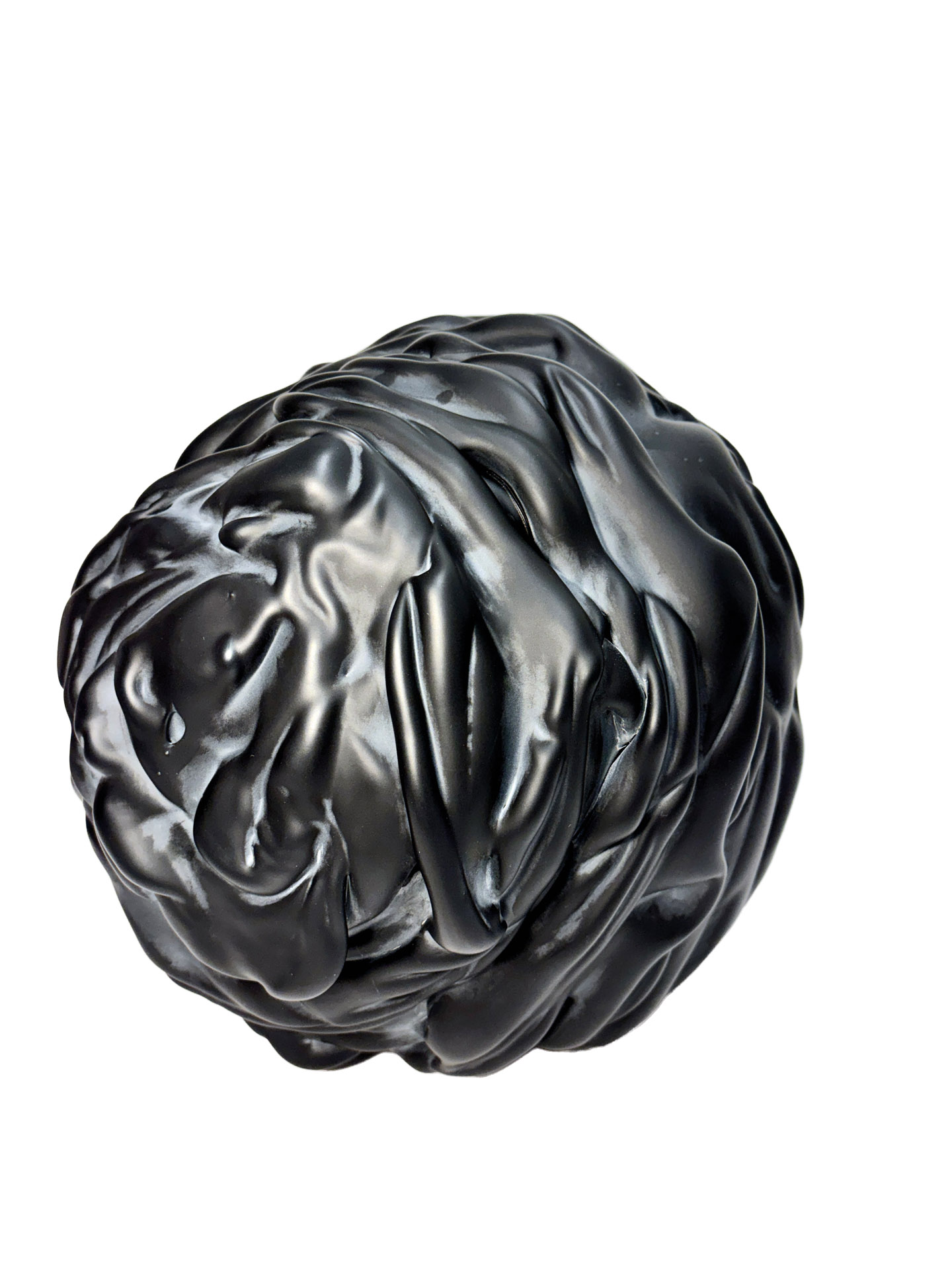
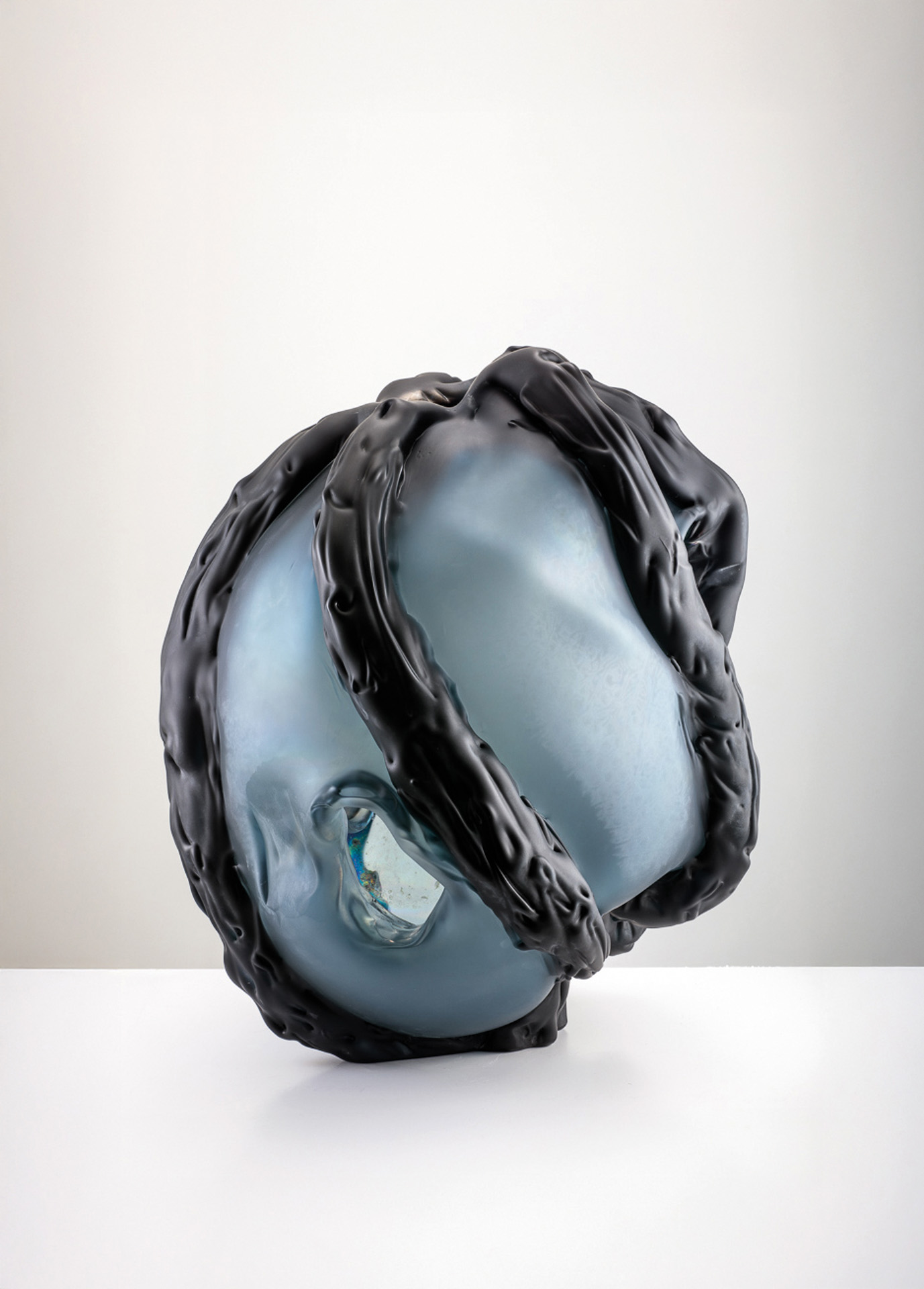
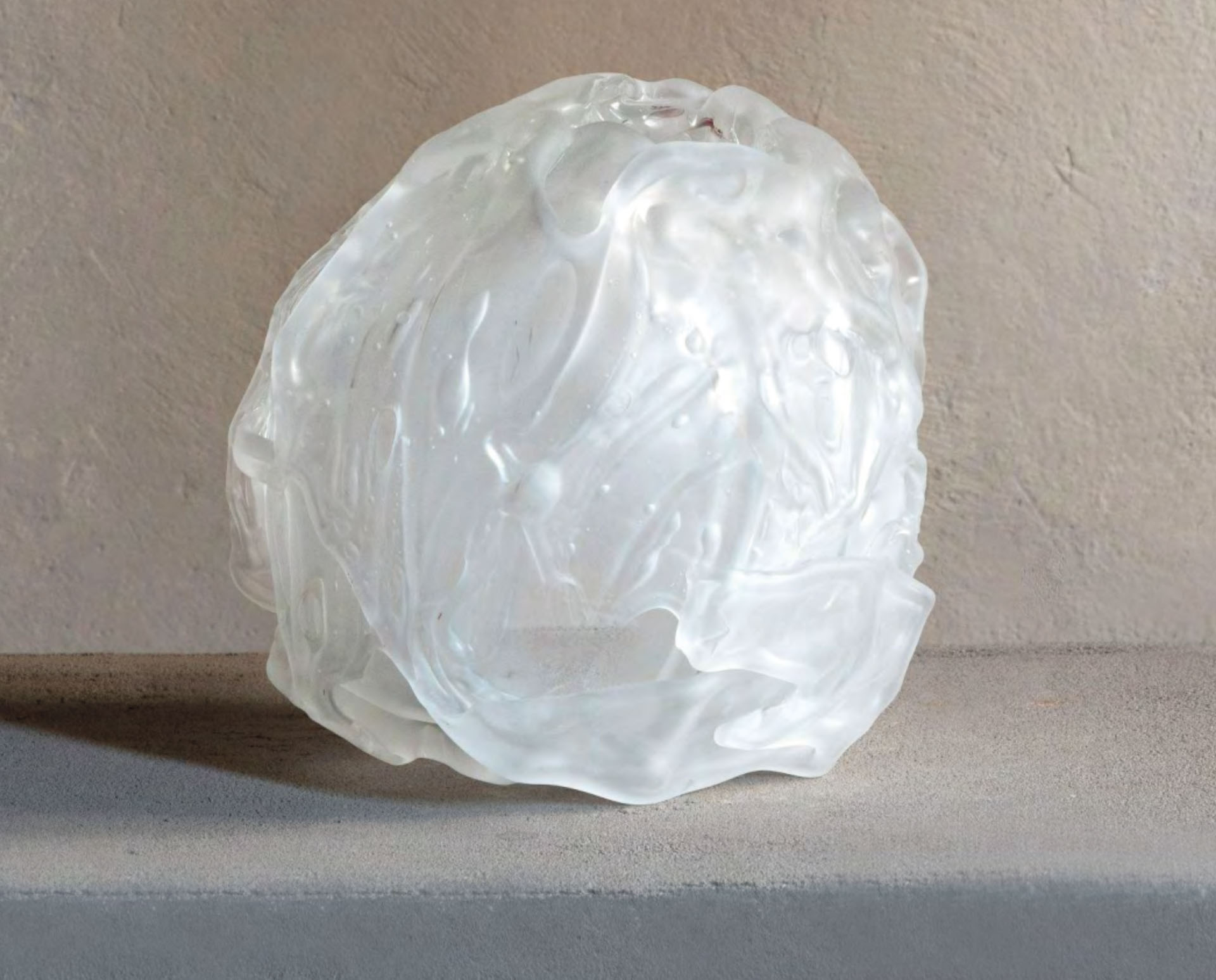
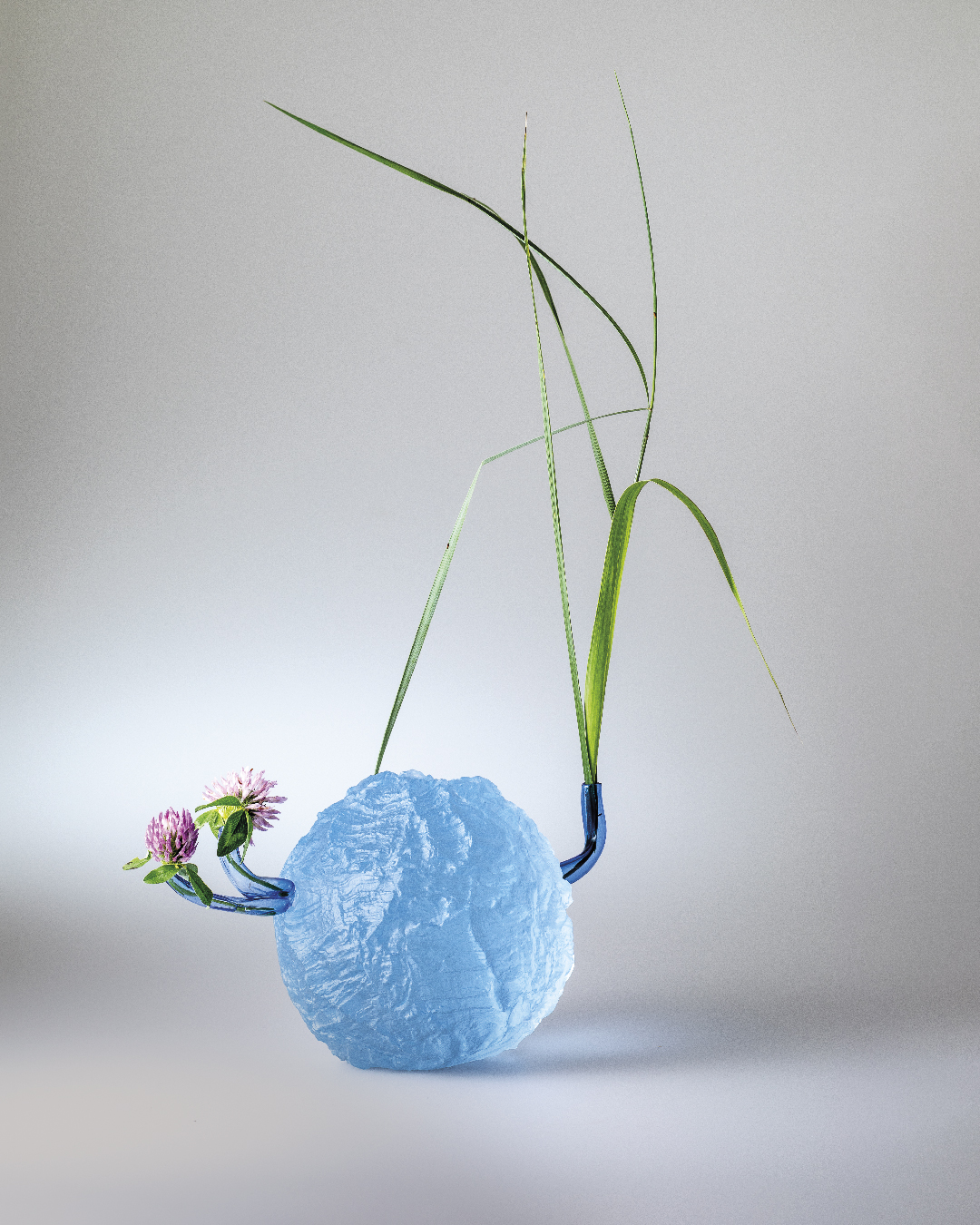
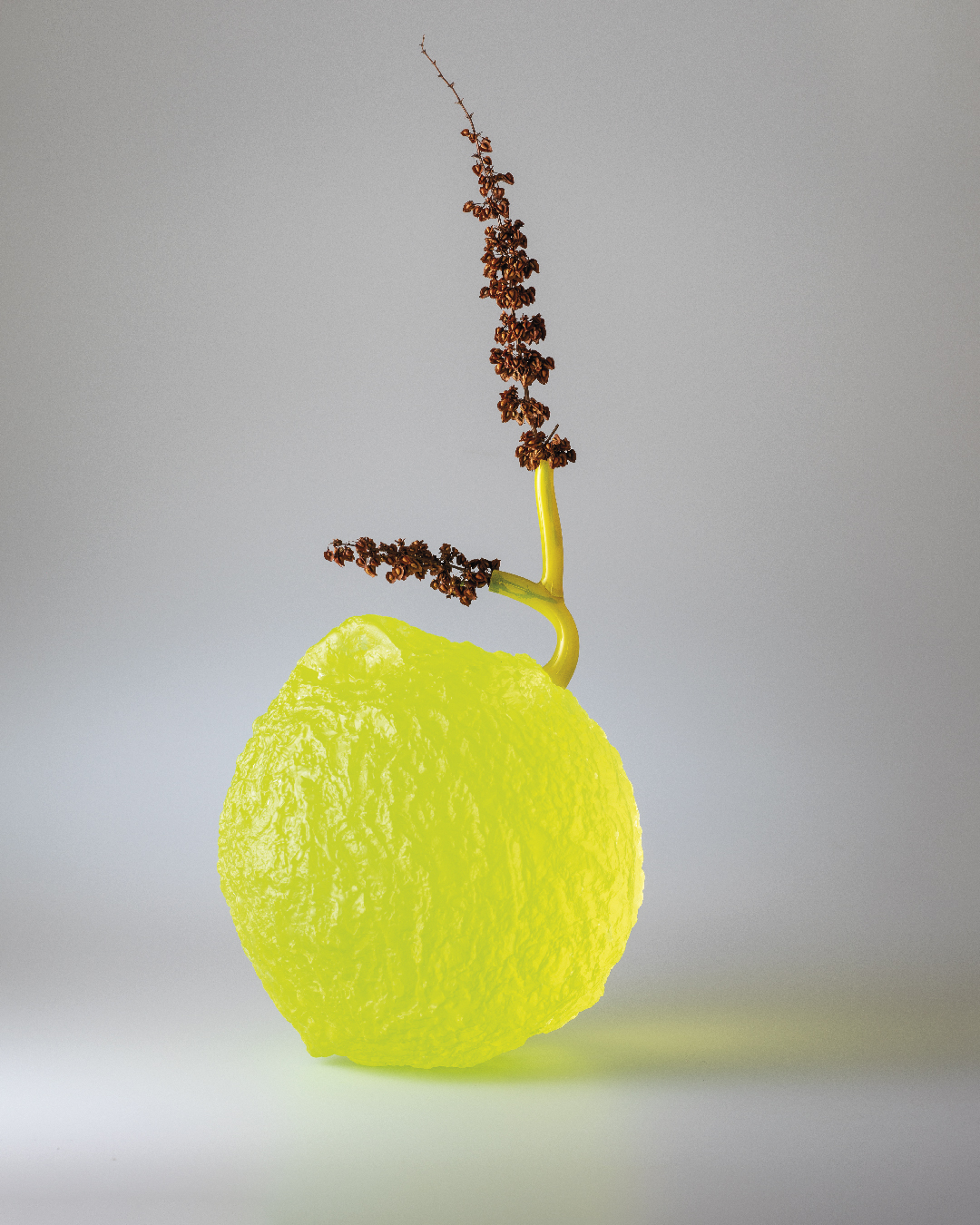
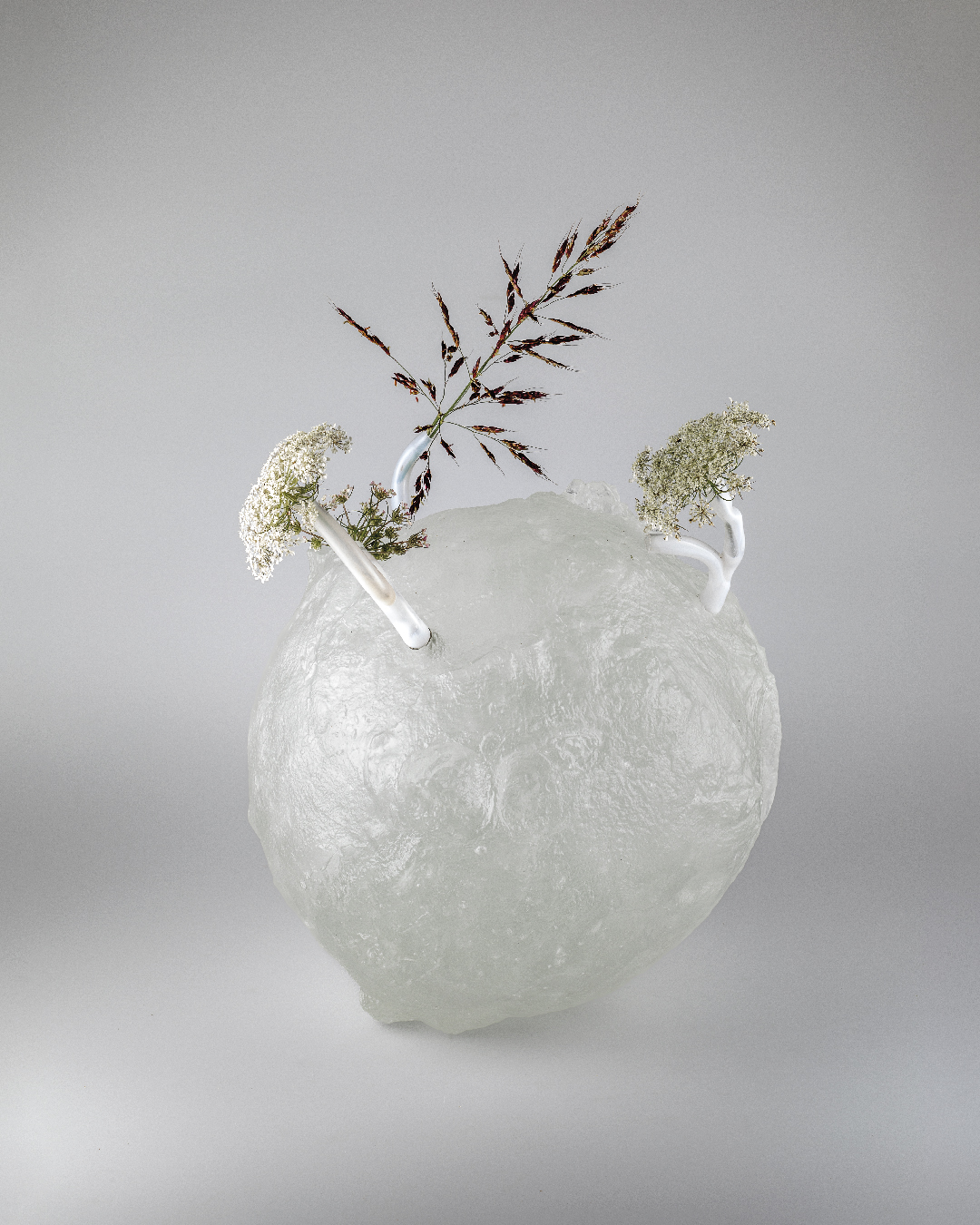
In the works of the OCEAN BARK series (2025), blown glass becomes a living organism. The closed sphere of the early BAUMWELTEN now opens into fissures, cavities, luminous wounds that reveal an iridescent and vulnerable interior, almost a sacred anatomy. The artist intervenes on the still-incandescent glass by engraving it, opening it up, and exposing its secret core to the gaze: a gesture that simultaneously evokes trauma and birth, scar and revelation. In this dialectic, the bark is no longer merely a protective surface, but a cosmic membrane through which the inner world filters outwards.
Pinus Pinaster, Cupressus, and Quercus Suber—works inspired by their respective tree species, which were featured in the 2025 Hub Venice Glass-Week exhibition at Palazzo Loredan—thus take on the character of animistic reliquaries. In archaic tradition, every tree is an axis mundi embodied in a living column that becomes a connecting line between the underworld, earth, and sky. The maritime pine evokes ancient Mediterranean cosmologies and resilience against wind and salt; the cypress, the funerary tree par excellence, has for millennia guarded the passage between the world of the living and that of the dead; the oak, consecrated to Zeus and the oracular deities, represents telluric wisdom and the strength of continuity. Transposed into Murano glass, using a color that evokes the ocean depths, these plant archetypes seem to emerge from a primordial era preceding the appearance of humankind, like liquid fossils or mineralized jellyfish.
The choice of a deep, dark blue is not merely an aesthetic one. The “ocean” evoked by the artist represents the great planetary unconscious: the origin of life, a womb-like space, and a mnemonic abyss. In Eastern philosophy, which is so central to the evolution of her artistic thought, emptiness does not equate to absence, but rather to the generative matrix of all forms.
It is here that the dialogue between the artist and the Murano master takes on an almost initiatory quality. Janine Thüngen-Reichenbach, accustomed to direct control over sculpture, agrees to entrust part of the creative process to a collective “dance” of synchronized gestures, trust, and the tacit transmission of knowledge. This shift is fundamental: glass introduces into her practice a relational and ritual dimension that echoes the ancient Venetian alchemical workshops, where the transformation of matter coincided with a spiritual transformation.
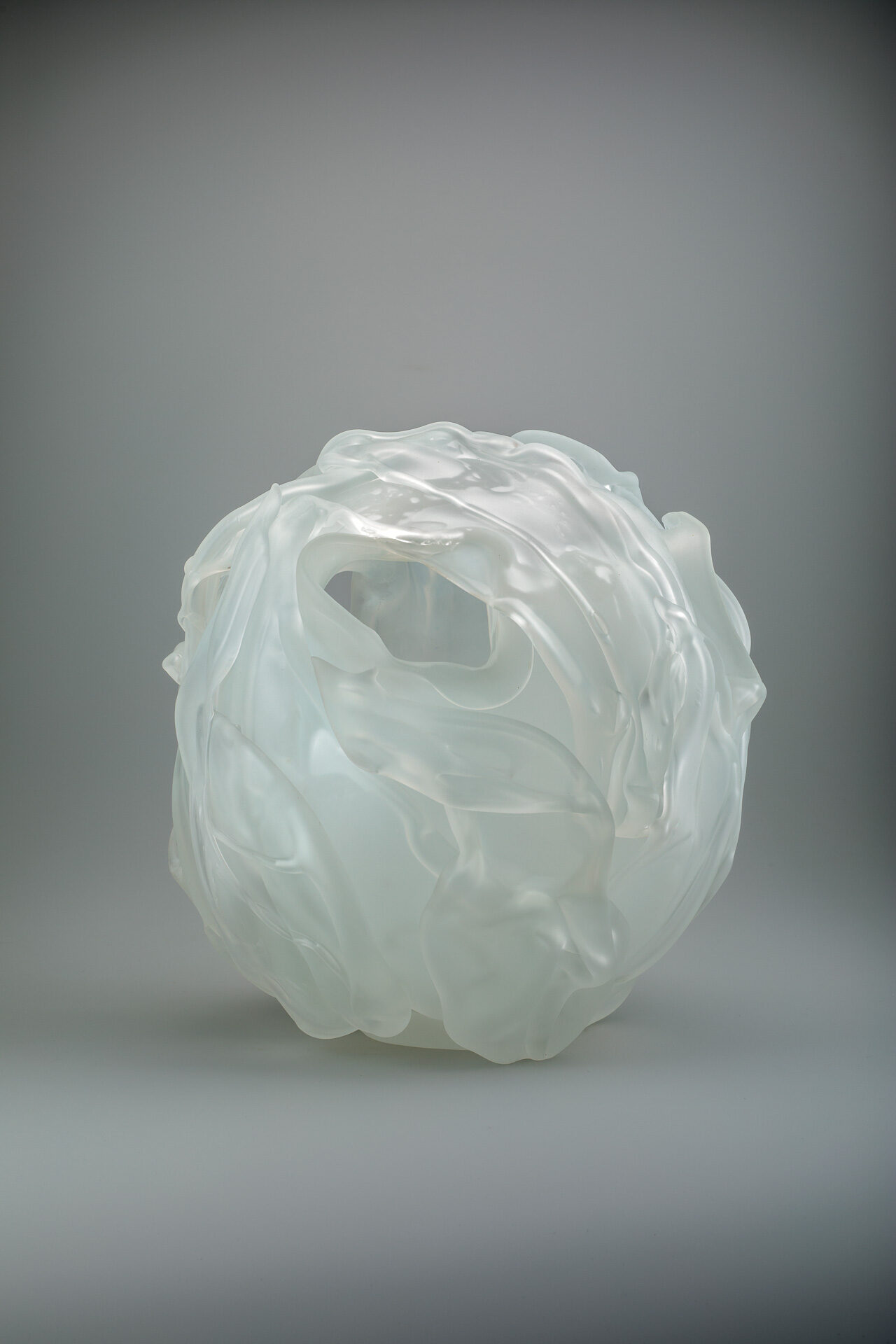
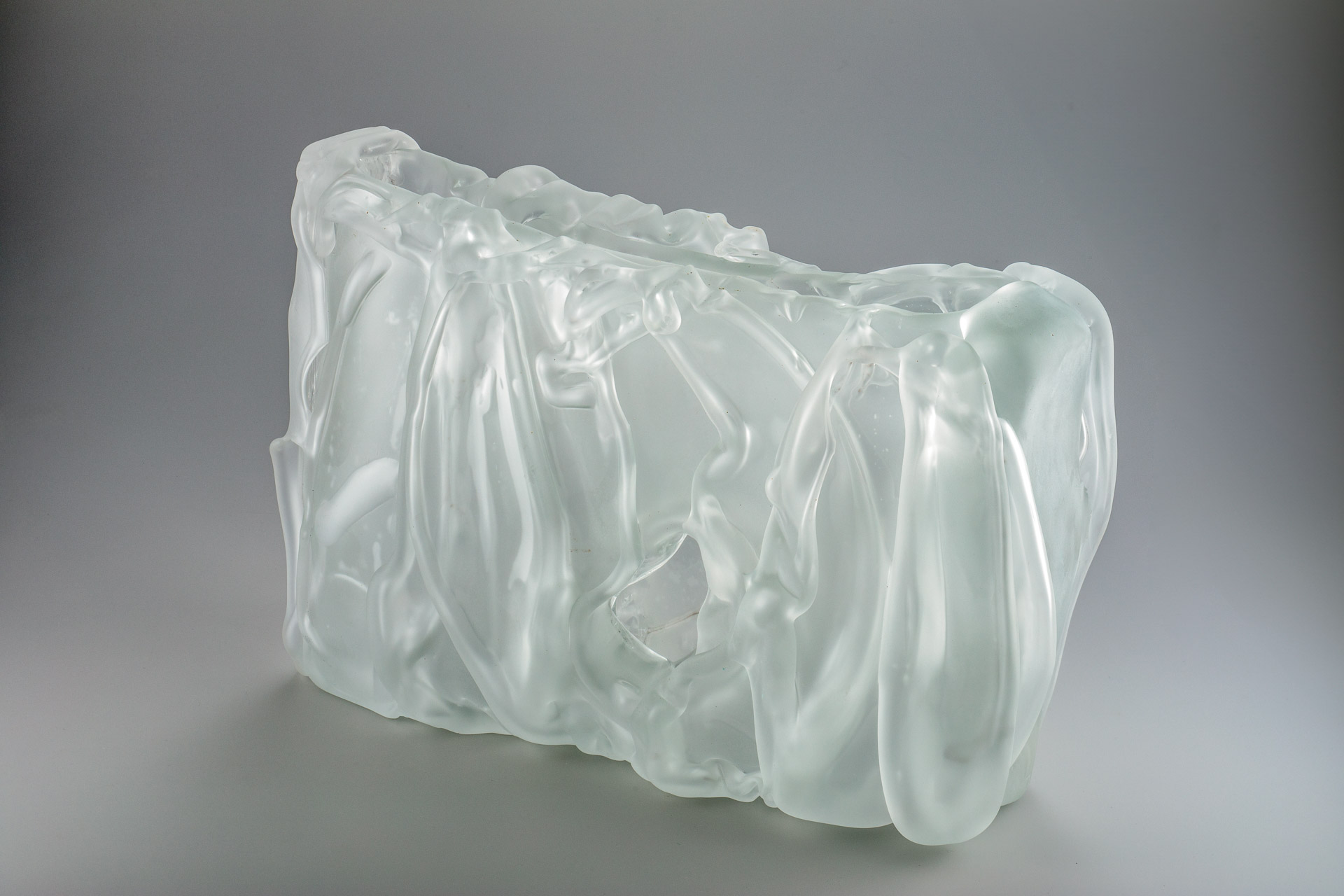
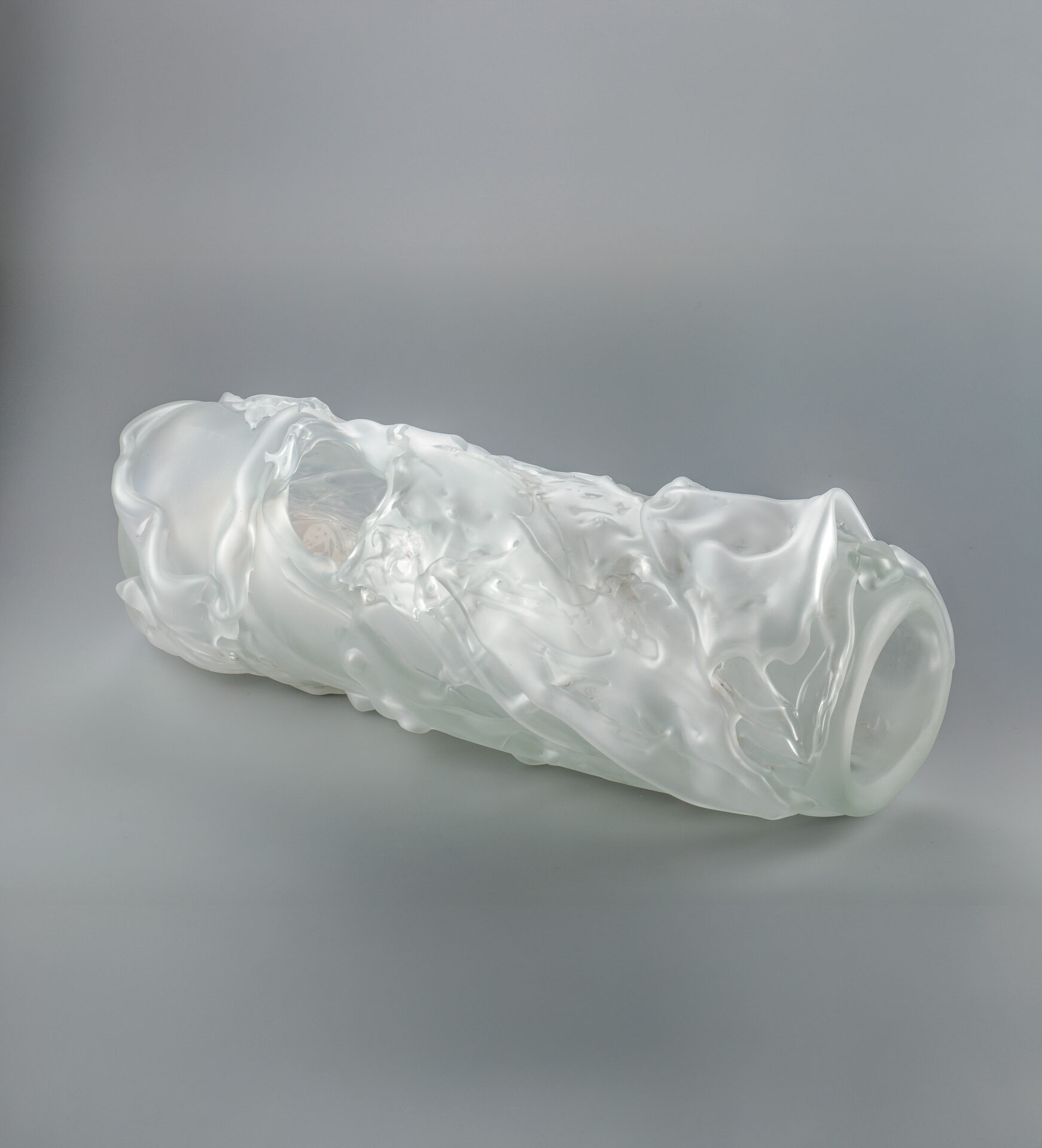
Alongside the large blown forms, the sandblasted crystal works—such as Quercus Olea, Pinus Parva, or Leucocarpa—appear as ectoplasmic apparitions, presences suspended between botany and vision.
The openings carved into the sculptures thus appear as meditative passages, cavities through which to contemplate what precedes language. In the background, a biblical image common to many other religions also emerges conceptually: the breath of life that animates creation. In blown glass, in fact, form is literally born from the human breath. The master glassblower blows air into the molten material just as, in the Genesis of the ancient scriptures, the divine breath breathes life into Adam’s clay.
Trees become hybrid creatures, bodies in symbiosis, metaphors for a profound coexistence that transcends the Western notion of the separate, isolated individual. The artist’s explicit reference to research on mycelium reinforces this interpretation: the invisible networks connecting tree roots become an image of an interconnected consciousness, of an underground intelligence that eludes the eye yet sustains all living things. One might say this theme has never been more relevant, given the cultural and civilizational shifts that all of humanity is currently experiencing…
Like ancient votive offerings or miniaturized planets, these sculptures thus hold a layered memory: biological, geological, spiritual. Each work is unique, unrepeatable, because the tree from which it originates is unique, and the combustion and gestural action that generated it are unique. In glass, however, memory does not fossilize: it continues to vibrate through the light. And this is perhaps the artist’s most radical insight: understanding that fragility is not the opposite of eternity, but its most luminous form.
Alessandro Tusset di Collalto

BAUMWELTEN
Exhibited at The Venice Glass Week 2025
HUB – Palazzo Loredan – Venezia